
A sharp fall in carnivore diet triglycerides is one of the most shared wins in meat-eating communities, and it is real for many people. Triglycerides are a blood fat that often drops fast when carbohydrate intake falls. But triglycerides are only one part of the lipid picture, and other numbers can move the other way. Here is why the drop happens and what to watch.
Quick Answer
Triglycerides often fall quickly because less carbohydrate means less sugar for the liver to turn into fat, and weight loss and less alcohol can add to the effect. Pooled trials of low-carb diets show triglyceride drops, but LDL cholesterol can rise. A low triglyceride number alone does not mean your heart risk is low.
Key Takeaways
- Mayo Clinic says triglycerides under 150 mg/dL are healthy, and 500 or above is very high.
- Excess calories, especially from high-carbohydrate foods, alcohol, obesity, and diabetes can raise triglycerides.
- Pooled low-carb trials show lower triglycerides, with a bigger drop in studies under six months.
- The same trials found LDL cholesterol rose slightly, so check the full lipid panel.
- Never stop statins, fibrates, or other lipid medicine because your triglycerides improved.
What Triglycerides Are and What Is Normal
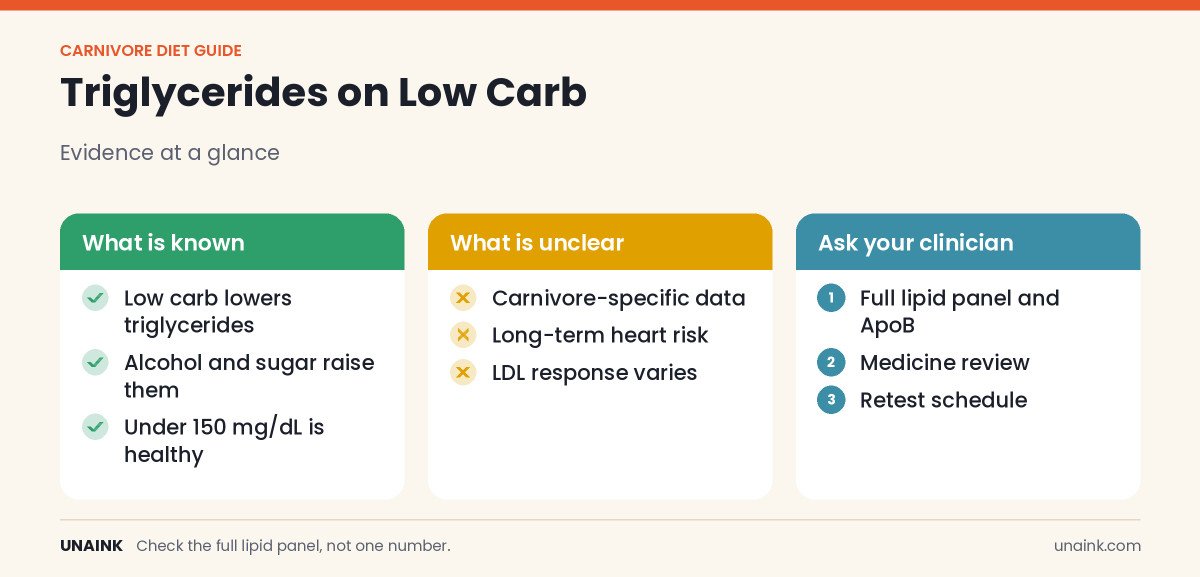
Triglycerides are fats carried in the blood that the body stores for energy. Mayo Clinic lists the levels as healthy under 150 mg/dL, borderline high 150 to 199, high 200 to 499, and very high 500 or above. Extremely high levels can inflame the pancreas.
Causes include eating more calories than you burn, especially from high-carbohydrate foods, plus obesity, metabolic syndrome, diabetes, an underactive thyroid, heavy alcohol use, and some medicines.
Why Carnivore Diet Triglycerides Drop So Quickly
- Less carbohydrate means less excess sugar for the liver to convert into triglyceride-carrying particles.
- Weight loss lowers triglycerides in many people.
- Cutting alcohol and sugary drinks removes two strong drivers.
- Lower insulin levels may change how fats are processed.
- Fasting-like eating patterns can lower blood fats before a test.
This is a general low-carb effect, not something unique to carnivore. It also reflects that triglycerides respond to short-term diet changes far faster than LDL does.
What the Trials Show
A 2020 PLoS ONE meta-analysis of 12 randomized trials found low-carbohydrate diets lowered triglycerides by about 0.15 mmol/L, or roughly 13 mg/dL, with a larger drop of about 0.23 mmol/L in interventions under six months. HDL cholesterol rose, but LDL cholesterol rose by about 0.11 mmol/L as well.
These were low-carb diets, not carnivore, and effects were modest on average. Individual changes can be larger. The 2026 scoping review of the carnivore diet found only nine human studies, so carnivore-specific lipid data are limited.
Why a Low Triglyceride Number Is Not the Whole Story
A low triglyceride result does not show that your heart risk fell. Saturated fat intake can raise LDL in some people, and Mayo Clinic advice for high triglycerides suggests replacing saturated fats with plant-based fats and eating omega-3 fish. Some people on carnivore see large LDL rises. Ask your clinician whether to track LDL, ApoB, or a calcium score. See carnivore diet and high cholesterol and carnivore diet and heart health.
When Triglycerides May Go the Wrong Way
People with certain inherited fat-processing conditions, uncontrolled diabetes, or heavy alcohol use can see triglycerides rise on a high-fat diet. If a lab shows a very high result, or you have severe stomach pain, see a clinician promptly. Do not assume a high-fat plan is safe for you until labs confirm it.
Getting Useful Lab Results
- Get a baseline lipid panel before you change your diet.
- Ask whether to fast before the test and keep conditions consistent.
- Repeat labs after 8 to 12 weeks and again at longer intervals.
- Ask about LDL, ApoB, HbA1c, and blood pressure along with triglycerides.
- Keep taking lipid or diabetes medicines unless your prescriber changes them.
Carnivore Diet Triglycerides: The Short Version
Carnivore diet triglycerides often drop because carbohydrates, alcohol, and body weight fall together, and low-carb trials back that up. Still, carnivore diet triglycerides tell only part of the story, so review the whole lipid panel with your clinician.
Frequently Asked Questions
How fast do triglycerides drop on low-carb diets?
They can fall within weeks, and pooled trials show larger drops in studies shorter than six months.
Are low triglycerides always a good sign?
Not on their own. LDL, blood pressure, and other risk factors also matter.
Why does LDL go up while triglycerides go down?
Higher saturated fat intake can raise LDL in some people even as triglycerides improve.
What triglyceride level is dangerous?
Mayo Clinic calls 500 mg/dL and above very high, with a risk of pancreatitis, so see a clinician.
Can I stop my cholesterol medicine if my numbers improve?
No. Only your prescriber should change medicine, after reviewing the full panel.
Conclusion
A quick drop in triglycerides is a genuine, well-documented effect of eating fewer carbohydrates, and it can be a positive sign for metabolic health. But it does not settle your overall cardiovascular risk. Pair it with a full lipid panel, blood pressure, and blood sugar, and let your clinician help interpret the pattern over time.
Medical note
This article is for general education and is not medical advice. Talk with a doctor or registered dietitian before making major diet changes, especially if you have a health condition, take medication, or are pregnant or breastfeeding.
Keep Reading
- Carnivore Diet and High Cholesterol: Why LDL can rise and what to check.
- Carnivore Diet and Heart Health: What we know about cardiovascular risk.
- Carnivore Diet and Insulin Resistance: Insulin, glucose, and diet.
- Is Saturated Fat Bad for You?: What the evidence says.
Sources
- Mayo Clinic: Triglycerides, Why Do They Matter?: Levels, causes, and treatment.
- The Effects of Low-Carbohydrate Diets on Cardiovascular Risk Factors: A Meta-Analysis (PLoS ONE, 2020): Pooled data from 12 randomized trials.
- Scoping Review of the Carnivore Diet (Nutrients, 2026): Nine human studies, very limited evidence.