Starting weaving is easier when you choose a few dependable tools instead of buying everything at once. This guide compares eight beginner-friendly weaving products across the core categories: looms, warp thread, weft yarn, scissors, and finishing needles. You normally need only one suitable loom plus the materials and tools that match your first project, so use the recommendations below to build a practical starter kit without unnecessary overlap.
Quick Start: A basic beginner weaving setup usually includes one loom, a strong warp thread, yarn for the weft, scissors, and a weaving or tapestry needle. Choose the loom first because its size and design determine what projects you can make.
Affiliate disclosure: This roundup contains Amazon affiliate links. We may earn a referral commission on qualifying purchases at no additional cost to you.
Top Picks
|
Category |
Product |
Best For |
|---|---|---|
|
💰 Cotton Yarn |
Washable weft, sampling, and utility projects |
|
|
🎯 Dedicated Warp |
Stable loom tension and structural projects |
|
|
✂️ General Craft Scissors |
Yarn trimming and paper templates |
|
|
🔰 Small Beginner Loom |
Kids, samples, and small tapestry projects |
|
|
🏆 Adjustable Loom |
Adults who want a loom with room to grow |
|
|
🚀 Large Starter Loom |
Larger beginner projects and family use |
|
|
🔧 Straight Weaving Needle |
Small frame looms and general finishing |
|
|
🎨 Bent Tapestry Needles |
Weaving in bulky ends and dense finishing |
How We Chose
Beginner weaving supplies should reduce setup frustration and make it easier to understand tension, over-under weaving, edge control, and finishing. We therefore prioritized simple setup, useful project sizes, dependable materials, and tools that solve common beginner problems.
For looms, size, adjustability, included accessories, and learning curve matter most. For warp and yarn, the key questions are strength, stretch, texture, and care. Scissors and needles should make trimming and finishing easier without adding unnecessary complexity. Because retailer ratings, review totals, prices, and stock can change, this guide focuses on practical product characteristics rather than temporary marketplace numbers.
Lily Sugar’n Cream Cone Yarn

Lily Sugar’n Cream Cone Yarn is a practical choice when you want plenty of 100% cotton yarn for weaving practice, kitchen textiles, coasters, wall pieces, and other washable projects. Its medium-weight cotton construction gives beginner work visible texture and makes it easy to experiment with color and basic weave patterns.
It is better viewed as a versatile weft and general craft yarn than as a replacement for dedicated high-tension warp thread. If your loom requires especially stable warp tension, use a purpose-made warp such as the Paper Farm option below.
Best for: Washable cotton weft, sampling, coasters, kitchen textiles, and simple decorative pieces.
Consider another option if: You specifically need low-stretch warp for a tightly tensioned loom.
What People Say
Common feedback around this cotton yarn focuses on the useful cone format, easy-care fiber, and suitability for practical home projects. Some users find cotton yarn firmer or more prone to splitting than softer plied yarns, so technique and tool choice can affect the experience.
Review snapshot: The sentiment graphic below should be treated as a snapshot rather than a live retailer rating because customer feedback changes over time.

When It Helps
|
Situation |
How It Helps |
|---|---|
|
Weft Practice |
The medium-weight cotton is easy to see and manipulate while practicing basic over-under weaving and color changes. |
|
Kitchen Textiles |
Cotton works naturally for practical pieces such as dishcloths, coasters, and other washable home projects. |
|
Sampling |
A cone provides a convenient continuous supply for testing patterns, spacing, and color combinations. |
|
Mixed-Fiber Projects |
Use the cotton as a stable-looking weft alongside wool or novelty fibers to explore texture contrasts. |
How To Use
Feed manageable lengths through your shuttle or weaving needle rather than dragging excessive yarn through the warp. Keep the edges relaxed so the sides of your work do not pull inward.
If you want to experiment with this yarn as warp, make a small sample first and avoid excessive tension. A purpose-made warp thread is the safer choice when consistent tension is important.
Versatility
This cotton yarn works well for practice swatches, coasters, kitchen textiles, small wall hangings, and other utility projects. It is less suitable when you want very soft drape or a highly specialized low-stretch warp.
Look And Feel
The neutral ecru tone shown here provides a quiet base for colorful wefts and suits both rustic and modern handmade pieces. Cotton produces a matte, familiar texture rather than a shiny finish.
Safety
Follow the care directions for the exact yarn shade and finished project. When children are weaving, supervise the use of scissors and any pointed tools used alongside the yarn.
Skill Level
Beginner to Intermediate — especially useful for practicing weft control and making practical cotton projects.
Key Benefits
- 100% cotton construction suited to many utility and decorative projects
- Cone format provides a convenient supply for repeated practice
- Easy-care fiber makes sense for many washable home-textile projects
Paper Farm 8/4 Warp Thread

Paper Farm Warp is the more purpose-built option in this roundup when your priority is holding steady loom tension. The 8/4 thread is listed as a 50/50 cotton-polyester blend and is designed for weaving applications such as tapestries, rugs, carpets, and other structured projects.
For beginners, a dedicated warp removes one variable from the learning process: you can concentrate on beating the weft evenly and controlling your edges instead of wondering whether a soft knitting yarn is stretching too much.
Best for: Beginners who want a dedicated warp for frame looms, rigid-heddle practice, tapestries, or sturdier projects.
Consider another option if: You want an all-natural fiber or a very fine warp for delicate work.
What People Say
Common feedback emphasizes strength and predictable behavior under tension. The main appeal is straightforward: it is designed as loom warp rather than being a general knitting or craft yarn repurposed for the job.
Review snapshot: The chart below is not a live Amazon rating and should be used only as a general feedback snapshot.

When It Helps
|
Situation |
How It Helps |
|---|---|
|
Warping A Loom |
A purpose-made warp is easier to tension consistently than many soft or stretchy craft yarns. |
|
Rugs And Structured Pieces |
The 8/4 cotton-polyester construction is intended for projects where the warp needs to stay supportive during weaving. |
|
Beginner Practice |
Predictable warp behavior lets new weavers concentrate on spacing, beating, and edge control. |
|
Colorful Wefts |
The natural off-white tone provides a neutral foundation for experimenting with contrasting weft yarns. |
How To Use
Warp the loom gradually and check tension across the full width rather than tightening isolated strands. Follow your loom’s recommended warping method and leave enough working length for tying or finishing.
If you are making an especially demanding rug or dense piece, sample the setup first instead of automatically doubling strands, since the correct sett and warp arrangement depend on your loom and project.
Versatility
This thread can support wall tapestries, rugs, practice panels, and other woven projects requiring a structural foundation. Its main role is warp, which makes it less redundant with the softer Lily cotton yarn than the original article suggested.
Look And Feel
The natural off-white color stays visually quiet behind colorful wefts and suits both traditional and modern woven designs.
Safety
Keep long warp strands organized during setup so loose thread does not become a tripping or tangling hazard. Care for the finished piece according to every fiber used, not the warp thread alone.
Skill Level
Beginner to Advanced — particularly useful for anyone who wants a dedicated, straightforward loom warp.
Key Benefits
- 8/4 construction intended specifically for weaving warp
- 50/50 cotton-polyester blend balances natural fiber content with added strength
- Neutral color works with a wide range of weft yarns and project styles
American Crafts 8-Inch Craft Scissors

These 8-inch American Crafts scissors are a general craft tool that can handle common weaving-table jobs such as trimming yarn tails and cutting paper templates. Their long blades are convenient for straight cuts, and the gold metal design gives them a distinctive craft-room appearance.
The important limitation is that this product is primarily marketed for paper crafting rather than as a specialist textile shear. It is useful in a beginner weaving kit, but people cutting substantial fabric, leather, or heavy cord should choose scissors designed for those materials.
Best for: Yarn trimming, templates, paper, ribbon, and light general craft use.
Consider another option if: You need dedicated fabric shears or heavy-material cutting.
What People Say
Feedback commonly focuses on the attractive finish and convenient 8-inch size. As with any general-purpose craft scissors, cutting performance depends on the material, so avoid treating them as a replacement for specialized textile shears.
Review snapshot: The graphic below is a historical sentiment snapshot rather than a live marketplace score.

When To Use
|
Situation |
How It Helps |
|---|---|
|
Trimming Yarn Tails |
A full-size pair of scissors makes routine trimming quicker than struggling with tiny craft snips. |
|
Pattern Cutting |
The long blades are convenient when preparing paper templates or guides for woven shapes. |
|
Ribbon And Light Craft Materials |
They can serve as an everyday craft-table cutting tool for lightweight materials around the loom. |
|
General Studio Work |
One multipurpose pair reduces the number of separate cutting tools a beginner needs to buy immediately. |
How To Use
Reserve the blades for paper, yarn, ribbon, and other appropriate craft materials so they stay useful for clean finishing cuts. Wipe away adhesive residue after template or paper-craft work.
Versatility
Useful for paper crafts and many light weaving-adjacent jobs, but not the right choice for heavy leather, wire, metal, or other materials requiring specialized cutters.
Look And Feel
The gold metal finish gives the scissors a decorative craft-room appearance while the traditional 8-inch format feels familiar on a worktable.
Safety
Scissor blades are sharp. Close and store the scissors safely after use, keep them away from young children, and use an age-appropriate cutting tool when children participate in weaving projects.
Skill Level
All Levels — a general craft tool rather than a weaving-specific specialty tool.
Key Benefits
- 8-inch format provides useful reach for routine craft cutting
- Suitable for yarn tails, paper templates, ribbon, and similar light materials
- Can serve multiple jobs in a beginner craft workspace
Friendly Loom PegLoom

The Friendly Loom PegLoom is a compact 7-by-10-inch hardwood tapestry loom made for approachable first projects. Its slanted nylon pegs help hold the warp in position, and the kit includes cotton warp string, wool yarn, a plastic weaving needle, and illustrated instructions.
It is especially useful when you want to learn the basic over-under motion without starting with a large frame. The tradeoff is project size: this is a learning and small-project loom rather than an expandable system for large textiles.
Best for: Children ages 6+, beginners, classrooms, coasters, bookmarks, samples, and small tapestries.
Consider another option if: You already know you want to weave scarves, wide panels, or larger home textiles.
What People Say
The main appeal is simplicity: a compact frame, included starter materials, and a design that keeps the first weaving exercises manageable. Some beginners may eventually outgrow the small working area.
Review snapshot: The sentiment graphic below is not a live retailer rating.

When It Helps
|
Situation |
How It Helps |
|---|---|
|
Learning Over-Under Weaving |
The small working area keeps the weaving path visible and makes mistakes easier to spot and correct. |
|
Teaching Kids |
The manufacturer positions the PegLoom for ages 6 and up, making it a practical introduction to basic tapestry weaving. |
|
Quick Projects |
Its compact dimensions suit samples, bookmarks, coasters, and small decorative panels. |
|
Portable Practice |
A small loom is easier to store and move than a large tabletop or floor setup. |
How To Use
Follow the illustrated instructions to arrange the cotton warp across the slanted pegs, then pass the weft over and under the warp with the included plastic needle. Keep the warp evenly tensioned without pulling the sides excessively tight.
Versatility
Best suited to learning, sampling, bookmarks, coasters, doll-size textiles, and small wall pieces. Its compact format intentionally limits the maximum project size.
Look And Feel
The hardwood frame has a simple traditional craft appearance, while the included colored yarn lets beginners begin practicing without building a full supply collection first.
Safety
The PegLoom is recommended for ages 6 and up. Supervise children as appropriate, keep small craft components away from younger children, and inspect wooden pieces before use.
Skill Level
Beginner — particularly suitable for children and first-time tapestry weavers.
Key Benefits
- Compact 7-by-10-inch hardwood loom is approachable for first projects
- Slanted nylon pegs help keep the developing weave in place
- Includes starter warp, wool yarn, plastic needle, and instructions
MILWARDS Extendable Weaving Loom

The MILWARDS loom is the more adaptable choice for a beginner who wants to move beyond tiny samples. Retail listings describe a beech-wood extendable frame supplied with a warp separator and instructions, giving you more flexibility as project sizes change.
Unlike the small PegLoom, this is aimed more toward an adult or older learner who wants a reusable tabletop-style frame. Check the current retailer listing for exact assembled dimensions and included accessories before ordering, because marketplace specifications can change.
Best for: Adult beginners, sampling, placemats, narrow wall pieces, and learners who want adjustable working space.
Consider another option if: You want an all-in-one children’s kit with yarn and multiple starter projects included.
What People Say
The main attraction is the combination of a wooden frame and adjustable format. Buyers should still check what accessories are included, since a loom may require separate shuttles, beaters, needles, or yarn depending on the project.
Review snapshot: The graphic below represents a sentiment snapshot rather than a current retailer score.

When It Helps
|
Situation |
How It Helps |
|---|---|
|
Learning Basic Weaves |
A larger frame gives you room to practice plain weave, stripes, texture changes, and edge control. |
|
Changing Project Size |
The extendable format provides more flexibility than a fixed miniature loom. |
|
Tabletop Practice |
It suits learners who want a reusable home setup without moving directly to a large floor loom. |
|
Skill Progression |
More working area lets you continue experimenting after outgrowing tiny first-project looms. |
How To Use
Assemble the loom on a flat, stable surface and confirm that adjustable fittings are secure before adding warp tension. Use the separator to space the warp consistently and increase tension gradually across the frame.
Versatility
Useful for samples, small home textiles, practice panels, and narrow decorative pieces. The actual maximum project dimensions depend on the loom setup, so verify the current listing before planning a specific finished size.
Look And Feel
The beech-wood construction gives the loom a traditional studio appearance that works naturally with yarn and other fiber-craft tools.
Safety
Check all adjustable fittings and supports before applying tension. Keep the loom on a stable work surface and inspect wooden parts periodically for damage or rough areas.
Skill Level
Beginner to Intermediate — a useful step up for learners who want more room than a small peg loom provides.
Key Benefits
- Extendable format provides more flexibility for different project sizes
- Beech-wood construction offers a traditional reusable frame
- Listed with a warp separator and instructions for setup
Melissa & Doug Multi-Craft Weaving Loom

The Melissa & Doug Multi-Craft Weaving Loom provides a larger beginner workspace while still packaging the experience as an approachable kit. It includes an adjustable wooden loom, oversized wooden needle, craft materials, illustrated instructions, and 91 yards of rainbow yarn.
The large frame makes it easier to progress from tiny samples to scarves, tasseled coasters, pouches, and decorative projects. It is primarily designed as a children’s craft product, but its size can also make it useful for adults learning basic frame-loom techniques.
Best for: Families, ages 6+, larger beginner projects, and buyers who want materials bundled with the loom.
Consider another option if: You want a compact portable loom or a more specialized adult weaving system.
What People Say
The appeal is the generous frame size and included starter materials. As with many beginner kits, experienced weavers may eventually want to replace included consumables or move to a more specialized loom as their technique develops.
Review snapshot: The chart below should not be interpreted as a live Amazon rating or current review count.

When It Helps
|
Situation |
How It Helps |
|---|---|
|
Learning At Home |
The kit combines a roomy frame with starter materials so beginners can practice without sourcing every component separately. |
|
Family Crafting |
The loom is designed for ages 6 and up and provides enough working area for recognizable finished projects. |
|
Making Longer Pieces |
The adjustable frame supports projects such as scarves and other pieces that need more working room than a miniature loom. |
|
Starter Gifts |
Included yarn, needle, craft materials, and instructions create a more complete starting package. |
How To Use
Have an adult complete the required assembly, place the loom on a stable surface, and follow the supplied instructions when adjusting the frame. Keep warp tension even and use the oversized wooden needle to pass the weft through the warp.
Versatility
Works well for introductory scarves, coasters, pouches, picture tapestries, practice panels, and other beginner crafts. Serious production weaving or very wide textiles will eventually require a more specialized loom.
Look And Feel
The wooden frame and brightly colored starter materials give the kit an approachable craft-room appearance that works especially well for family or educational use.
Safety
The manufacturer recommends the product for ages 6 and up. Adult assembly is required, and the product carries a small-parts choking warning for children under 3. Inspect and tighten the assembled frame before weaving.
Skill Level
Beginner — designed to make larger first projects approachable for children and new weavers.
Key Benefits
- Adjustable wooden frame provides more project room than small peg looms
- Includes an oversized wooden needle and starter craft materials
- Includes 91 yards of rainbow yarn for immediate beginner projects
Susan Bates 5-Inch Steel Weaving Needle

The Susan Bates 14085 is a straightforward 5-inch steel weaving needle for tapestry, loom work, sewing, and finishing. Its extra length gives you useful reach across small frame-loOM projects and makes it easier to carry yarn through multiple warp strands.
Unlike the bent Clover needles below, this is the more conventional straight option. Choose it when you want reach and direct control rather than a curved tip specifically intended for hooking through finished stitches.
Best for: Frame-loom weaving, tapestry work, joining, mending, and general yarn finishing.
Consider another option if: A bent tip would make weaving in ends through dense work easier.
What People Say
The practical appeal is its simple 5-inch steel construction. It is the kind of inexpensive single-purpose tool that can remain useful even after a beginner progresses to more advanced weaving.
Review snapshot: The graphic below is retained as a feedback snapshot and is not a current marketplace rating.

When It Helps
|
Situation |
How It Helps |
|---|---|
|
Small Frame Looms |
The 5-inch length gives you more reach than a short hand-sewing needle when passing yarn through warp. |
|
Finishing Edges |
A rigid steel needle gives controlled placement when hiding yarn tails or making joins. |
|
Joining Panels |
The needle can be used for yarn-based seaming and other finishing work after pieces leave the loom. |
|
General Craft Work |
It can also handle suitable mending, sewing, and tapestry tasks away from the loom. |
How To Use
Thread a manageable length of yarn and pass the needle through the warp without forcing it. When finishing a piece, weave loose ends back through nearby rows and trim only after the end is secure.
Versatility
Useful for tapestry weaving, small frame-loOM projects, yarn finishing, joining, and light mending. Very bulky cord may require a larger-eye tool.
Look And Feel
The plain steel construction is functional rather than decorative, which suits a tool designed primarily for repeated studio use.
Safety
Store the needle in a container, needle case, or pincushion when it is not being used. Keep pointed craft tools away from children and pets.
Skill Level
All Levels — simple enough for beginners and still useful for experienced fiber crafters.
Key Benefits
- 5-inch length provides useful reach for small-loom work
- Steel construction creates a rigid, reusable weaving tool
- Works for tapestry, joining, finishing, and general yarn crafts
Clover Jumbo Tapestry Needles Bent Point 2 Pack
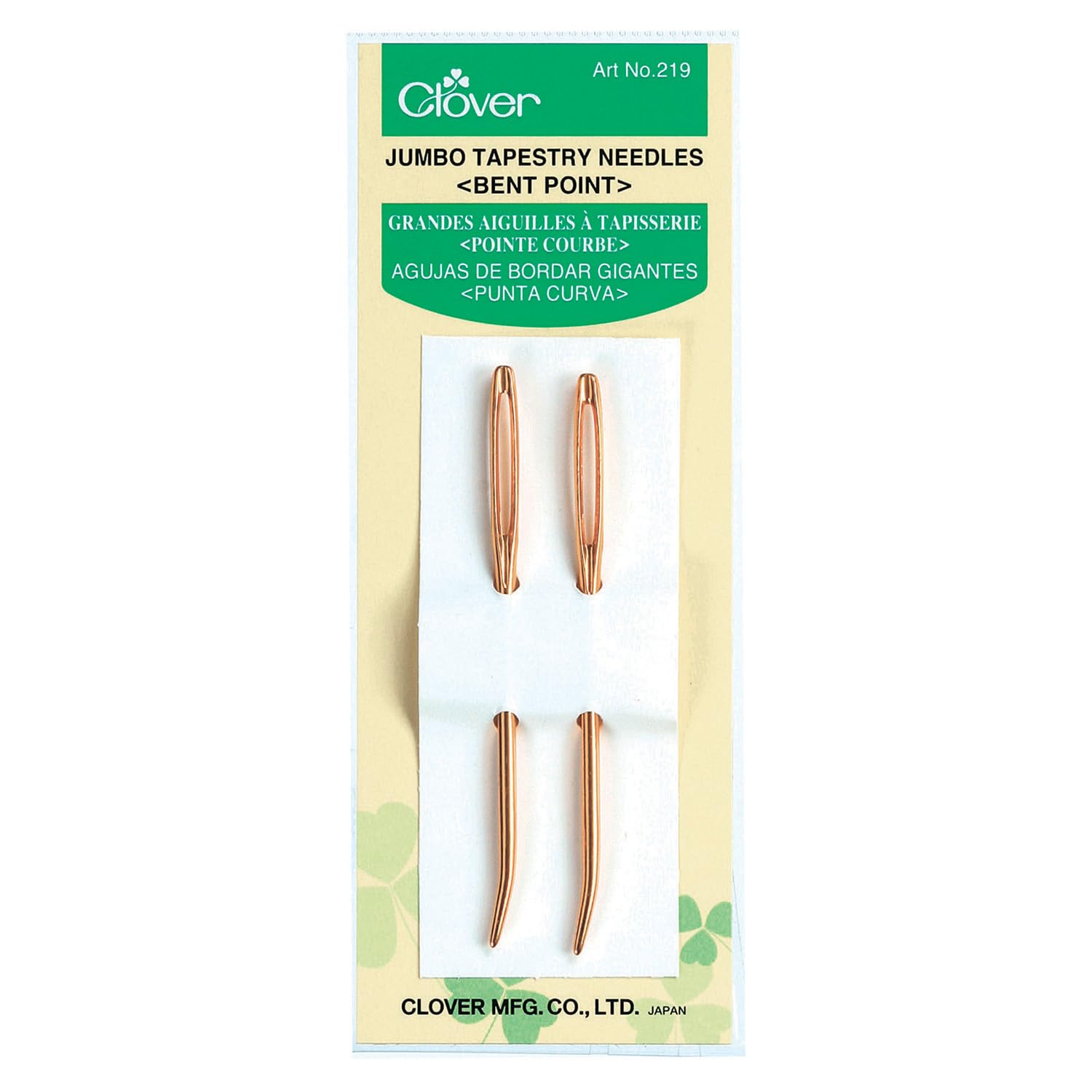
Clover Jumbo Tapestry Needles use a bent tip to make hooking and pulling yarn through stitches or dense woven areas easier. The current Clover specification lists two aluminum needles per package, each approximately 70 mm long.
They overlap with the Susan Bates needle in general finishing duties but solve a slightly different problem: the bent point is particularly convenient when weaving in bulky ends or working through an already dense surface.
Best for: Weaving in ends, rug and tapestry finishing, joining panels, crochet finishing, and bulky yarn.
Consider another option if: You want the extra reach of a long straight weaving needle.
What People Say
The curved tip is the defining feature because it helps the needle catch yarn and navigate finished stitches. This makes the pair particularly useful for people who find straight needles awkward when finishing dense work.
Review snapshot: The sentiment graphic below is not a live rating or current review count.

When It Helps
|
Situation |
How It Helps |
|---|---|
|
Weaving In Ends |
The bent tip helps you guide yarn through neighboring stitches or woven rows without approaching everything straight on. |
|
Rug And Tapestry Finishing |
The jumbo format is useful when handling thicker yarn during finishing work. |
|
Joining Panels |
The large format accommodates yarn-based seams when joining suitable woven, knitted, or crocheted pieces. |
|
Knitting And Crochet Finishes |
The same bent-tip design works for hiding ends and seaming bulky knit or crochet projects. |
How To Use
Thread the needle with the yarn you want to hide or join, then use the bent tip to enter adjacent stitches or woven rows at a comfortable angle. Pull gradually rather than forcing a bulky knot or thick section through the fabric.
Versatility
Useful for tapestry and rug finishing, woven panel joins, knitting, crochet, and other yarn crafts. For very fine thread work, a smaller tapestry needle will usually give better control.
Look And Feel
The compact aluminum needles are designed as practical finishing tools and store easily with other small weaving accessories.
Safety
Even tapestry and finishing needles can poke or injure when handled carelessly. Store the pair securely and keep small tools away from young children and pets.
Skill Level
All Levels — especially helpful for beginners who find weaving in bulky yarn ends awkward.
Key Benefits
- Bent tip helps hook and guide yarn through finished work
- Jumbo size is useful with medium-to-bulky yarn
- Two reusable aluminum needles are included
FAQ
What Weaving Supplies Should A Beginner Buy First?
Start with one loom, dedicated warp thread, yarn for the weft, scissors, and a weaving or tapestry needle. You do not need every loom or every needle in this roundup. A small PegLoom is appropriate for compact first projects, while an adjustable frame gives you more room to progress.
Do I Need Special Warp Thread?
A dedicated warp is usually the easier choice because warp threads must remain reasonably stable while you weave. Soft knitting or crochet yarn can work in some projects, but stretch, fuzz, and abrasion can make tension harder to manage. An 8/4 cotton-polyester warp is a straightforward option for many beginner frame-loom projects.
Can I Use Regular Yarn For Weaving?
Yes. Many knitting and crochet yarns work well as weft, where you can experiment with cotton, wool, acrylic, novelty fibers, and different textures. Warp has a more structural job, so choose it more carefully and follow the requirements of your loom and project.
Which Beginner Loom Should I Choose?
Choose the Friendly Loom PegLoom when you want a small, simple learning tool, the MILWARDS frame when adjustability and room to grow matter more, or the Melissa & Doug loom when you prefer a larger beginner kit with starter materials included. Project size and intended user are more important than simply choosing the largest loom.
Should I Choose A Straight Or Bent Tapestry Needle?
A longer straight weaving needle such as the Susan Bates option gives you reach across a small frame loom. A bent-point needle such as the Clover pair can be easier when weaving in ends or navigating dense finished stitches. Many fiber crafters eventually keep both styles because they solve slightly different problems.
How Do I Finish And Care For Woven Pieces?
Secure the final rows, weave loose ends back into the fabric, and trim only after they are stable. Care depends on every fiber used in the finished piece, so follow the most delicate relevant yarn-care instructions rather than assuming all woven projects can be machine washed or tumble dried.
Customer Preferences
The easiest way to choose among these products is by the problem you need to solve. Choose Lily cotton when you want accessible washable weft for practice and utility pieces. Choose Paper Farm when dependable warp is the priority. The American Crafts scissors make sense as a general craft-table cutter, while the three looms cover small learning projects, adjustable adult practice, and larger kit-based projects. For finishing, choose the Susan Bates needle for straight reach or the Clover bent-point pair for working ends through dense stitches.

Note: Treat preference graphics as a snapshot rather than live sales, rating, or review data.
Wrapping Up
A beginner weaving kit does not need to contain every product in this roundup. Start by choosing one loom that fits the size of project you want to make. Add a dependable warp, a weft yarn you enjoy working with, scissors, and one suitable weaving or finishing needle.
The Friendly Loom PegLoom keeps first projects compact, the MILWARDS loom gives an adult beginner more adjustable working space, and the Melissa & Doug loom provides a larger kit-style starting point. Paper Farm is the more specialized warp choice, while Lily cotton gives you a practical weft for sampling and home projects. The Susan Bates and Clover needles then cover two different finishing styles. Building your kit this way keeps the purchase focused on the techniques you actually plan to learn.
| Product Name | Image | Type | Best For | Key Details |
|---|---|---|---|---|
| Lily Sugar’n Cream Cone Yarn Soft Ecru |
|
100% cotton yarn | Weft, sampling, kitchen textiles, and utility projects |
|
| Durable Loom Warp Thread (Natural/Off White) |
|
8/4 warp thread | Stable loom setup, tapestries, rugs, and structured weaving |
|
| American Crafts Scissors Kit |
|
8-inch craft scissors | Yarn tails, paper templates, ribbon, and light craft work |
|
| Friendly Loom | PegLoom – 7″x10″ Wooden Tapestry Loom |
|
Small peg loom | Kids, first projects, samples, coasters, and small tapestries |
|
| MILWARDS Weaving Loom: Extendable |
|
Extendable beech loom | Adult beginners who want adjustable working space |
|
| Melissa & Doug Wooden Multi-Craft Weaving Loom |
|
Adjustable wooden starter loom | Families and larger beginner projects |
|
| Susan Bates 14085 Steel Weaving Needle, 5-Inch |
|
Straight steel weaving needle | Small frame looms, tapestry weaving, joining, and finishing |
|
| Clover Jumbo Tapestry Needles Bent Point 2 Pack |
|
Bent-point tapestry needles | Bulky ends, dense finishing, panel joins, knitting, and crochet |
|