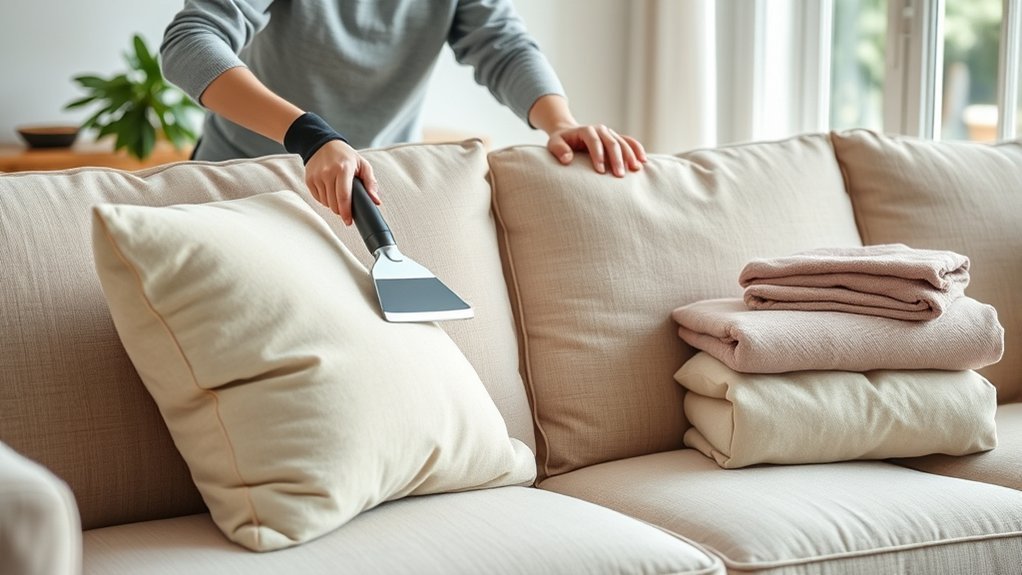
A sofa lasts longer when you spread out wear, clean it according to its upholstery instructions, protect it from strong sunlight, and repair small problems before they reach the frame. The most useful habits are simple: vacuum regularly, rotate and fluff removable cushions, blot spills quickly, inspect seams and joints, and use only cleaners approved for the sofa’s material.
Quick Answer
To make a sofa last longer, rotate and fluff removable cushions, vacuum upholstery and crevices, blot spills immediately, limit direct sunlight, protect high-use areas, and repair loose seams or hardware early. Most importantly, check the manufacturer’s cleaning instructions before using water, detergent, solvent, steam, conditioner, or stain remover.
Key Takeaways
- Rotate, flip when allowed, and fluff removable cushions so one seat does not take all the wear.
- Vacuum fabric regularly and deal with spills quickly, but always follow the upholstery cleaning code and manufacturer instructions.
- Keep upholstery away from prolonged direct sunlight and strong heat when practical.
- Use throws or washable covers in high-spill, pet, or child-use areas when they fit the sofa safely.
- Repair loose seams, hardware, webbing, springs, or frame problems early; structural damage is a better reason to replace a sofa than age alone.
At a Glance
| Time Required | About 10–20 minutes for routine vacuuming, fluffing, rotation, and inspection; spills should be handled promptly. |
| Difficulty | Easy for routine care; moderate to professional-level for springs, webbing, mechanisms, or frame repairs. |
| Tools Needed | Vacuum with upholstery attachment, clean white cloths, soft brush if approved, and material-specific cleaner only when permitted. |
| Cost | Low for routine care if you already own basic cleaning tools; cushion, upholstery, spring, mechanism, and frame repairs vary widely. |
How Long Sofas Last
There is no single lifespan that applies to every sofa. Construction quality, frame joinery, cushion materials, upholstery, frequency of use, pets, children, sunlight, moisture, cleaning methods, and repair history all affect how long a sofa remains comfortable and safe.
A high-quality frame may remain useful through multiple sets of cushions or even new upholstery. Room & Board notes that a well-made sofa can last for multiple decades with appropriate care, although cushions and upholstery may need attention sooner than the frame itself.
Instead of replacing a sofa because it reaches a certain birthday, watch its condition. Sagging that does not recover, torn upholstery, loose joints, damaged springs, persistent odors, leaning sections, or a cracked frame tell you more than a calendar does.
Note: A warranty period is not the same as an expected lifespan. A sofa can outlast its warranty, while misuse, accidental damage, or normal wear may not be covered by a warranty at all.
Daily Sofa Habits That Prevent Wear
Small habits reduce concentrated wear. Dirt and grit can work into upholstery, while repeatedly using one seat compresses the same cushion and support system day after day.
- Use different seats instead of always sitting in the same position.
- Avoid sitting or standing on sofa arms unless the manufacturer specifically designed them to bear that load.
- Keep shoes off upholstered seating when possible so grit does not grind into the fabric.
- Use a washable throw in areas exposed to pet hair, snacks, or frequent spills.
- Check seams, zippers, legs, cushions, and visible joints regularly for developing damage.
- Keep sharp objects, hook-and-loop fasteners, and rough hardware away from delicate upholstery.
The most effective sofa-care routine spreads wear out instead of waiting for one favorite seat, seam, or cushion to fail.
Rotate Cushions to Prevent Sagging
Regularly rotating removable sofa cushions helps distribute pressure more evenly. La-Z-Boy and Room & Board both recommend rotating and fluffing cushions to promote even wear and maintain their appearance.
If the seat cushions are reversible, flip them as well as swapping their positions. If a cushion has a shaped front, zipper location, attached fastener, or one-sided upholstery, do not force a flip that the design does not allow.
Back cushions filled with fiber, feathers, down, or similar loose fill often benefit from frequent fluffing. Foam cushions may not need the same amount of fluffing, but changing their positions can still reduce concentrated compression.
Pro Tip: If your sofa is used every day, pair cushion rotation with your regular vacuuming routine. That makes it easier to clean under the cushions and notice loose seams, crumbs, moisture, or hardware before they become bigger problems.
Protect Your Sofa From Sunlight and Spills
Strong, prolonged sunlight can fade upholstery, so use blinds, curtains, shades, or a different furniture position when a sofa receives intense direct sun for hours each day. Manufacturer care guidance commonly recommends limiting direct sunlight for both fabric and leather furniture.
| Risk | Smart Move | Benefit |
|---|---|---|
| Direct sunlight | Use blinds, shades, or curtains | Helps limit fading |
| Liquid spills | Blot promptly and follow the cleaning code | Reduces spread and staining risk |
| Crumbs and pet hair | Vacuum and use a washable protector where useful | Reduces embedded debris |
| Repeated use of one seat | Rotate seating positions and removable cushions | Spreads compression more evenly |
If you are comparing upholstery fabrics, abrasion ratings can help, but a bigger number does not automatically mean a proportionally longer lifespan. The Association for Contract Textiles warns that abrasion tests measure only one aspect of performance and that Wyzenbeek double-rub results and Martindale cycles should not be treated as interchangeable lifespan scores.
Check the Upholstery Cleaning Code First
Before applying water, soap, solvent, stain remover, steam, or another cleaner, find the manufacturer’s care label. Upholstery fabrics are commonly identified with cleaning codes such as W, S, WS, or X. The code helps indicate whether the fabric’s coloration tolerates water, solvent, both, or neither, but the sofa manufacturer’s instructions still take priority.
| Code | General Meaning | What to Do |
|---|---|---|
| W | Water-based upholstery cleaning is permitted. | Use an approved water-based upholstery cleaner, pretest an inconspicuous area, and avoid over-wetting. |
| S | Water-free solvent cleaning is specified. | Do not use water. Use only an appropriate upholstery solvent according to the manufacturer or seek professional cleaning. |
| WS | Water-based upholstery shampoo or an appropriate furniture dry-cleaning solvent may be permitted. | Pretest first, avoid saturation, and follow the furniture maker’s instructions. |
| X | No water- or solvent-based cleaner. | Vacuum or lightly brush with an approved soft brush; use professional advice for more serious soiling. |
Warning: Do not assume that a removable cushion cover is machine washable. Some covers can shrink, distort, bleed, or become difficult to refit. Follow the sewn-in care label and manufacturer instructions before removing or laundering any cover.
How to Clean Fabric and Leather Sofas
Routine cleaning should match the upholstery material rather than follow one universal recipe.
Fabric Sofa Care
Vacuum cushions, seams, creases, and the area beneath removable cushions with an upholstery attachment. Room & Board recommends regular vacuuming because dirt and dust can contribute to faster fabric wear.
If a spill occurs, remove excess material carefully and blot liquid with a clean, absorbent cloth instead of aggressively rubbing it into the fabric. Then follow the sofa’s cleaning code. Even when water-based cleaning is allowed, pretest the cleaner on an inconspicuous area and avoid soaking the cushion.
Professional upholstery cleaning can be useful when the sofa is generally soiled, has a difficult stain, or requires a cleaning method you cannot safely perform at home. A fixed every-one-or-two-year schedule is not necessary for every sofa; use, material, color, pets, and the manufacturer’s care advice should guide the interval.
Leather Sofa Care
Leather needs material-specific care. Regular dusting or vacuuming with a suitable attachment helps keep abrasive debris off the surface. For a spill, blot promptly and follow the instructions for that exact leather type.
Do not automatically apply household detergent, oils, wipes, polish, or conditioner. Top-grain, protected, nubuck, suede-like, and synthetic leathers can require different products. A conditioner should be used only when appropriate for the leather and according to the furniture or leather manufacturer’s directions.
Keep leather away from prolonged direct sunlight and strong heat sources when practical, because fading and drying can become more noticeable with exposure.
Use Throws, Covers, and Protectors
Throws, slipcovers, and protectors can reduce the amount of dirt, pet hair, crumbs, and spills that reach the original upholstery. They are especially useful on the most frequently used seat or in homes with pets and children.
Wash removable protective layers according to their own care labels and clean the sofa beneath them as well. Leaving a dirty throw in place can trap grit against the upholstery instead of protecting it.
Make sure any protector fits without interfering with a recliner, sleeper mechanism, power control, vent, moving headrest, or heat-producing component.
Protect the Frame, Joints, and Legs
Cushions and upholstery are only part of a sofa’s lifespan. The frame, joinery, legs, springs, webbing, and mechanisms carry the actual load.
- Do not drag a sofa by one arm or leg when moving it.
- Lift from strong structural points with enough people for the sofa’s weight and size.
- Do not repeatedly drop onto the same seat or use the arms as stools.
- If accessible legs or manufacturer-approved fasteners loosen, tighten them according to the assembly instructions.
- Investigate new rocking, leaning, clicking, scraping, or sharp spring noises instead of assuming they are normal.
- Keep sleeper and reclining mechanisms clear of toys, cords, blankets, and objects that can jam moving parts.
A small loose fastener may be an easy fix. A cracked rail, pulled joint, broken spring attachment, damaged webbing, bent mechanism, or electrical recliner fault deserves a more careful inspection.
Fix Loose Cushions, Springs, and Tears
Early repair can prevent a small upholstery or support problem from spreading. Start with the least invasive fix and identify the real cause before adding padding or a rigid support.
Cushion Refill Fixes
Flattened cushions may improve with rotation, fluffing, or redistribution of loose fill. If the insert itself has permanently lost support, replacing the foam, fiber, feather/down blend, or complete insert can restore the seat without replacing the entire sofa.
Replacement cost varies with cushion size, foam density, layered construction, wrapping, specialty shapes, and professional labor. Match the original dimensions and intended firmness rather than assuming the thickest or firmest foam is automatically better.
If the cushion cover is tight, distorted, or difficult to remove, an upholsterer can measure the insert and recommend a compatible replacement without overstressing seams or zippers.
Spring Support Repairs
A sagging seat is not always a cushion problem. Remove loose cushions when the design allows and inspect for displaced springs, damaged clips, stretched webbing, broken support material, cracked wood, or loose joints.
A rigid board or commercial support panel placed beneath a cushion may temporarily change the feel of some sofas, but it does not repair a broken spring, webbing system, or frame. Do not use a makeshift support if it interferes with a recliner, sleeper mechanism, electrical component, or moving hardware.
Broken springs, detached spring clips, torn webbing, cracked rails, or major joint failures are better handled as structural repairs. If you cannot safely identify how the support system is attached, use a qualified furniture repairer or upholsterer.
Tear Patch Solutions
Minor upholstery damage is easier to control before the opening widens. The correct repair depends on the material and where the tear sits.
| Issue | Safer Fix |
|---|---|
| Loose thread | Do not pull it. Trim or secure it only if the upholstery construction allows. |
| Opening seam | Restitch with matching upholstery thread when accessible or use an upholsterer for loaded seams. |
| Small woven-fabric tear | Use a compatible upholstery repair method after testing; avoid products that stiffen or discolor the visible surface. |
| Leather tear | Use a repair system intended for that leather finish or consult a leather-repair professional. |
| Sagging support beneath cushion | Inspect springs, webbing, clips, and frame instead of hiding the problem with extra padding alone. |
A Simple Sofa Maintenance Schedule
| Frequency | Maintenance |
|---|---|
| As needed | Blot spills, remove crumbs, correct wet areas, and address new tears or loose threads promptly. |
| Weekly or during regular cleaning | Vacuum high-use areas, fluff loose-fill cushions, check seams, and remove debris from crevices. |
| Regularly | Rotate and flip removable cushions when the design permits; change favorite seating positions. |
| Monthly | Vacuum beneath removable cushions, inspect legs and visible hardware, and look for developing sagging or frame movement. |
| Seasonally | Check whether changing sunlight is reaching the sofa, clean protective throws or covers, and inspect less-visible surfaces. |
| When heavily soiled or damaged | Follow the care label or consult an upholstery, leather, or furniture-repair professional. |
When to Reupholster a Sofa
Reupholstery makes the most sense when the sofa has a strong, stable frame but the fabric, padding, or cushions are worn. It can also preserve a well-made, unusually comfortable, custom-sized, or sentimental piece that would be difficult to replace.
Signs It’s Time
- The upholstery is worn, stained, faded, or torn, but the frame remains solid.
- Cushion inserts need replacement, yet the basic seating structure is still sound.
- The sofa has a style, scale, or sentimental value worth preserving.
- The cost and quality of rebuilding the piece compare favorably with buying a replacement that meets the same needs.
If the sofa rocks because of a cracked frame, has extensive structural damage, contains a failing mechanism that cannot be economically repaired, or has persistent contamination or odor inside its padding and frame, replacement may make more sense.
Reupholstery vs. Replacement
Professional reupholstery costs vary widely with sofa size, fabric choice, tufting, piping, cushion work, transportation, spring or webbing repair, and frame restoration. Get a detailed quote that separates upholstery labor, fabric, cushions, structural repairs, and transport before comparing it with a new sofa.
Reupholstery can also reduce waste by keeping a repairable frame in service instead of discarding the entire piece.
Note: In the United States, reupholsterers are responsible for ensuring covered furniture complies with current federal upholstered-furniture flammability requirements. A professional shop should understand the rules that apply to materials and labeling.
When It’s Time to Replace Your Sofa
Age alone does not determine when a sofa should be replaced. Focus on structural condition, comfort, cleanliness, repairability, and whether the piece still meets the household’s needs.
- Check support. If cushions have been repaired or replaced but the seat still collapses or slopes, inspect the underlying support system.
- Inspect the frame. Cracked rails, repeatedly failing joints, severe leaning, or movement between structural sections can make continued repair impractical.
- Check springs and mechanisms. Broken support components, damaged sleeper hardware, or unreliable power-recliner parts may require professional repair before continued use.
- Consider persistent contamination. Deep odor, moisture damage, mold contamination, or material that cannot be cleaned safely may justify replacement.
- Compare repair value. A strong frame with worn fabric is a reupholstery candidate; a weak frame with multiple failures is usually a poorer candidate.
Sources
- Room & Board — Fabric & Upholstery Care — vacuuming, cushion rotation, and sunlight guidance.
- Room & Board — Leather Care — leather cleaning, sunlight, rotation, and material-specific conditioning guidance.
- Joint Industry Fabric Standards and Guidelines — W, S, WS, and X upholstery cleaning-code guidance.
- Association for Contract Textiles — Performance Guidelines — abrasion testing and textile-performance context.
- U.S. Consumer Product Safety Commission — Upholstered Furniture — current U.S. upholstered-furniture and reupholstery flammability requirements.
- Room & Board — Why a Great Sofa Is Worth It — longevity of well-built sofas and replacement of worn cushions.
Frequently Asked Questions
What Is the 2 2 1 Rule for Sofas?
There is no widely recognized furniture-industry maintenance standard called the “2 2 1 rule” that universally means rotating cushions every two weeks, fluffing every two weeks, and cleaning monthly. If a retailer or article uses that phrase, check its own definition. For actual sofa care, follow the manufacturer instructions and a consistent vacuuming, cushion-rotation, spill-care, and inspection routine.
What Is the Average Lifespan of a Sofa?
There is no universal evidence-based lifespan that fits every sofa. Construction, frame quality, cushions, upholstery, household use, sunlight, pets, moisture, cleaning, and repair history all matter. A well-built frame can remain useful for many years and may outlast its original cushions or upholstery, so condition is a better replacement guide than age alone.
How Do You Bring an Old Couch Back to Life?
Start by vacuuming it according to the upholstery instructions, rotating or replacing worn cushion inserts, repairing loose seams, checking the support system, and adding a washable throw if useful. If the frame is solid but the upholstery is badly worn, professional reupholstery can restore the piece. Structural cracks, severe contamination, or multiple failed components may make replacement more practical.
What Is the 2/3 Rule for a Sofa?
The 2/3 rule is an informal decorating guideline, not a sofa-maintenance standard. It suggests that a sofa placed against a wall may look balanced when its width is roughly two-thirds of the usable wall length. Treat it as a starting point rather than a requirement, because doors, windows, side tables, traffic paths, room shape, and freestanding layouts can change the best size.
Conclusion
A sofa lasts longer when maintenance focuses on the parts that actually wear: cushions, upholstery, seams, supports, joints, and the frame. Rotate removable cushions, vacuum regularly, protect the sofa from prolonged sunlight, handle spills promptly, and follow the cleaning code before applying any product. Small repairs are worth making early, while broken springs, damaged mechanisms, or cracked structural parts deserve proper inspection. When the frame remains sound, new cushions or reupholstery can extend the sofa’s useful life; when the structure itself is failing, replacement may be the better choice.