If you’re comparing slipcovers vs. removable sofa covers, focus on fit, cleaning, compatibility, and how much of the sofa you want to cover. The terms can overlap: a slipcover is itself removable, while some sofas also have zip-off covers for individual cushions, arms, or modules. Knowing that difference makes it much easier to choose a cover that works for everyday use.
Quick Answer
Slipcovers are removable fabric shells that cover most or all of a sofa, while “removable sofa covers” can also mean zip-off covers made for individual cushions, arms, or modules. Slipcovers are useful for whole-sofa style changes; integrated zip-off covers usually make section-by-section cleaning easier. Always follow the specific fabric’s care instructions.
Key Takeaways
- A slipcover usually wraps most or all of a sofa; removable upholstery covers may instead unzip from individual cushions, arms, or modules.
- Integrated zip-off covers are convenient when you want to clean one section without removing a full-sofa cover.
- Slipcovers provide fuller coverage than throws, which mainly protect the surfaces they physically cover.
- Some performance fabrics resist stains, liquids, abrasion, and minor snags, but performance varies by product.
- A removable cover is not automatically machine washable; always check the manufacturer’s care instructions.
- Measure the sofa carefully and confirm cushion, recliner, zipper, and arm compatibility before ordering a fitted cover.
What Are Slipcovers and Removable Covers?
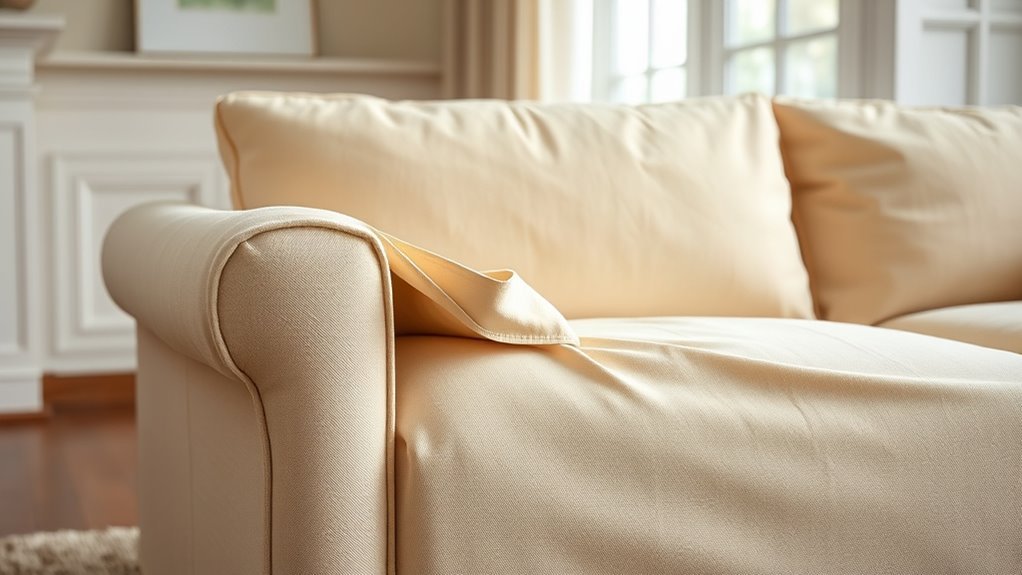
Slipcovers are removable fabric covers designed to fit over most or all of a sofa, loveseat, or chair. Some are tailored to a specific furniture model, while others use stretch fabric, ties, elastic, or tucking to fit a range of sofa shapes.
Removable sofa covers is a broader term. It can include a whole-sofa slipcover, but it may also describe upholstery covers that unzip from individual seat cushions, back cushions, arms, or modular sections. On sofas designed around removable upholstery, you can often clean or replace one component without taking the entire sofa cover off.
The key difference is not simply “removable versus non-removable.” It is whether the cover comes off as one larger shell or as separate fitted pieces designed for the sofa.
Neither approach is automatically better. A full slipcover can change the look of an older sofa and protect more of the original upholstery. Individually removable covers can be easier to manage when one cushion or module gets dirty.
Slipcovers vs. Removable Sofa Covers: Side-by-Side
| Feature | Whole-Sofa Slipcover | Integrated Removable Covers |
|---|---|---|
| Coverage | Usually covers most or all visible upholstery. | May cover cushions only or cushions plus arms, backrests, and modules. |
| Fit | Ranges from universal stretch-fit to model-specific tailored designs. | Usually made for that exact sofa or sofa series. |
| Cleaning | May require removing one large cover or several fitted pieces. | Often lets you remove the affected cushion or module only. |
| Style changes | Useful for changing most of the sofa’s visible color or texture. | Replacement color choices depend on what the manufacturer sells. |
| Compatibility | Must match sofa dimensions, arm shape, cushion layout, and recliner features. | Normally limited to the furniture model for which the covers were made. |
| Best for | Refreshing an existing sofa or adding broad upholstery protection. | Easy section-by-section cleaning and manufacturer-matched replacement covers. |
Note: “Removable” does not mean “machine washable.” Zippers only tell you that a cover can come off. The care label or manufacturer instructions determine whether it should be machine washed, hand washed, spot cleaned, or professionally cleaned.
Slipcovers vs. Throws
Slipcovers and throws can both protect a sofa, but they work differently. A slipcover is shaped or fitted around the furniture. A throw is simply draped over part of the sofa.
Choose a throw when you want fast, casual coverage for a seat, backrest, or favorite pet spot. Choose a slipcover when you want more consistent coverage and a neater fit around the sofa.
Slipcovers Fit Better
Compared with a loose throw, a fitted slipcover follows more of the sofa’s shape and is less likely to slide completely off during normal use. The exact result depends on the cover design and how closely its dimensions match the furniture.
| Feature | Slipcover |
|---|---|
| Fit | Can be sofa-specific or stretch-fit; tailored models provide the cleanest fit. |
| Coverage | Usually covers substantially more upholstery than a throw. |
| Installation | May require tucking, straps, elastic, ties, or separate cushion pieces. |
| Maintenance | Often removable, but washing method depends on the fabric and manufacturer. |
| Style | Can provide a coordinated, fitted appearance when sized correctly. |
A model-specific slipcover normally looks neater than a generic cover because seams, cushion shapes, and openings are designed around that sofa. Universal stretch covers are easier to adapt to multiple sofas but may need occasional retucking.
Throws Offer Light Protection
A throw is the simplest option when you mainly want to catch pet hair, crumbs, or light surface dirt. Installation takes seconds because you only drape it over the area you want to protect.
The tradeoff is limited coverage. Throws can shift when people or pets move across the sofa, and exposed arms, sides, cushion edges, and lower panels remain vulnerable.
For fuller everyday protection, a fitted slipcover or washable manufacturer-designed cover is usually more practical. For occasional protection or decoration, a throw may be all you need.
Why Removable Covers Can Be Useful for Pets
Removable covers are convenient in homes with pets because hair, dirt, drool, and small accidents often affect one cushion before the rest of the sofa. If that section has a separately removable and washable cover, you may be able to clean only the affected piece.
| Feature | Why It Helps | Practical Result |
|---|---|---|
| Separate covers | One dirty section may be removed without stripping the whole sofa. | Less work for small messes. |
| Close fit | Model-specific covers are less likely to bunch than loose throws. | More consistent coverage. |
| Tight-weave fabric | Some fabrics collect less embedded hair and resist minor surface snags better than loose weaves. | Easier routine upkeep. |
| Washable construction | Allows deeper cleaning when the care instructions permit it. | Useful after muddy paws or accidents. |
Warning: No ordinary upholstery cover should be treated as claw-proof. Cats and dogs can puncture, pull, or snag fabric, especially loose or looped weaves. If scratching is a concern, compare fabric samples and the manufacturer’s abrasion or pet-use guidance before buying.
Why Performance Fabric Matters
Performance fabric is a broad label for upholstery engineered or treated to improve characteristics such as stain resistance, liquid repellency, abrasion resistance, cleanability, or durability. The exact benefits vary by manufacturer and fabric line.
For example, Crypton’s pet-fabric guidance describes stain and liquid resistance and a tight weave intended to help resist pet hair and minor claw snags. That does not mean every performance fabric has identical properties.
Tight Weave Protection
A dense weave can be useful in a busy home because there are fewer large loops or open spaces for hair and claws to catch. This can reduce minor snagging compared with loose, highly textured fabrics, although it will not prevent damage from determined scratching.
- Look for a dense, smooth surface if pet hair is a concern.
- Avoid assuming “performance” automatically means pet-proof.
- Check abrasion or durability information when the manufacturer publishes it.
- Order a swatch when possible so you can feel the texture before committing.
- Confirm cleaning instructions before choosing a light color for a high-traffic room.
Spill Resistance
Some performance fabrics use fiber technology, coatings, or finishes that slow liquid absorption or make stains easier to remove. Others focus more on abrasion resistance than liquid repellency.
| Feature to Check | Why It Matters |
|---|---|
| Liquid repellency | Can give you more time to blot a fresh spill before it penetrates. |
| Stain resistance | May make common household stains easier to remove. |
| Removable covers | Can make deeper cleaning easier if the covers are washable. |
| Abrasion rating | Helps compare fabrics intended for frequent upholstery use. |
Cozey currently lists removable and washable cover options for the Ciello collection. Its performance-fabric cover instructions specify a cold gentle machine wash and air drying while avoiding bleach and high heat. Care instructions can differ among fabrics, so use the directions for the exact cover you own.
Pet-Friendly Durability
For pets, prioritize cleanability and snag resistance rather than relying only on the phrase “pet friendly.” A tightly woven fabric may handle minor claw contact better than a loose looped fabric, while a removable washable cover can make dirt and accidents easier to manage.
- Tighter weaves can reduce minor snagging.
- Prompt blotting can keep fresh spills from spreading.
- Separate removable panels make localized cleaning easier.
- Washable covers are useful only when the care label permits machine washing.
- Replaceable covers can extend the useful life of a sofa when the frame and cushions remain sound.
How to Clean and Maintain Sofa Covers
Start with the manufacturer’s care label. Do not assume a removable cover belongs in a washing machine simply because it has a zipper.
For routine care, vacuum the sofa with an upholstery attachment to remove dust, crumbs, and pet hair before they become embedded. Blot fresh liquid spills instead of rubbing them deeper into the fabric.
Sunbrella’s upholstery-care instructions, for example, state that some removable casings can be machine washed but recommend checking with the furniture manufacturer first. For applicable covers, Sunbrella directs users to close zippers, wash cold on a delicate cycle with mild detergent, and air dry.
- Vacuum first. Remove loose hair, dust, and crumbs.
- Check the care label. Confirm whether the cover is machine washable, hand washable, spot-clean only, or professionally cleanable.
- Treat spills promptly. Blot rather than aggressively rubbing the fabric.
- Close zippers if instructed. This can help removable covers keep their shape during washing.
- Use the specified water temperature and detergent. Do not substitute hotter water because you assume it will clean better.
- Dry exactly as directed. High heat can shrink or distort some upholstery covers.
- Refit carefully. Smooth seams and corners into place rather than stretching a damp or shrunken cover aggressively.
Pro Tip: Before washing an entire cover for the first time, read the complete manufacturer instructions and photograph how seams, zippers, and cushion panels sit on the sofa. Reassembly is much easier when you have a reference.
There is no universal rule that sofa covers must be washed every few months. Deep-clean them when needed according to the fabric instructions. Homes with pets, children, allergies, or frequent spills may need more frequent cleaning than lightly used rooms.
When to Replace Covers Instead of Reupholster
If the sofa still has a solid frame, comfortable cushions, and working hardware, replacing removable covers may be simpler than full reupholstery. A replacement cover addresses surface wear without stripping and rebuilding the upholstered layers.
Professional reupholstery can make sense for a high-quality, sentimental, antique, or structurally sound sofa that deserves more extensive restoration. Current U.S. consumer pricing estimates can span roughly $600 to $4,000 for couch reupholstery, with the actual price depending on size, fabric, labor, cushion work, repairs, and location.
- Choose replacement covers when the existing fabric is worn but the sofa underneath is still in good condition.
- Use covers when you want a reversible color or style change.
- Keep a second washable cover set if frequent pet or child messes make downtime inconvenient.
- Consider reupholstery when padding, webbing, springs, or other upholstered components also need rebuilding.
- Repair or replace the furniture itself if the frame is cracked, unstable, or no longer comfortable.
How to Choose the Right Sofa Cover
Choosing the right sofa cover starts with the furniture you already own. Before ordering, identify the sofa’s overall shape and whether the seat and back cushions are removable or attached.
Measure Before You Buy
Measure the sofa rather than relying only on labels such as “three-seat” or “standard sofa.” Useful measurements include:
- overall width from outer arm to outer arm;
- overall height from the floor to the highest point;
- seat depth and overall sofa depth;
- arm width and arm height;
- individual cushion width, depth, and thickness;
- distance around unusual curves or high backs when the cover manufacturer requests it.
Compare those measurements with the cover maker’s sizing chart. If you are buying a model-specific replacement cover, confirm the exact furniture collection, generation, module size, and arm style.
Check Sofa Compatibility
Some furniture designs are more difficult to cover than others. Reclining footrests, attached cushions, unusual arms, chaise sections, power controls, USB ports, and console sections may require a specially designed cover.
Do not block a recliner mechanism, ventilation opening, power cord, control panel, or moving joint with a generic slipcover.
Match the Cover to Your Household
| Need | What to Look For | Why |
|---|---|---|
| Pets | Tight weave, easy hair removal, stain resistance, replaceable or washable cover | Helps with everyday hair, dirt, and minor messes. |
| Kids | Manufacturer-approved machine-washable fabric | Makes deeper cleanup more practical. |
| Tailored appearance | Model-specific fitted slipcover | Seams and openings are designed around the sofa. |
| Fast installation | Stretch cover with clear sizing range | More forgiving when the sofa is not made for a dedicated cover. |
| Frequent spills | Stain-resistant fabric with clearly documented cleaning instructions | Reduces guesswork when accidents happen. |
If breathability matters in a warm room, do not judge the cover only by whether the fiber is cotton or synthetic. Weave density, backing, coatings, cushion construction, and room conditions can all affect how the upholstery feels. Compare fabric specifications and order a swatch when possible.
Sources
- Sunbrella — Upholstery Cleaning Guidance — backs removable-cover washing precautions, cold delicate washing where permitted, mild detergent, and air drying.
- Crypton — Furniture and Fabric for Pet Owners — supports product-specific stain, liquid, tight-weave, and minor-snag performance claims.
- Cozey — Ciello Collection — confirms current removable and washable Ciello cover options.
- HomeAdvisor — Couch Reupholstery Cost Guide — supports the current broad U.S. reupholstery cost range and major cost factors.
Frequently Asked Questions
Is slipcovered furniture out of style?
No objective rule makes slipcovered furniture “out of style.” Current furniture brands still sell sofas with removable and replaceable covers. The final look depends on the cover’s fit, fabric, color, seams, and how well it suits the room.
What is the 2-2-1 rule for sofas?
The 2-2-1 rule is a decorative pillow arrangement using five pillows: two larger pillows at the outer ends, two coordinating or slightly smaller pillows layered inward, and one statement or lumbar pillow in the center. It refers to styling throw pillows, not to a sofa having two seat cushions, two back cushions, and one center cushion.
Are all removable couch covers washable?
No. A removable cover may require machine washing, hand washing, spot cleaning, or professional cleaning depending on its fabric, backing, seams, zipper construction, and manufacturer instructions. Check the care label before washing.
What are the pros and cons of slipcover sofas?
Slipcovers can protect original upholstery, change a sofa’s color, and make some stains easier to manage because the covering is removable. The drawbacks are that generic covers may wrinkle or shift, fitted versions must match the furniture closely, and not every cover is machine washable.
Can removable sofa covers go in the dryer?
Only if the care instructions specifically allow machine drying. Some upholstery manufacturers require air drying because high heat can shrink, distort, or damage the cover. Follow the instructions for your exact fabric rather than using a general dryer setting.
Do performance-fabric covers protect a sofa from pet claws?
They can reduce minor snagging when the fabric has a tight, durable weave, but they are not claw-proof. Repeated scratching can damage most upholstery. Check the specific fabric’s construction and durability guidance if pets regularly scratch furniture.
Conclusion
The right sofa cover depends on how your furniture is built and how you use it. A fitted slipcover is useful when you want broad protection or a full style change, while individually removable cushion or module covers can make localized cleaning easier. For pets or children, look beyond marketing labels and check the actual fabric construction, stain resistance, snag resistance, and care instructions.
Most importantly, measure before ordering and confirm the washing method before putting any cover in a machine. A cover that fits correctly and can be maintained according to its manufacturer’s instructions can keep a sound sofa usable and presentable for much longer.