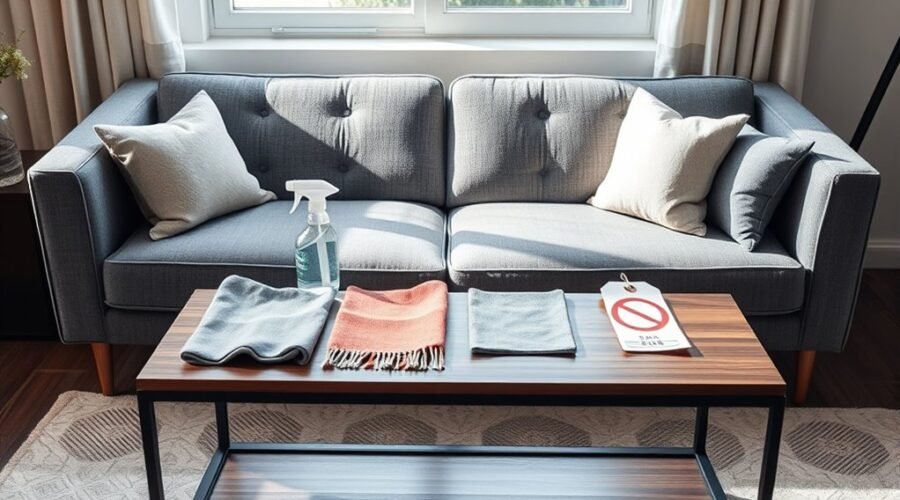
Your sofa’s care tag is the safest place to start before you treat a spill or stain. Codes such as W, S, WS, and X tell you which broad type of cleaning method the upholstery manufacturer permits. They do not mean every cleaner, washing method, or cleaning machine in that category is automatically safe, so always read the complete label and follow any manufacturer-specific instructions.
Quick Answer
W means use an approved water-based upholstery cleaner, S means use a water-free solvent method, WS allows either appropriate water-based or solvent-based cleaning, and X means vacuuming or light brushing only. Follow the full furniture label, use as little cleaner as necessary, and pretest any permitted product in a hidden area.
Key Takeaways
Key Takeaways
- W means use water-based upholstery cleaning products; it does not mean the fabric can be soaked, machine-washed, or automatically steam-cleaned.
- S means use an appropriate water-free solvent method and avoid water-based cleaners.
- WS, sometimes written W-S, W/S, or SW, permits either an appropriate water-based or solvent-based method.
- X means routine care should be limited to vacuuming or light brushing, with no liquid cleaner.
- Pretest any permitted cleaner on an inconspicuous area and check for color, texture, pile, or finish changes after it dries.
- When the tag is missing, do not guess with a liquid cleaner. Check with the manufacturer, retailer, fabric supplier, or a qualified upholstery cleaner first.
What Sofa Cleaning Codes Mean
Sofa cleaning codes tell you which category of cleaning product is appropriate for the upholstery face fabric. They are a practical starting point for preventing water rings, shrinkage, color changes, pile distortion, and other avoidable damage.
W means a water-based upholstery product is permitted. S means use a water-free solvent method. WS means either an appropriate water-based or solvent-based cleaner may be used. X means no routine liquid cleaning: use vacuuming or light brushing instead. Ashley’s current care and cleaning guidance uses these same basic distinctions.
Use the cleaning code as the first restriction, then follow the complete instructions for your exact sofa and fabric.
The letter is not permission to use every product in a category. A W code, for example, does not mean you should soak the upholstery, remove a cushion cover and wash it, or run a steam cleaner over the sofa. Construction, backing, dyes, finishes, and cushion materials can have their own limitations.
Note: WS may also appear as W-S, W/S, or SW. Follow the exact wording on your furniture label because manufacturers may provide additional instructions beyond the letter code.
Cleaning Code Cheat Sheet
| Code | Generally Permitted | Avoid |
| W | Manufacturer-approved water-based upholstery shampoo or foam | Solvent spot cleaners, oversaturation, unapproved washing or extraction |
| S | Appropriate water-free upholstery solvent method | Water and water-based detergents |
| WS / W-S / SW | Appropriate water-based or water-free solvent cleaning | Oversaturation, aggressive scrubbing, untested products |
| X | Vacuuming or light brushing | Water, solvent, shampoo, foam, and other liquid spot cleaners |
Warning: A cleaning code describes permitted cleaning chemistry; it does not automatically make removable cushion covers washable. Do not machine-wash, hand-wash, or separately dry-clean a cover unless the manufacturer specifically says you can.
Where to Find the Cleaning Code Tag
Before you clean, look for the sofa’s care or cleaning tag. It is commonly tucked under the seat cushions, attached beneath the furniture, sewn to the frame, or placed along the back or side. The label may contain the cleaning code along with fiber, flammability, manufacturing, or other information.
| Location | What to look for |
|---|---|
| Under cushions | A sewn-in label or tag |
| Furniture frame | A fabric or paper care label |
| Armrest side | A tag along a hidden edge or seam |
| Sofa back or underside | A rear or bottom label panel |
Read the full cleaning instructions before starting any care routine. If the tag is missing, check the purchase paperwork, manufacturer website, retailer listing, or fabric specification if you have it. Upholstery cleanability labeling is voluntary rather than part of the federal clothing Care Label Rule, according to the Drycleaning & Laundry Institute, so older, custom, or reupholstered furniture may not have a useful code.
If you still cannot identify the approved method, limit home care to vacuuming or gentle dry soil removal until the manufacturer or a qualified upholstery professional can advise you. A hidden test does not make an otherwise incompatible cleaner safe.
W Code: Water-Based Cleaning
A W code means the upholstery can generally be spot-cleaned with a manufacturer-approved water-based upholstery shampoo or foam cleaner. It does not mean the fabric should be saturated, removed and washed, or treated with a solvent cleaner.
Blot fresh spills promptly with a clean, absorbent white cloth. Use only a small amount of an appropriate water-based product, and let the area dry completely before using the sofa again.
Do not oversaturate the fabric. Excess liquid can travel into the backing, cushion filling, seams, or frame even when the face fabric itself is water-cleanable.
Water-Based Cleaning Basics
If your upholstery has a W code, start by vacuuming loose soil. Then pretest the cleaning product on a hidden area. Let the test spot dry and check for dye transfer, rings, texture change, pile distortion, or other visible differences.
When treating a fresh spill, blot rather than scrub. Work from the outside edge of the spot toward the center so you do not spread the stain. Keep pressure controlled and use as little moisture as the cleaning process requires.
Some furniture makers recommend distilled water for rinsing because minerals in tap water can mark certain upholstery. For example, Room & Board’s upholstery-care guidance recommends distilled water when a spot-cleaner procedure calls for a water rinse. Treat this as fabric-specific guidance rather than part of the definition of a W code.
Pro Tip: A good spot test checks more than color. Let the test area dry completely and compare its texture, sheen, pile direction, softness, and edge marks with the surrounding fabric before treating a visible stain.
Best Cleaning Products
For W-code upholstery, choose water-based products specifically intended for upholstery, such as an approved upholstery shampoo or foam cleaner. Follow both the sofa manufacturer’s instructions and the cleaner label.
Do not substitute a dry-cleaning solvent merely because it is described as mild. Current guidance from both Ashley and La-Z-Boy instructs owners not to use solvent spot cleaners on W-code upholstery.
Apply the water-based cleaner lightly and follow its directions for blotting, agitation, rinsing, or residue removal. Foam products can help limit the amount of liquid introduced into the upholstery, but even a foam cleaner can cause trouble if the fabric becomes overly wet.
A W code also does not automatically approve hot-water extraction or steam cleaning. Check the furniture manufacturer first; La-Z-Boy, for example, states that hot-water extraction or steam cleaning is not recommended for its W-code upholstery.
Drying And Blotting
After cleaning W-code upholstery, blot excess moisture with a clean white cloth instead of rubbing aggressively. Continue with light pressure until you are no longer lifting significant moisture or soil.
If the approved procedure requires a rinse, use only the amount needed to remove cleaner residue. Do not soak the cushion or assume that more water produces a better result.
Let the upholstery dry fully before normal use. Keep air moving through the room when appropriate and follow the manufacturer’s drying instructions. Persistent dampness is undesirable because porous upholstery materials can support mold when they remain wet. The CDC’s mold guidance specifically warns about soaked upholstery and other materials that cannot be dried promptly.
If a stain remains after the area dries, reassess the stain and product instructions rather than repeatedly saturating or scrubbing the same spot.
With W-code fabric, controlled moisture, correct chemistry, careful blotting, and complete drying give you the best chance of cleaning without damaging the upholstery.
S Code: Solvent-Only Cleaning
The S code means water-based cleaning is not the approved method. Use only an appropriate water-free upholstery cleaning solvent or professional process that matches the furniture manufacturer’s instructions.
Water can cause problems such as visible rings, shrinkage, texture changes, or other damage on upholstery labeled for solvent-only care. Do not substitute a damp cloth, detergent solution, or household water-based stain spray.
Before treating a visible area, pretest the permitted solvent in an inconspicuous spot and let it dry. Check for color transfer, fading, finish change, or texture damage. Use only the amount directed by the product and furniture manufacturer.
Follow all safety directions on the solvent product label, including ventilation, storage, and any warnings concerning heat or ignition sources. Do not mix cleaning products.
If the stain is large, the upholstery is valuable, the label recommends professional service, or you are uncertain which solvent is appropriate, professional upholstery cleaning is the safer choice. Professional cleaners can inspect the fiber, construction, dyes, finish, and soil before choosing a process.
WS Code: Water or Solvent
With a WS code, you have more flexibility: an appropriate water-based or water-free solvent-based cleaning method may be permitted. The same code can appear as W-S, W/S, SW, or a similar manufacturer notation.
That flexibility does not mean every cleaner is safe. Read the complete label, choose the mildest suitable method, use limited moisture, and pretest the product before treating the visible upholstery.
Water Or Solvent Options
For a WS-coded sofa, water-based upholstery products can be useful for many ordinary water-soluble spills, while an appropriate solvent method may be needed for certain oily soils. The stain type, fabric construction, finish, and manufacturer instructions should guide the choice.
If a water-based procedure includes rinsing, distilled water may help reduce mineral spotting on fabrics for which the manufacturer recommends it. If you choose a solvent product, make sure it is intended for upholstery and permitted by the furniture instructions.
Keep routine care simple: vacuum regularly, address spills promptly, and avoid letting soil build up. For delicate, valuable, heavily soiled, or uncertain upholstery, a professional cleaner can evaluate the fabric before treatment.
Spot Test First
Before cleaning a WS-coded sofa, apply a small amount of the chosen product to a hidden area such as the rear edge, skirt, or inconspicuous seam, as long as that area uses the same fabric.
Do not scrub the test spot. Follow the product directions, let the area dry completely, and inspect it in good light. Look for color loss, dye transfer, rings, stiffness, sheen changes, pile distortion, shrinkage, or finish damage.
If anything looks or feels different after drying, stop and choose another manufacturer-approved method or contact a professional.
Safe Cleaning Methods
A WS code gives you two broad cleaning routes, but the safest process still starts with inspection and restraint.
- Vacuum loose dust, crumbs, and grit before applying any cleaner.
- Blot a fresh spill to remove as much liquid as possible without spreading it.
- Choose a water-based or solvent-based method permitted by the furniture label.
- Pretest the product on a hidden area and let it dry completely.
- Use the smallest practical amount of cleaner and avoid soaking the upholstery.
- Let the treated area dry fully before judging the result or repeating treatment.
With steady maintenance and controlled spot cleaning, WS upholstery is often easier to care for than fabrics restricted to only one cleaning category.
X Code: Vacuum-Only Care
X-coded upholstery needs the most restrictive routine care. Vacuum the surface with an appropriate upholstery attachment or lightly brush it with a nonmetallic stiff-bristle brush when the manufacturer permits brushing.
For X-coded upholstery, routine care means dry soil removal: vacuum or brush lightly, and keep liquid cleaners off the fabric.
If you brush by hand, use light strokes rather than aggressive rubbing. Friction alone can alter the appearance of delicate pile or surface finishes.
Do not use water, detergent foam, upholstery shampoo, dry-cleaning solvent, or another liquid spot treatment unless the furniture manufacturer gives specific instructions that override the general X-code rule.
Because home stain treatment is so limited, preventive care matters. Keep food, drinks, wet clothing, and other spill risks away when practical, and vacuum before dust and grit become embedded.
If an X-coded sofa develops a significant stain, contact the manufacturer or an upholstery professional rather than experimenting with household cleaners.
How to Remove Sofa Stains Safely
To remove a sofa stain safely, start with the cleaning code and complete manufacturer instructions. The type of stain matters, but the fabric’s restrictions come first.
If you see W, use an approved water-based upholstery product. For S, use only the approved water-free solvent method. If the sofa is marked WS, either appropriate method may be possible after testing. For X, avoid home liquid spot cleaners and stick to vacuuming or light brushing.
For fresh spills, remove solids carefully and blot excess liquid with a clean white cloth. Do not grind the spill deeper into the fibers. Avoid aggressive scrubbing, which can spread the stain, distort pile, roughen fibers, or create a visible cleaned patch.
- Read the complete care tag.
- Vacuum or remove loose debris before adding cleaner.
- Blot fresh liquid; do not scrub it outward.
- Select only a cleaning method permitted by the code.
- Pretest the permitted cleaner in a hidden area.
- Work from the outside edge of the stain toward the center.
- Control moisture and allow the upholstery to dry fully.
- Stop if you notice color transfer, texture change, rings, or finish damage.
Warning: Do not assume a zippered cushion cover is washable. Removing and cleaning a cover separately can shrink or distort it or affect its backing, making it difficult or impossible to refit correctly.
Common Sofa Cleaning Mistakes to Avoid
- Using water on an S or X fabric: plain water can be incompatible with the upholstery even when the stain itself is water-soluble.
- Using solvent on a W fabric: W-code manufacturer guidance commonly prohibits solvent spot cleaning.
- Soaking W or WS upholstery: the permitted cleaner type does not mean the cushion, backing, or frame should become wet.
- Skipping the spot test: an allowed cleaning category does not guarantee colorfastness or finish compatibility.
- Scrubbing aggressively: friction can damage fibers, flatten pile, spread soil, or create a permanent texture difference.
- Assuming W means machine washable: upholstery cleaning codes and laundry washing instructions are not the same thing.
- Using a steam machine without checking: a W or WS code does not by itself authorize steam cleaning or hot-water extraction.
Sofa Care Tips to Prevent Damage
Once you understand the cleaning code, routine maintenance can reduce how often you need stain treatments or deep cleaning.
Vacuum the sofa regularly with a suitable upholstery attachment to remove dust, crumbs, pet hair, and grit before they become embedded. If a spill happens, blot it promptly with a clean, absorbent white cloth rather than rubbing it across the fabric.
Regular vacuuming and prompt blotting are simple ways to reduce embedded soil and keep small spills from becoming larger cleaning jobs.
Rotate and fluff removable cushions when the furniture design allows it so normal wear is distributed more evenly. Protect the sofa from prolonged direct sunlight when practical, because repeated UV exposure can fade many textile dyes and finishes.
Check the cleaning code every time you introduce a new spot-cleaning product. A cleaner that worked well on another sofa may be wrong for yours even if the fabrics look similar.
Also avoid assuming that more cleaner, more water, or harder scrubbing will remove a difficult stain. When a cautious first treatment does not work, identify the stain and review the manufacturer instructions before repeating the process.
When to Call a Professional Cleaner
- The code is missing or unclear: A professional can inspect the upholstery before liquid cleaner is applied.
- The label requires or recommends professional service: Follow that instruction rather than improvising at home.
- The sofa is X-coded and stained: Home liquid treatment is not appropriate under the normal X-code restriction.
- The stain is large, old, oily, or unknown: Repeated DIY treatments can make later removal harder.
- The fabric has a delicate pile, finish, or construction: Velvet-like surfaces and specialty textiles may need techniques beyond the letter code alone.
- You see dye transfer, rings, shrinkage, or texture change: Stop treatment before the damaged area becomes larger.
- The upholstery is heavily soiled overall: Whole-piece cleaning requires more control than isolated spot cleaning.
- Previous DIY cleaning failed: Do not keep adding different chemicals to the same area.
The current ANSI/IICRC S300 Standard for Professional Upholstery Cleaning covers professional inspection, fibers and construction, cleaning methods, spot and stain removal, equipment, and related procedures. For valuable or uncertain upholstery, using a qualified cleaner who follows recognized professional practices can reduce unnecessary experimentation.
Frequently Asked Questions
Where Can I Find the Sofa Cleaning Code?
Look under the seat cushions, beneath the sofa, along the frame, near a side or arm seam, or on the rear label. Read the entire tag rather than relying only on the letter. If you cannot find it, check the manufacturer, retailer, purchase records, or fabric specification before applying a liquid cleaner.
My Couch Has No Cleaning Code. What Should I Do?
Check beneath the cushions, under the frame, and along hidden seams first. If no code is available, contact the manufacturer or retailer or ask a qualified upholstery cleaner to identify the appropriate method. Until you know what the fabric permits, stick to vacuuming and gentle dry soil removal rather than experimenting with water or solvent.
What Does Clean Code S Mean on a Couch?
Code S means water-based cleaning is not the approved method. Use an appropriate water-free upholstery solvent or professional process permitted by the furniture manufacturer. Pretest the permitted product in a hidden area, use only the amount directed, and avoid water-based cleaners.
What Does the Ashley Furniture Cleaning Code “S” Mean?
Ashley Furniture states that code S upholstery should be cleaned only with a dry-cleaning solvent, should not be saturated, and should not be cleaned with water. Ashley also recommends routine vacuuming or appropriate brushing for general care. Always check the tag on your exact Ashley item because product-specific instructions may add further restrictions.
Does a W Cleaning Code Mean the Cushion Cover Is Washable?
No. W means an appropriate water-based upholstery cleaning product is permitted; it does not automatically mean a removable or zippered cover can be machine-washed, hand-washed, or removed for separate cleaning. Follow the furniture manufacturer’s specific cover-care instructions.
Can I Steam-Clean a W or WS Sofa?
Not based on the letter code alone. W and WS identify permitted cleaning-agent categories, but steam cleaning or hot-water extraction can introduce much more moisture and heat than spot cleaning. Check the complete furniture instructions first; some manufacturers specifically advise against hot-water extraction even on W-coded upholstery.
Sources
- Ashley — Care and Cleaning — manufacturer definitions and restrictions for W, S, WS/SW, and X upholstery codes.
- La-Z-Boy — Fabric & Leather Care — spot-testing, W/S/W-S cleaning restrictions, brushing, saturation, and extraction guidance.
- Room & Board — Fabric & Upholstery Care — cleaning-code guidance and distilled-water recommendations for appropriate rinsing procedures.
- Drycleaning & Laundry Institute — Cleanability Codes for Household Fabrics — code definitions, voluntary upholstery labeling context, and removable-cover cautions.
- IICRC — ANSI/IICRC S300 — current professional upholstery-cleaning standard and scope.
- CDC — Mold — moisture, drying, and wet-upholstery guidance.
Conclusion
A sofa cleaning code is simple once you know what the letters control: W for an approved water-based method, S for a water-free solvent method, WS for either appropriate option, and X for vacuuming or light brushing only. The important part is not to read more into the code than it actually says.
Check the complete tag, pretest permitted cleaners, control moisture, blot instead of scrubbing, and never assume a removable cover is washable. If the code is missing, the stain is difficult, or the fabric starts changing color or texture, stop experimenting and get manufacturer or professional guidance before a small spot becomes permanent damage.