Carnivore diet hair loss is a worry that tends to arrive a few months after the switch, when you least expect it. In many cases it is a temporary shedding pattern triggered by a big change, such as rapid weight loss or eating too little. In others it is a sign of an underlying problem that needs a proper check.
Quick Answer
Carnivore diet hair loss is often temporary shedding called telogen effluvium, which typically appears two to three months after a trigger such as rapid weight loss, under-eating, stress, or nutrient shortfalls. Hair usually regrows within three to six months once the trigger is dealt with. Patchy bald spots, a scalp rash, itching or pain, loss lasting beyond six months, or other symptoms like fatigue and irregular periods should be seen by a clinician.
Key Takeaways
- Cleveland Clinic says acute telogen effluvium appears about two to three months after the trigger and resolves in about 95 percent of cases.
- Rapid weight loss, restrictive diets, and nutrient shortfalls are recognized triggers.
- No studies specifically measure hair loss on carnivore diets; reports are anecdotal.
- Thyroid disease, iron deficiency, PCOS, and genetic pattern loss can look similar and need testing.
- Scalp rash, burning, pain, bald patches, or loss beyond six months point to a different cause.
What Temporary Shedding Looks Like
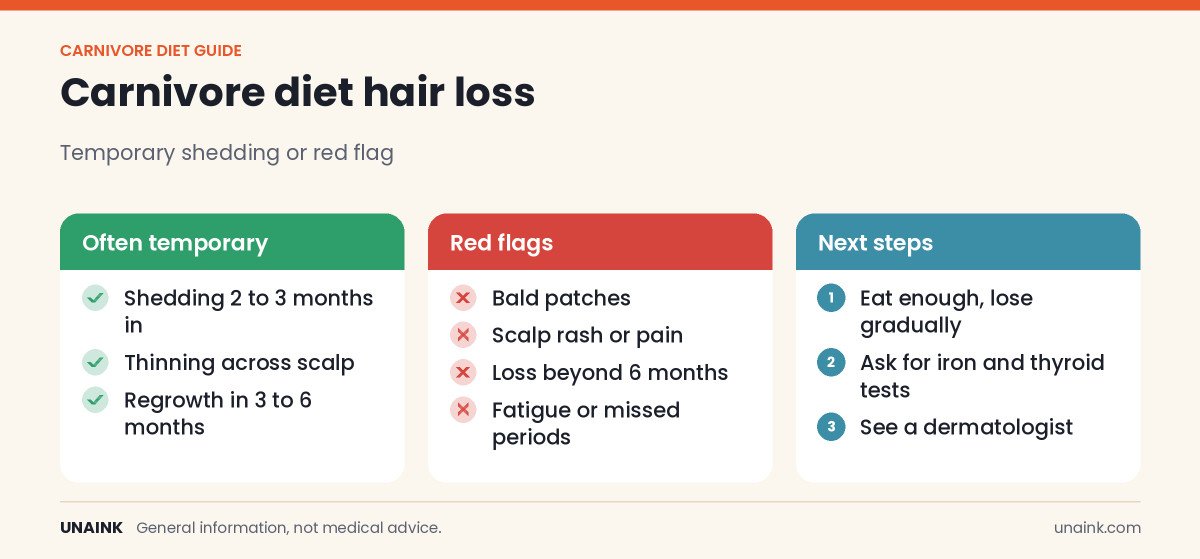
Most healthy people lose up to about 100 hairs a day. With telogen effluvium, daily loss can reach roughly 300, according to Cleveland Clinic. It typically thins the whole scalp rather than causing bald patches, and it does not normally affect the hairline or cause total baldness. Because shedding follows the trigger by two to three months, many people no longer connect it to the diet change that came before.
Why Carnivore Diet Hair Loss Can Happen
Cleveland Clinic lists rapid weight loss, fad diets lacking protein, and restrictive diets that cause nutrient deficiencies among triggers. Carnivore eating is rich in protein, but total calories can drop quickly, weight can fall fast, and entire food groups are removed. Stress from big lifestyle changes and illness also matter. The nutrients that support hair include iron, zinc, biotin, and vitamins A, B, C, D, and E, so deficiencies in any of these can contribute.
| Possible driver | Clue | Next step |
|---|---|---|
| Rapid weight loss | Shedding 2 to 3 months after a big drop | Slow the pace, eat enough |
| Under-eating | Fatigue, constant cold | Increase calories |
| Iron shortfall | Heavy periods, tiredness, pale skin | Ferritin and blood count |
| Thyroid disorder | Cold, weight change, dry skin | Thyroid tests |
| Hormonal change | PCOS, postpartum, menopause | See a clinician |
| Scalp or autoimmune condition | Patches, rash, burning | Dermatology visit |
| Genetic pattern loss | Widening part or receding hairline | Dermatology visit |
Iron, Zinc, and Other Nutrient Gaps
Red meat is a rich source of well-absorbed heme iron, yet deficiency still occurs. The NIH notes that women with heavy menstrual bleeding are at higher risk, and that the adult RDA is 18 mg for premenopausal women versus 8 mg for men. Blood tests are far more informative than guessing. Read carnivore diet nutrient deficiency, carnivore diet for anemia, and what are organ meats. Avoid megadoses; supplements can cause harm, and biotin can interfere with some lab tests.
Is Carnivore Diet Hair Loss Temporary?
Usually yes if it is telogen effluvium. Cleveland Clinic says acute cases last less than six months, hair typically regrows within three to six months, and most cases resolve within six to eight months once the underlying cause is addressed. Chronic telogen effluvium lasts longer than six months. That timeline only holds if the trigger stops. Continued rapid weight loss, ongoing under-eating, or an untreated condition keeps the cycle going.
What You Can Do
- Eat enough calories and avoid crash dieting; aim for gradual change.
- Include variety, such as eggs, fish, and occasional organ meats, if your plan allows.
- Be gentle with hair: avoid tight styles and harsh heat or chemical treatments for a while.
- Ask for ferritin, blood count, thyroid, and vitamin D testing, especially if you menstruate.
- Manage stress and sleep.
- Give it time. Shedding often peaks and then slows over a few months.
Red Flags: When It Is Not Just Shedding
- Round or patchy bald spots, or sudden loss of eyebrows or lashes.
- Scalp rash, itching, burning, pain, or flaking, which Cleveland Clinic says telogen effluvium should not cause.
- Hair loss lasting beyond six months, or steadily worsening.
- Fatigue, cold intolerance, weight change, or irregular or missed periods alongside hair loss.
- Heavy periods with breathlessness or pale skin.
- New facial hair growth, acne, or other signs of hormone imbalance.
A clinician or dermatologist can examine the scalp and order tests. Pregnant or breastfeeding readers, teens, and anyone with a history of eating disorders should not try restrictive diets without medical guidance. See who should not do the carnivore diet.
Carnivore Diet Hair Loss: The Short Version
Carnivore diet hair loss is frequently a temporary shedding response that settles in months once calories, nutrients, and stress are addressed. If carnivore diet hair loss comes with patches, scalp symptoms, other health changes, or lasts past six months, get it evaluated.
Frequently Asked Questions
How soon after starting carnivore does hair fall out?
Telogen effluvium usually appears about two to three months after a trigger.
Will my hair grow back?
In acute telogen effluvium, regrowth usually begins within three to six months once the cause is handled.
Does eating only meat cause deficiencies?
It can leave gaps in some nutrients, and evidence is limited. Blood testing is the way to find out.
Should I take biotin?
Not without checking with a clinician. Hair loss is rarely caused by biotin deficiency, and biotin can interfere with some lab tests.
When should I see a dermatologist?
For bald patches, scalp symptoms, loss beyond six months, or if the shedding distresses you.
Conclusion
Shedding after a big diet change is common and often reversible, but it is also a prompt to check your calories, your nutrient status, and your overall health. Treat the red flags seriously and keep the plan gentle.
Medical note
This article is for general education and is not medical advice. Talk with a doctor or registered dietitian before making major diet changes, especially if you have a health condition, take medication, or are pregnant or breastfeeding.
Keep Reading
- Carnivore Diet Nutrient Deficiency: Where gaps may appear.
- Carnivore Diet and Thyroid Health: What is known.
- Carnivore Diet for Anemia: Iron and B12 questions.
- Carnivore Diet for PCOS: Hormones and diet.
Sources
- Cleveland Clinic: Telogen effluvium: Triggers, timing, duration, and red flags
- NIH ODS: Iron fact sheet: Iron needs, risk groups, and heme iron
- Cleveland Clinic: The carnivore diet: Nutrient concerns of the diet