The organ meat vs muscle meat question is really about what you get per bite. Steak and ground beef supply protein, iron, zinc, and B12, but organs like liver concentrate many of those nutrients and add others, such as choline and folate. The tradeoff is that some of those nutrients can be excessive if you eat organs too often.
Quick Answer
Organ meats are generally more nutrient dense than muscle meat, especially for B12, folate, choline, vitamin A, and iron. Muscle meat is milder, easier to eat in large amounts, and a better everyday protein source. Most people do well with muscle meat as the base and small portions of organs once or twice a week.
Key Takeaways
- Beef liver has roughly 30 times the B12 of 85 percent lean ground beef per 3 oz serving.
- Liver provides much more iron, folate, choline, and vitamin A than lean muscle cuts.
- A single serving of liver can exceed the adult upper limit for preformed vitamin A.
- Muscle meat is the practical staple and supplies zinc, protein, and iron in a mild form.
- Pregnancy, gout, kidney disease, and iron overload call for medical guidance before eating organs often.
Organ Meat vs Muscle Meat Nutrient Numbers
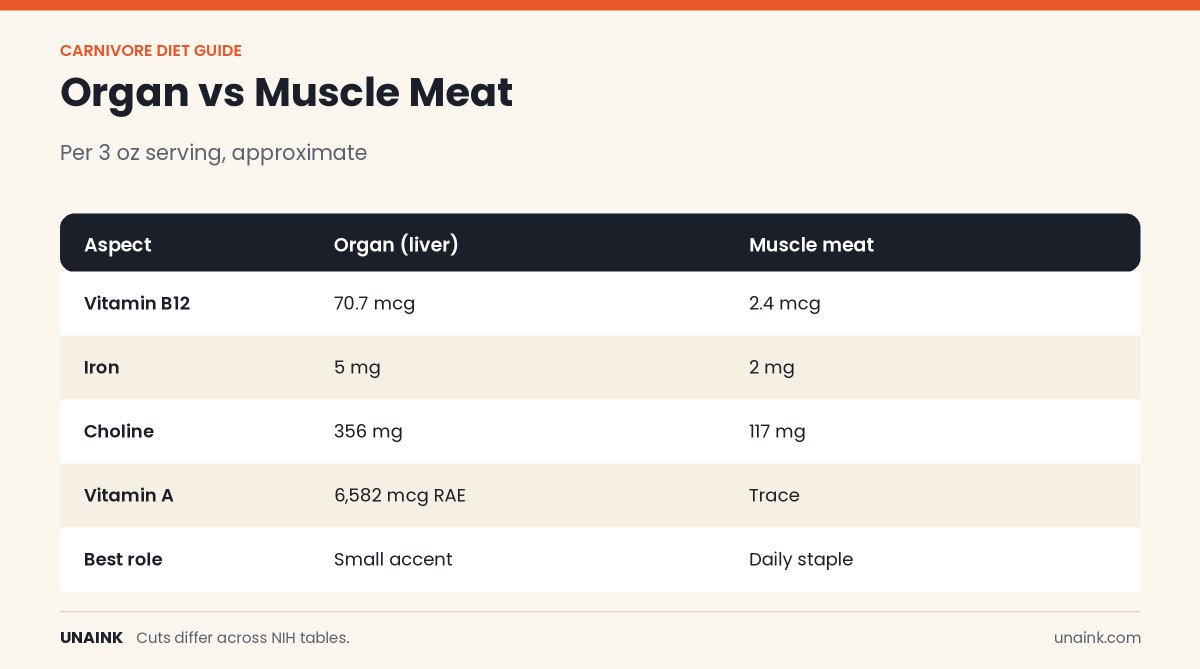
NIH Office of Dietary Supplements tables give a clear picture per 3 ounce serving. Pan-fried beef liver provides 70.7 mcg of B12, 215 mcg of folate, 356 mg of choline, and 5 mg of iron. By comparison, 85 percent lean ground beef provides 2.4 mcg of B12, braised bottom round gives 2 mg of iron, and braised top round gives 117 mg of choline.
| Per 3 oz | Beef liver | Muscle meat (example) |
|---|---|---|
| Vitamin B12 | 70.7 mcg | 2.4 mcg (85% lean ground beef) |
| Iron | 5 mg | 2 mg (braised bottom round) |
| Choline | 356 mg | 117 mg (braised top round) |
| Folate | 215 mcg | Low |
| Vitamin A | 6,582 mcg RAE | Trace |
| Zinc | Moderate | 3.8 mg (roasted bottom sirloin) |
The muscle examples are different cuts across NIH tables, so treat the comparison as a rough guide rather than an exact like-for-like test.
What Muscle Meat Does Better
- Protein in bulk, with an easy flavor and a wide range of cuts.
- Zinc and heme iron in a form many people absorb well.
- Fat for energy, especially from fattier cuts like ribeye and ground beef.
- Ease: nobody needs a recipe to enjoy a burger.
Heme iron from meat is absorbed better than nonheme iron from plants, according to NIH. That is why even ordinary beef helps with iron needs.
The Limits of Organs
A 3 ounce serving of liver supplies about 6,582 mcg RAE of vitamin A, more than double the adult upper limit of 3,000 mcg RAE for preformed vitamin A. For that reason, many people eat liver once or twice a week in small portions rather than daily.
- Pregnancy: high preformed vitamin A is a concern, so ask an obstetric clinician before eating liver.
- Gout: organ meats are rich in purines, so ask a clinician.
- Hemochromatosis or iron overload: avoid heavy organ intake without medical advice.
- Copper-handling disorders such as Wilson disease: liver is very high in copper.
Taste and Cooking
Organs taste stronger. Liver is mineral and rich, heart is closer to steak, and kidney is sharp. Start with heart or chicken liver, or blend liver into ground beef for a milder start. Our guides to cooking beef liver and cooking beef heart help.
Cook liver to 145°F, and cook ground blends to 160°F, following USDA guidance.
A Practical Way to Combine Them
- Build most meals around muscle meat and fatty cuts.
- Add a small serving of liver or a liver blend once or twice a week.
- Rotate in heart, kidney, or other organs for variety.
- Adjust for health conditions, pregnancy, or supplements with a clinician.
See what organ meats are and nose to tail eating for more ideas.
Organ Meat vs Muscle Meat: The Short Version
Organ meat vs muscle meat is not a contest where one must win. Muscle meat is the dependable base, organs are the nutrient boosters, and the best organ meat vs muscle meat balance keeps portions of organs modest.
Frequently Asked Questions
Are organ meats healthier than muscle meat?
They are more nutrient dense for several vitamins and minerals, but not simply healthier. Excess vitamin A and copper are possible, so portions and frequency matter.
How often should I eat liver?
Many sources suggest one or two small servings per week for healthy adults, but your needs depend on health, pregnancy, and supplements. A clinician can advise.
Can I get the same nutrients from muscle meat alone?
You can get many, including B12, zinc, and iron, but not as concentrated. Folate, choline, and vitamin A are far lower in lean muscle meat.
Which organ is best for beginners?
Heart is often the easiest because it tastes and chews like steak. Chicken liver is a mild liver option.
Is organ meat safe during pregnancy?
High amounts of preformed vitamin A can be a concern in pregnancy, so talk with your obstetric clinician before eating liver.
Conclusion
Use muscle meat as your foundation and organs as the accent. A small, steady amount of liver or other organs can add a lot without crowding out the foods you enjoy.
Medical note
This article is for general education and is not medical advice. Talk with a doctor or registered dietitian before making major diet changes, especially if you have a health condition, take medication, or are pregnant or breastfeeding.
Keep Reading
- What Are Organ Meats?: The most nutrient-dense foods in the beef family.
- How to Eat Organ Meat: Easy ways to get started.
- Beef Liver vs Chicken Liver: Nutrients, taste, and safety compared.
- How to Cook Beef Heart: A beginner-friendly organ.
Sources
- NIH ODS: Vitamin B12 Fact Sheet: B12 in beef liver and ground beef.
- NIH ODS: Iron Fact Sheet: Iron in liver and beef, heme iron absorption.
- NIH ODS: Choline Fact Sheet: Choline in liver and beef top round.
- NIH ODS: Vitamin A Fact Sheet: Upper limit and liver content.
- NIH ODS: Zinc Fact Sheet: Zinc in beef and recommended intakes.