A cocktail table is a low, versatile table you use for drinks, snacks, or as a social focal point. You’ll usually see it in two height ranges: highboy models at about 40 to 42 inches for standing gatherings, and lowboy versions around 30 inches for seated use. That height difference changes how you place it, how people interact with it, and which space it suits best.
Key Takeaways
- A cocktail table is a low, versatile table used for drinks, snacks, and decor in social spaces.
- Most cocktail tables stand about 30 inches tall, though heights can range from 30 to 43 inches.
- Highboy cocktail tables are 40 to 42 inches tall and work well for standing gatherings or bar stools.
- Lowboy cocktail tables are around 30 inches tall and suit seated conversations and easier access.
- Cocktail tables are taller than coffee tables, which usually measure only 16 to 18 inches high.
What Is a Cocktail Table?
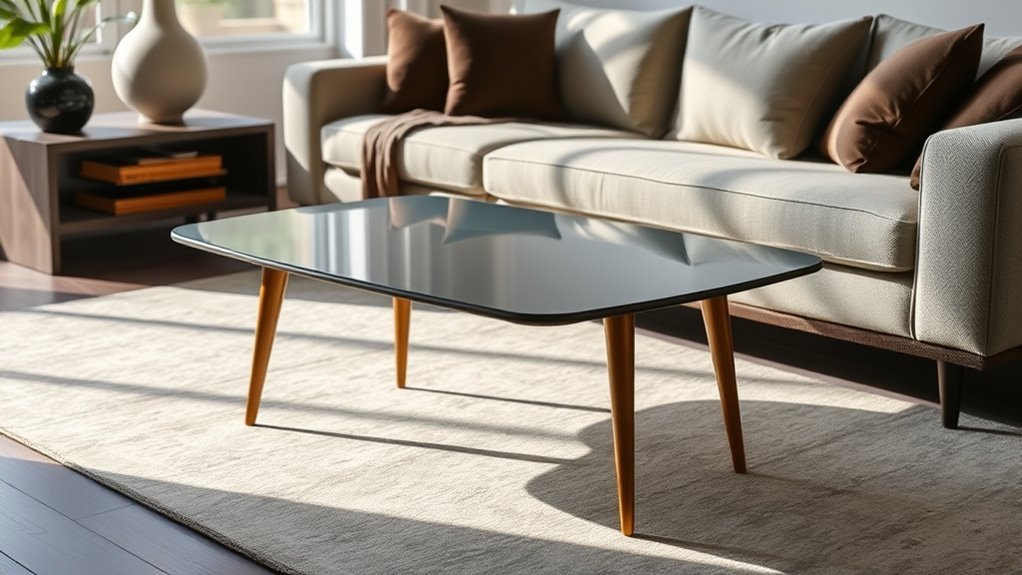
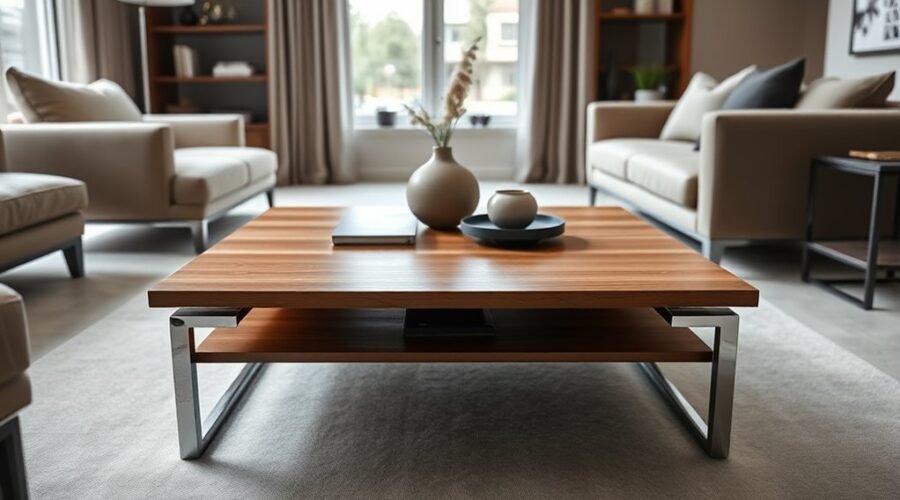
A cocktail table is a low, versatile table designed for drinks, snacks, and decor, often serving as a focal point in living rooms and lounges. You use cocktail tables to anchor social zones and support serving drinks without crowding the room.
Their height and proportions help you pair them with seating, so guests can converse and reach items comfortably. You’ll often see elegant finishes like glass or polished metal, which give the table a more refined look than a casual coffee table.
Height and proportion make cocktail tables easy to pair with seating, keeping conversation and drinks comfortably within reach.
Shapes vary too: round designs soften circulation, square forms maximize symmetry, and rectangular models stretch along seating arrangements. Some cocktail tables sit higher for standing interactions, while others stay lower for seated gatherings.
In every case, the table’s role is functional and visual, blending accessibility, style, and spatial efficiency in one compact centerpiece.
How Tall Is a Cocktail Table?
Cocktail table height typically falls between 30 and 43 inches, depending on whether you need a lowboy or a highboy model. When you compare models, you’ll see that cocktail tables are typically sized to match the event’s seating or standing format.
A standard cocktail table often measures about 30 inches, which aligns with dining-table height and supports seated conversations. Highboy versions rise to about 40 to 42 inches, so you can pair them with bar stools or use them for standing receptions.
Lowboy styles, by contrast, sit lower and suit relaxed, seated gatherings. The exact table height affects comfort, reach, and accessibility, so you should choose the height that supports your layout.
If you want smooth social interaction, match the standard cocktail table to your guests’ posture and movement needs.
Highboy Cocktail Table Dimensions
Highboy cocktail tables typically stand 40 to 42 inches tall, which makes them well suited for standing receptions and informal mingling.
When you plan seating, pair these highboy cocktail tables with bar stools that measure about 28 to 32 inches in seat height so guests can sit comfortably without crowding the tabletop.
Pair highboy cocktail tables with 28- to 32-inch bar stools for comfortable seating without crowding the tabletop.
You’ll usually choose a 24-inch, 30-inch, or 36-inch diameter top, depending on how much surface area you need for drinks, plates, or display items. A round top supports easy circulation, while a square top can fit tighter layouts or more structured arrangements.
This height also keeps conversations at a more natural eye level, so you can maintain a relaxed, social rhythm during events.
Because the dimensions stay consistent across many models, you can estimate spacing, seating, and traffic flow with precision before you set the room.
Lowboy Cocktail Table Dimensions
When you choose a lowboy cocktail table, you’ll usually see a standard height of 30 inches, which matches a dining table.
You can expect top dimensions around 24 to 36 inches in diameter or length, with round and square profiles fitting different room layouts.
For seating clearance, you’ll want enough space for 4 to 6 people so everyone can reach drinks and snacks comfortably.
Standard Lowboy Height
Lowboy cocktail tables typically stand about 30 inches tall, putting them in the same general height range as dining tables. When you choose lowboy cocktail tables, you get a surface that works with seated use and keeps interaction natural. Cocktail tables generally sit lower than dining furniture, but these inches tall lowboy cocktail tables preserve comfortable reach for drinks and small plates.
| Feature | Measurement | Effect |
|---|---|---|
| Height | 30 inches | Matches seated ergonomics |
| Use | Drinks, plates | Supports social settings |
| Pairing | Chairs, lounges | Fits relaxed seating |
This height reduces bending, so you can converse, serve, and access items efficiently. The result is a stable, practical table that supports comfort during gatherings without sacrificing proportion or function.
Common Lowboy Top Sizes
With a standard height of 30 inches, lowboy cocktail tables are sized to pair naturally with seated arrangements. Their top dimensions typically range from 24 to 36 inches in diameter or length.
You can choose common top sizes that match your room layout and the number of chairs you use. A 24-inch top suits compact lounge settings, while 30- to 36-inch tops give you more usable surface for drinks, snacks, and decor.
The lowboy height keeps the table visually balanced beside seating, so it won’t dominate the space. In seated gatherings, these proportions support easy access and a relaxed flow.
You’ll get a practical surface that fits lounge areas and maintains clear, efficient circulation around the table.
Seating Clearance Guidelines
For comfortable seating clearance, you should place lowboy cocktail tables 12 to 18 inches from surrounding sofas or chairs, so guests can reach drinks and snacks without crowding the seating area. This seating clearance keeps circulation smooth and supports relaxed conversation around cocktail tables. Lowboy table height usually runs 16 to 18 inches, matching sofa cushions for easy access and balanced proportion.
| Dimension | Recommendation | Effect |
|---|---|---|
| Height | 16–18 in | Comfortable reach |
| Clearance | 12–18 in | Better movement |
| Length/diameter | 30–48 in | Serves 4–6 |
You’ll create a precise layout that feels open, functional, and inviting.
How Cocktail Table Shape Affects Space
When you choose a round cocktail table, you open the room visually and preserve clear circulation around it.
Rectangular tables can define seating zones more explicitly, but you’ll need to place them carefully so they don’t interrupt traffic paths.
The table’s shape directly affects flow, so you should match it to the room’s layout and intended use.
Round Tables Open Space
Round cocktail tables open up a room by removing sharp corners that can interrupt movement and crowd a space. You get smoother circulation because the round profile reduces collision points and supports easier guest flow in tighter layouts.
| Feature | Effect |
|---|---|
| Rounded edge | Softens movement paths |
| Central placement | Improves access |
| Compact footprint | Conserves space |
These round tables also encourage conversation, since guests can face one another without fixed angles limiting interaction. In smaller rooms, the circular form fits neatly without overwhelming the footprint, so you preserve usable space. The edge-free perimeter creates a more relaxed, inviting setting, and when you place the table centrally, you enhance mobility around it. That balance makes round cocktail tables a practical choice for social spaces where access, flow, and comfort matter.
Rectangular Tables Define Areas
Rectangular cocktail tables create clear boundaries in larger spaces, helping you define seating zones while keeping conversation organized.
When you choose rectangular tables, you can place them against walls or in corners, which preserves floor area and keeps the layout efficient. Their long edges support linear grouping, so guests can reach drinks and snacks without crowding.
You’ll also notice that these tables can hold more items than round options, including decorative accents and multiple glasses, without looking cluttered. That added capacity strengthens their practical role in formal settings.
Their strong visual presence gives the room a more structured, elegant character. If you want to define areas with precision, rectangular cocktail tables offer a controlled, functional shape that fits many larger interiors.
Shape Affects Flow
The shape of a cocktail table directly affects how people move through a room, and round or oval designs usually make circulation easier because they eliminate sharp corners. You’ll notice that this shape supports smoother flow, especially where seating sits close by.
- Round or oval tables improve access in compact spaces.
- They encourage conversation and a casual atmosphere.
- Square or rectangular tables add structure in larger rooms.
- They need 12–18 inches of clearance to protect flow.
When you choose a table, match the shape to the room’s traffic pattern. A round or oval profile keeps pathways open, while a rectangular form can work if you position it carefully.
That precision helps you balance function, comfort, and the room’s overall ambiance without blocking movement.
How to Choose the Right Cocktail Table Size
How do you choose the right cocktail table size? Start by measuring your floor space and leaving 12–18 inches of clearance around the cocktail table so you can move comfortably.
Then compare the table’s height to your seating: lowboys, around 30 inches, pair well with sofas, while highboys, up to 42 inches, suit bar stools.
You should also check how much surface area you need for drinks, books, and decor; a table that’s too small will feel inefficient, while one that’s too large will crowd the room.
In technical terms, the table’s visual weight matters too. Lighter materials help maintain openness in small rooms, while heavier construction can anchor larger spaces.
Unlike dining tables, a cocktail table is selected for proportion, access, and daily usability.
Match dimensions to your room’s layout, seating type, and function, and you’ll get a balanced result.
Cocktail Table vs. Coffee Table
Although people often use the terms interchangeably, a cocktail table and a coffee table differ in height, formality, and intended use. You’ll usually place a cocktail table in a more formal room, while coffee tables suit everyday seating areas.
Cocktail tables suit formal spaces, while coffee tables bring easy function to everyday seating areas.
- Height: cocktail tables typically measure 30 to 43 inches; coffee tables usually sit at 16 to 18 inches.
- Function: a cocktail table supports drinks and social interaction; coffee tables hold snacks, remotes, and books.
- Style: cocktail tables often use glass or polished metal for a refined look; coffee tables more often use rustic or industrial finishes.
- Origin: cocktail tables emerged in the 1920s; coffee tables trace back to Victorian living rooms.
If you need a statement piece, choose a cocktail table. If you want low, accessible surface area near a sofa, coffee tables fit better.
The right height shapes comfort, circulation, and visual balance in your space.
Frequently Asked Questions
What Is the Ideal Height for a Cocktail Table?
The ideal height for a cocktail table is usually 40 to 43 inches, so you can pair it with 28 to 32 inch bar stools comfortably.
You’ll want to match cocktail table styles to your seating arrangements and design considerations for easy conversation and balanced proportions.
This height lets you avoid awkward bending or stretching, while keeping a polished, elevated look that works well in social spaces and entertaining areas.
How Tall Is a 30 Inch Cocktail Table?
A 30-inch cocktail table stands about as tall as a standard dining table; when you hosted four friends last weekend, it probably felt like a compact stage for drinks and conversation.
You’ll find it fits many cocktail table styles, reflects common table height variations, and supports comfortable seating arrangements for 4–6 people.
Keep 12–18 inches of clearance around it, and you’ll improve movement, access, and overall room balance.
What Is the Typical Height of a Cocktail Table?
The typical height of a cocktail table is 30 to 42 inches, and you’ll usually see lowboy models near 30 inches and highboy styles around 40 to 42 inches.
You can match design styles, material choices, and functionality purposes to your event setup. Low tables work well for seated guests, while taller ones support standing interactions.
You’ll get better comfort and flow when you pair the height with your seating.
What Is the Difference Between a High Top Table and a Cocktail Table?
A high top table stands taller, around 40 to 42 inches, while you’ll find a cocktail table at about 30 inches.
You use high top styles for standing gatherings or bar stools, and cocktail tables for seated seating arrangements beside sofas or chairs.
Table materials may be similar, but the height changes function, access, and comfort.
In practice, you choose high tops for mingling and cocktail tables for relaxed service.
Conclusion
Now you can see why the cocktail table’s height matters so much. You’ll choose a highboy for standing guests, a lowboy for seated comfort, and the right shape to keep your space flowing. But there’s one last detail that changes everything: the table’s final purpose. When you match size, height, and setting, you don’t just fill a room—you control how people move, gather, and interact. That’s the difference between a table and a well-planned experience.