The suet vs tallow confusion is understandable, because the two words describe the same animal fat at different stages. Suet is the raw, hard fat from a cow. Tallow is what you get after melting, straining, and cooling it. Knowing which is which helps you shop, cook, and store each one properly.
Quick Answer
Suet is raw beef fat, usually from around the kidneys and loins. Tallow is suet that has been rendered, meaning slowly melted and strained into a smooth, shelf-stable cooking fat. Suet is used in traditional puddings and pastry, while tallow is used for frying, roasting, and searing.
Key Takeaways
- Suet is raw fat; tallow is rendered suet.
- Rendering removes bits of tissue and moisture, which makes tallow far more shelf-stable.
- Suet keeps only a few days in the refrigerator but freezes well for months.
- Tallow works for frying and searing; suet is used for traditional recipes and snacks.
- Both are high in saturated fat, so portion size still matters.
What Suet Is
Suet is the firm, crumbly fat found around a cow’s kidneys and loins. Butchers often sell it as kidney fat, and it is prized because it is cleaner and harder than the fat found beneath the skin or between muscles. Lamb and mutton also have some suet, though less of it.
Because it contains small amounts of connective tissue and water, raw suet spoils faster than finished fat. One rancher guide says to refrigerate it for about five days or freeze it for up to roughly six months.
What Tallow Is
Tallow is suet that has been melted at low heat, strained, and cooled. The process separates pure fat from tissue, so the end product is smooth, pale, and mild. Our beef tallow guide covers its uses in more detail.
A well-strained batch can sit sealed at room temperature for months, with some sources citing up to a year, and it lasts longer in the refrigerator or freezer. Always sniff for rancid odors before using older fat.
Suet vs Tallow: Side by Side
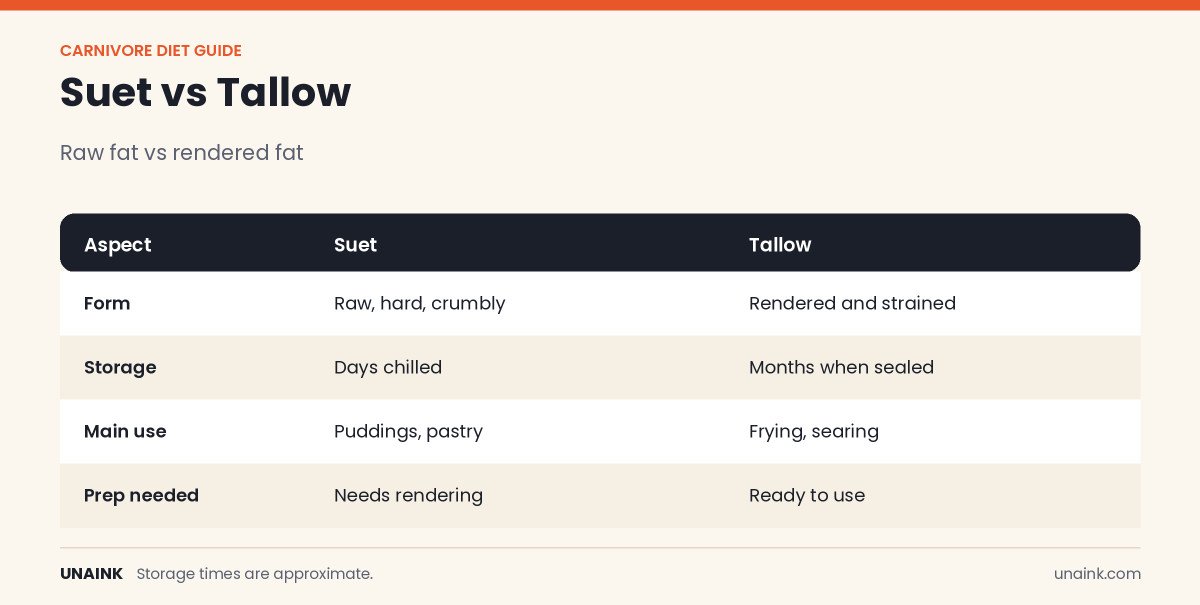
| Feature | Suet | Tallow |
|---|---|---|
| Form | Raw, hard, crumbly | Rendered, smooth, solid when cool |
| Melting point | Roughly 113 to 122°F | Same fat, but melts cleanly |
| Storage | About 5 days in the fridge; freezes well | Months in a cool place; longer chilled |
| Main uses | Puddings, pastry, mincemeat, bird feed | Frying, roasting, searing, baking |
| Prep needed | Needs rendering for most cooking | Ready to cook with |
How Suet Becomes Tallow
Rendering is simple and takes about an hour of low heat. A step-by-step version lives in our how to render beef tallow guide.
- Cut cold suet into small pieces, or grind it, so it melts evenly.
- Heat gently in a heavy pot or skillet, stirring now and then.
- Simmer until the fat is liquid and the bits turn crisp, about an hour.
- Strain through fine mesh or cheesecloth into clean jars.
- Cool, seal, and label the jars with the date.
Keep the heat low so the fat does not scorch, since burnt tallow tastes bitter. The crisp leftover bits, called cracklings, can be salted and eaten.
When to Use Each
- Use tallow for frying eggs, searing steaks, roasting, and basting.
- Use suet for traditional dishes such as steamed puddings, mincemeat, and some pastry, where its crumbly texture matters.
- Use fresh suet if you plan to render soon, and freeze it if you cannot.
- Compare tallow with other fats in tallow vs lard and beef tallow vs butter.
Health Notes
Both forms are mostly saturated and monounsaturated fat. One tablespoon of tallow has about 115 calories and roughly 6.4 g of saturated fat, according to USDA data. The American Heart Association suggests keeping saturated fat below 6 percent of calories, so people managing cholesterol should discuss animal fats with a clinician.
Suet vs Tallow: The Short Version
In the suet vs tallow comparison, suet is the raw fat and tallow is the finished product. Remember that suet vs tallow is really a question of preparation, so render the fat before you cook with it unless a recipe calls for suet itself.
Frequently Asked Questions
Is suet the same as tallow?
Not exactly. Suet is raw beef fat, while tallow is suet that has been rendered and strained. They start as the same material.
Can I use suet instead of tallow for frying?
Raw suet is not ideal for frying because it contains tissue and water. Render it first to make clean tallow.
Where do I buy suet?
Ask a butcher or rancher for kidney fat. Many will sell it cheaply or give it away with a meat order.
How long does rendered tallow last?
Sealed and kept cool, it can last for months, and longer in the refrigerator or freezer. Discard it if it smells rancid.
Is suet healthy?
It is a calorie-dense animal fat, high in saturated fat. It can fit into some diets in moderation but is not a health food.
Conclusion
Think of suet as the raw ingredient and tallow as the finished fat. With a bit of low heat and patience, one becomes the other, and either can have a place in a meat-based kitchen.
Medical note
This article is for general education and is not medical advice. Talk with a doctor or registered dietitian before making major diet changes, especially if you have a health condition, take medication, or are pregnant or breastfeeding.
Keep Reading
- What Is Beef Tallow?: The classic carnivore cooking fat.
- How to Render Beef Tallow: Step-by-step instructions.
- Tallow vs Lard: Beef fat and pork fat compared.
- Nose to Tail Eating: Using every part of the animal.
Sources
- Tru Organic Beef: What is Suet and Tallow: Rancher guide to the suet and tallow difference, rendering, and storage.
- Nutrition Advance: Beef Tallow Nutrition, Benefits, and Drawbacks: USDA-based nutrition for tallow.
- American Heart Association: Saturated Fats: Saturated fat guidance.