


Carnivore flu is the informal name for a cluster of flu-like symptoms that some people feel in the first days or weeks after cutting out carbohydrates. It is not an infection, and it often passes. But the same symptoms can also be a real illness, so it helps to know the timeline and the warning signs.
Quick Answer
Carnivore flu typically begins two to seven days after the body shifts to burning fat and usually lasts one to two weeks, though it can be as short as two days or as long as about a month. Typical symptoms include headache, fatigue, brain fog, irritability, nausea, cramps, and poor sleep. Fever, severe vomiting, chest pain, fainting, or symptoms that keep worsening are not normal adaptation and need medical care.
Key Takeaways
- The term describes ketogenic-style adaptation, and no controlled trials follow carnivore dieters specifically.
- Cleveland Clinic puts onset at 2 to 7 days and typical duration at 1 to 2 weeks.
- Dehydration and low sodium, potassium, and magnesium are likely contributors.
- Easing in, eating enough, and replacing salt and fluids are the main self-care steps.
- People on diabetes or blood pressure medicines should speak with their prescriber first.
What Carnivore Flu Feels Like
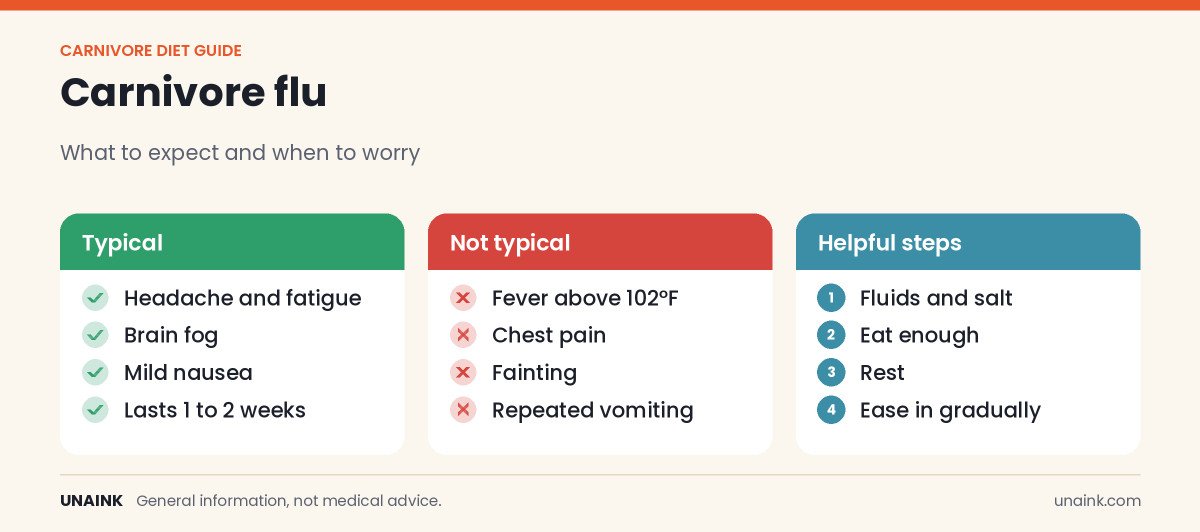
Cleveland Clinic lists brain fog, constipation or diarrhea, fatigue, hanger, headache, irritability, muscle cramps, nausea, trouble falling asleep, and upset stomach as common symptoms. It describes them as a sign the body is adapting, and says nobody can fully explain why some people get them and others do not. Most reports come from low carb and keto settings, and carnivore dieters often use the same label.
Carnivore Flu Timeline
| When | What people often notice |
|---|---|
| Days 1 to 3 | Hunger swings, irritability, lightheadedness |
| Days 2 to 7 | Headache, fatigue, brain fog, nausea |
| Week 1 to 2 | Symptoms often peak then ease |
| Week 2 to 4 | Most people feel steadier; some take about a month |
This table blends Cleveland Clinic timing with typical patterns. Individual experience varies, and it is not a promise.
Why It Happens
Cutting carbohydrates can lower stored water and reduce sodium, potassium, and magnesium intake, according to Cleveland Clinic. Insulin drops and the kidneys excrete more sodium and water, so dizziness and cramps are common. Also, you may be eating less than usual while your appetite adjusts. See carnivore diet ketosis and gluconeogenesis for the background.
What Helps
- Drink water and use sodium; read how much salt.
- Use a carnivore electrolyte drink or broth.
- Eat enough, with some fat, and do not try to restrict calories in week one.
- Rest and skip hard workouts until fatigue and cramps ease, as Cleveland Clinic advises.
- Prioritize sleep.
- Ease in. Cleveland Clinic suggests gradually reducing carbs instead of stopping all at once.
When It Is Not Just Carnivore Flu
A true cold, flu, COVID, or stomach bug can start in the same window and feel similar. Fever, chills, a sore throat, cough, or body aches suggest infection. Do not assume symptoms are only diet adaptation. Seek care for a fever above 102°F, a severe or sudden headache, confusion, a stiff neck, vision changes, chest pain, fainting, repeated vomiting, or signs of dehydration.
Medicine and Medical Cautions
Cleveland Clinic advises talking to a primary care provider first because medications for blood pressure and diabetes can make symptoms worse. For people taking SGLT2 inhibitors, the FDA has warned that ketoacidosis can occur even when blood sugar is not very high, and it lists low-carb eating and reduced calories among risk factors. Symptoms are nausea, vomiting, belly pain, unusual tiredness, and trouble breathing. These need urgent medical attention, and you should tell the clinician which medicines you take. Do not change medication on your own. Those with kidney disease, eating disorders, pregnancy, or breastfeeding should skip self-experimentation. Related: who should not do the carnivore diet.
Carnivore Flu: The Short Version
Carnivore flu is a short-lived adaptation pattern that usually fades within one to two weeks with fluids, salt, rest, and enough food. If carnivore flu symptoms are severe, include fever or chest pain, or last beyond a month, get medical advice.
Frequently Asked Questions
How long does carnivore flu last?
Cleveland Clinic gives a range of about two days to a month, with one to two weeks typical.
Can I prevent it?
You may lower the odds by cutting carbs gradually and keeping up fluids, salt, and food.
Is carnivore flu the same as keto flu?
They are described the same way. Both involve a sharp carbohydrate drop.
Should I take electrolytes?
Many people do. People with kidney disease or on certain medicines should check with a clinician first.
When should I get checked?
For fever, chest pain, fainting, severe vomiting, or symptoms that do not improve.
Conclusion
For most people the rough patch is short. Go slowly, drink, salt your food, eat enough, and rest. When something feels wrong in a way that does not match mild adaptation, treat it as an illness first and a diet question second.
Medical note
This article is for general education and is not medical advice. Talk with a doctor or registered dietitian before making major diet changes, especially if you have a health condition, take medication, or are pregnant or breastfeeding.
Keep Reading
- Carnivore Diet Electrolytes: Replace what you lose.
- How Long to Adapt: Adaptation timelines.
- Carnivore Diet Headache: Causes and relief.
- How to Start the Carnivore Diet: A gradual way in.
Sources
- Cleveland Clinic: Keto flu: Symptoms, timing, and remedies
- FDA: SGLT2 inhibitors and ketoacidosis: Warning symptoms and risk factors
- Mayo Clinic: Dehydration: Dehydration signs

[…] Carnivore Flu: Early adaptation symptoms explained […]
[…] Low calories, electrolyte shifts, poor sleep (see carnivore flu) […]
[…] Carnivore Flu: Other early adaptation symptoms. […]
[…] No good studies follow carnivore dieters through this phase, so use it as a rough guide and read carnivore flu for the full […]
[…] feel erratic for one to two weeks, which is the typical duration it gives for these symptoms. See carnivore flu for the broader […]