A carnivore diet for truckers has to survive truck stops, tight schedules and a cab with limited cooking space. It can be done with a cooler, a few reliable stops and some planning. This guide covers practical meals, cooler food safety and the health factors that make drivers a group worth being careful with.
Quick Answer
A carnivore diet for truckers works best when you pack a cooler with cooked meat, eggs and jerky, and fill gaps with simple truck stop orders like burgers without buns, bacon, eggs and rotisserie chicken. Keep cold food at 40°F or below, and talk with a clinician first if you take medicine or have a health condition.
Key Takeaways
- A cooler with ice packs and a thermometer is the foundation of eating this way on the road.
- Diners, grills and grocery stores offer plain meat and eggs at most stops.
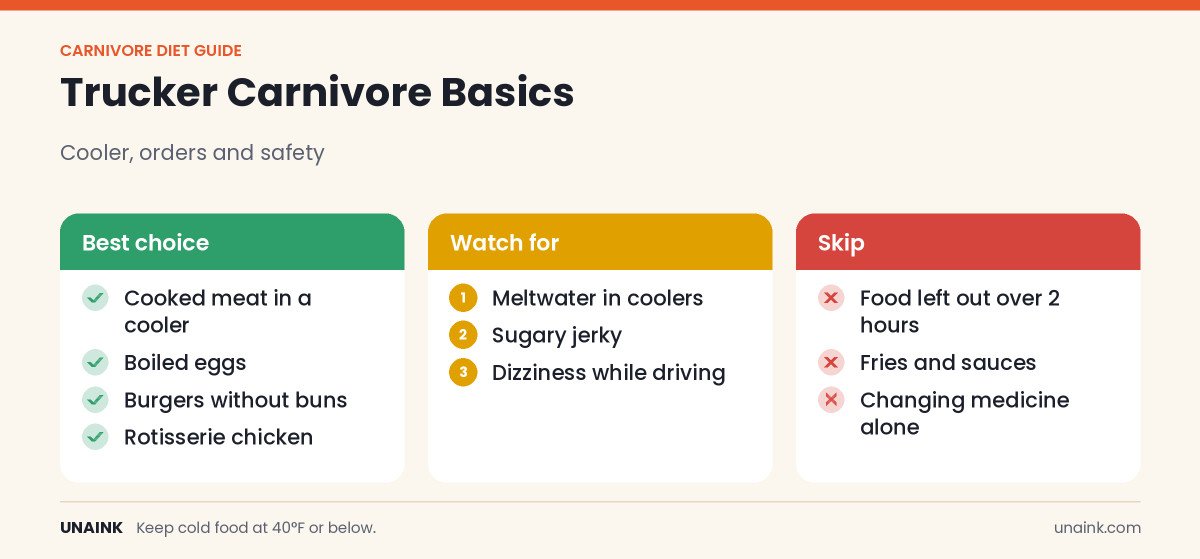
- Keep cold food at 40°F or below and throw out perishables left out more than 2 hours.
- Dizziness and fatigue during adaptation can affect driving, so start on a home stretch, not a long haul.
- Drivers have higher rates of obesity and other health risks, so medical guidance matters more than usual.
Why Truckers Look at This Diet
Long hours and limited choices push many drivers toward fast food. A 2010 survey of 1,670 long-haul drivers at 32 truck stops, published by the CDC, found that 69 percent were obese compared with 31 percent of the U.S. working adult population. Drivers also reported more smoking and more risk factors at once.
Those numbers explain the interest in simple, filling meals, but the carnivore diet itself has limited research behind it. A 2026 scoping review found only nine human studies and called the evidence very limited.
Carnivore Diet for Truckers: Stocking the Cooler
Cooked meat travels well when it is kept cold. Use a hard-sided cooler, plenty of ice or frozen gel packs, and a small thermometer. Good choices include:
- Hard-boiled eggs, peeled or in the shell
- Pre-cooked burger patties, meatballs or sausages
- Sliced roast beef or cooked steak strips
- Rotisserie chicken bought hot and chilled quickly
- Beef sticks and jerky with short ingredient lists
- Canned sardines or tuna for emergencies
Our homemade jerky guide and meal prep plan show how to cook once and eat for several days.
Cooler Food Safety on the Road
The USDA says cold food should be kept at 40°F or below, and perishable food left out more than 2 hours should be discarded. That limit drops to 1 hour when the air is above 90°F, which is easy to reach in a parked cab. Cooked meat keeps 3 to 4 days in the refrigerator, and ground meat is best used within 1 to 2 days.
| Food | Cold storage limit | Tip |
|---|---|---|
| Cooked beef, chicken or pork | 3 to 4 days at 40°F or below | Pack in small containers |
| Hard-boiled eggs | Use within about a week | Keep cold, away from meltwater |
| Raw ground meat | 1 to 2 days | Avoid carrying raw meat unless frozen |
| Reheated leftovers | Reheat to 165°F | Check several spots |
Meltwater can spoil the food at the bottom, so keep items in sealed containers or bags.
Truck Stop and Grocery Orders
Most restaurants will serve a plain plate. Order a double burger without the bun, eggs with bacon or sausage, a steak with extra butter, or grilled chicken without seasoning blends. Ask for no sauces or fries. Grocery stores near stops often sell rotisserie chicken, deli meat and boiled eggs.
For more restaurant tactics, see eating out on a carnivore diet and carnivore diet while traveling.
Safety Behind the Wheel
The first one to two weeks can bring tiredness, headaches and dizziness, covered in our fatigue guide and dizziness guide. Those symptoms are a risk when you are driving. Start the change during time off, drink water and add salt as discussed in the electrolytes article, and do not push through lightheadedness at the wheel.
The CDC also recommends seven or more hours of sleep a night for drivers. Diet will not replace rest.
Talk With a Clinician First
Drivers often take blood pressure or diabetes medicine, and a very low carbohydrate diet can change how those drugs work. Do not stop or adjust any prescription without your clinician. If you have kidney disease, a history of disordered eating or heart disease, check first. Ask about lab work after a few months.
Carnivore Diet for Truckers: The Short Version
A carnivore diet for truckers depends on a well-packed cooler, simple restaurant orders and a careful start. If you try a carnivore diet for truckers, keep food at 40°F or below and get medical advice, since driving raises the stakes for dizziness and fatigue.
Frequently Asked Questions
Can I keep meat in a truck cooler for several days?
Cooked meat lasts 3 to 4 days if the cooler stays at 40°F or below. Replace ice often and check with a thermometer.
What can I eat at a truck stop?
A burger without a bun, eggs with bacon or sausage, grilled steak or chicken, and rotisserie chicken from a nearby store.
Is jerky okay on the road?
Yes, if it has a short ingredient list. Many brands add sugar, so read the label.
Will I be tired while driving?
Some people feel tired or dizzy in the first weeks. Start during time off and stop driving if you feel lightheaded.
Do I need a doctor first?
Yes, if you take medicine or have a condition. Truck drivers face higher rates of obesity and related risks, so medical guidance helps.
Conclusion
Eating carnivore on the road is more about logistics than willpower. Pack a cold, tidy cooler, learn a few dependable orders and begin when you can rest. Check in with a clinician, because drivers have more to gain from medical support than most.
Medical note
This article is for general education and is not medical advice. Talk with a doctor or registered dietitian before making major diet changes, especially if you have a health condition, take medication, or are pregnant or breastfeeding.
Keep Reading
- Carnivore Diet While Traveling: Airport, hotel and road trip eating.
- Eating Out on a Carnivore Diet: How to order at restaurants.
- Carnivore Diet Meal Prep: Cook ahead for cooler-friendly meals.
- How to Make Beef Jerky at Home: A portable, shelf-friendly snack.
Sources
- CDC NIOSH: Obesity and Other Risk Factors in Long-Haul Truck Drivers: Survey of 1,670 long-haul drivers.
- CDC NIOSH: Health of Long-Haul Truck Drivers: Health risks and sleep recommendations.
- USDA FSIS: Leftovers and Food Safety: Cold holding, 2-hour rule and storage times.
- Nutrients 2026 scoping review of the carnivore diet: Limited human evidence.