Knowing how to break a fast on carnivore diet matters because the first meal after a long gap is when many people feel cramps, nausea, or a heavy, sloshy stomach. Meat is dense in protein and fat, and a huge, rich meal on an empty stomach can be uncomfortable. A slower, softer start usually goes better.
Quick Answer
Start with a small portion of something gentle, such as a cup of bone broth, a couple of eggs, or a few ounces of tender ground beef. Wait 20 to 30 minutes, then eat the rest of your meal slowly. The longer the fast, the smaller and gentler the first bite should be.
Key Takeaways
- Start small after any fast, and the longer the fast, the smaller the start.
- Broth, eggs, and tender ground meat are easier first foods than a large fatty steak.
- Drink water and replace salt before and during your first meal.
- Fasts of 48 hours or more, or any fast with medication, call for medical guidance.
- Refeeding problems are mainly a risk after prolonged starvation, not a typical daily eating window.
Why the First Meal Can Upset Your Stomach
After hours without food, your gut is quiet. A large meal of fatty meat arrives all at once, and fat slows stomach emptying, so fullness, nausea, or reflux can follow. Eating fast and swallowing air makes it worse.
Dehydration and low sodium can add to the problem. Many people on very low-carb eating lose more water and salt early on, which can leave you lightheaded or crampy when you finally eat.
How to Break a Fast on Carnivore Diet Step by Step
- Rehydrate first. Sip water, and add salt or an electrolyte drink if you usually need it. See carnivore diet electrolytes.
- Eat something light. A cup of bone broth, two soft eggs, or a small portion of fish works well.
- Pause for 20 to 30 minutes. This is a practical rule of thumb, not a studied one. Notice how you feel.
- Add protein with moderate fat. Ground beef, a smaller steak, or chicken thighs are reasonable.
- Return to a normal meal once your stomach feels settled, eating slowly and stopping when satisfied.
What to Eat First, by Fast Length
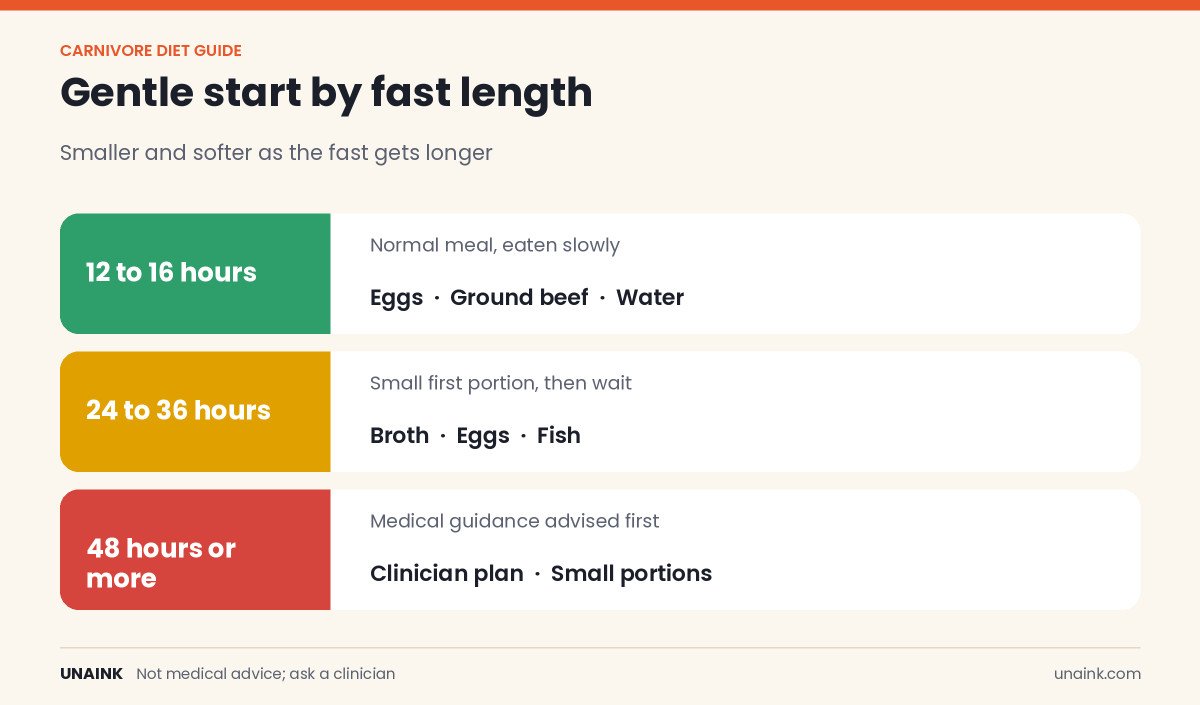
| Fast length | Gentle first foods | Go easy on |
|---|---|---|
| 12 to 16 hours (daily window) | Eggs, ground beef, a normal-sized portion | Eating very fast |
| 24 to 36 hours | Broth, then eggs or fish, then a normal meal | Large, very fatty cuts at once |
| 48 hours or more | Small sips of broth and small portions, spaced out | Big meals; seek medical guidance first |
These are common-sense starting points, not clinical protocols. If you are unsure, shorter fasts and smaller first portions are the safer direction.
Foods and Habits That Often Cause Trouble
- A large, fatty ribeye or a pan of bacon as the very first food.
- A big glass of milk, which some people tolerate poorly because of lactose.
- Eating in under 10 minutes.
- Alcohol on an empty stomach.
- Skipping salt and water, then eating a heavy meal.
If nausea keeps showing up, read carnivore diet nausea and the fat factor for more causes.
Refeeding Syndrome: When It Is a Real Concern
Refeeding syndrome is a set of dangerous shifts in phosphate, potassium, and magnesium that can follow restarting food after starvation. A StatPearls review lists risk factors such as low body weight, unintentional weight loss, eating disorders, and heavy alcohol use, and most cases occur when feeding restarts after prolonged starvation.
That source focuses on starvation and hospital patients, not on short intermittent fasts. Still, anyone planning a fast of multiple days should do it with medical supervision and a clear plan for the first meals.
Who Should Be Careful or Avoid Fasting
Fasting is not appropriate for everyone, and a carnivore diet adds its own questions. Talk with a clinician first if you:
- Take insulin, sulfonylureas, SGLT2 inhibitors, blood pressure drugs, diuretics, or GLP-1 medicines, since fasting can change how these act.
- Have diabetes, kidney disease, or a history of eating disorders.
- Are pregnant, breastfeeding, a teen, or a child.
- Are underweight or recovering from illness.
Never change or stop a medicine on your own because of a fasting plan. Your care team can tell you what is safe.
Break a Fast on Carnivore Diet: The Short Version
The simplest way to break a fast on carnivore diet is to rehydrate, start with a small gentle portion, wait a short while, and then eat a normal meal. When you break a fast on carnivore diet after 48 hours or more, or while on medication, involve a clinician.
Frequently Asked Questions
What is the best first food to break a fast on carnivore diet?
Bone broth, soft-cooked eggs, or a few ounces of tender ground beef are common gentle choices. There is no single proven best food.
Why do I feel sick after eating a big steak post-fast?
A large, fatty meal on an empty stomach slows digestion and can cause nausea or fullness. Smaller portions and slower eating often help.
Do I need electrolytes when I break a fast?
Many people find salt and fluids help, especially on very low-carb eating. Needs vary, so ask a clinician if you have heart, kidney, or blood pressure conditions.
Is refeeding syndrome a risk with intermittent fasting?
It is mainly reported after prolonged starvation in high-risk people. The review cited here does not address short fasts, so extended fasts should be medically supervised.
Can I combine fasting and carnivore if I have diabetes?
Only with medical guidance. Fasting and low-carb eating can both lower blood sugar, which matters if you take glucose-lowering drugs.
Conclusion
A gentle first meal protects your stomach and makes fasting easier to repeat. Keep the first portion small, drink fluids, and let your appetite and comfort guide the rest. For deeper background on timing, see combining carnivore and intermittent fasting.
Medical note
This article is for general education and is not medical advice. Talk with a doctor or registered dietitian before making major diet changes, especially if you have a health condition, take medication, or are pregnant or breastfeeding.
Keep Reading
- Carnivore Diet and Intermittent Fasting: How to combine the two safely.
- Carnivore Diet Electrolytes: Salt, potassium, and magnesium basics.
- How to Make Beef Bone Broth: A gentle first food after a fast.
- Carnivore Diet Nausea: Why meat can make you feel queasy.
Sources
- StatPearls: Refeeding Syndrome: Risk factors and electrolyte shifts.
- Cleveland Clinic: The Carnivore Diet: Overview of risks and limited evidence.
- Nutrients scoping review of the carnivore diet (2026): Evidence is limited and mostly self-reported.