

Nose to tail eating means using the whole animal, from muscle meat to organs, fat and bones, instead of eating only the familiar steaks and chops. It began as a practical way to waste less food, was popularized by chefs such as Fergus Henderson, and has become a core idea in carnivore circles because different parts of the animal supply different nutrients. This guide explains what nose to tail eating is, why whole-animal nutrition matters, what is on the plate, and how to start without feeling overwhelmed.
Quick Answer
Nose to tail eating is the practice of eating every edible part of an animal, including organs, fat, bones and connective tissue. It matters because organ meats and bone-based foods supply nutrients such as vitamin A, B12, iron and collagen that muscle meat alone has less of. It also reduces waste. The trade-offs are strong flavors, high vitamin A from liver and the need to cook everything safely.
Key Takeaways
- Nose to tail eating uses the whole animal: muscle meat, organs, fat, bones and connective tissue.
- Organ meats such as liver and heart add vitamins and minerals that muscle meat provides in smaller amounts.
- Fat, bone broth and marrow supply energy and collagen-rich foods.
- Liver is very high in vitamin A, so keep portions small and avoid it in pregnancy unless advised.
- Cook variety meats to at least 160°F and buy from trusted sources.
What Is Nose to Tail Eating?
Nose to tail eating is a way of cooking and eating that treats the whole animal as food. Traditional kitchens around the world have always worked this way, using every cut from cheek to trotter. Modern supermarkets sell mostly muscle meat, so the idea now feels radical, even though it is old.
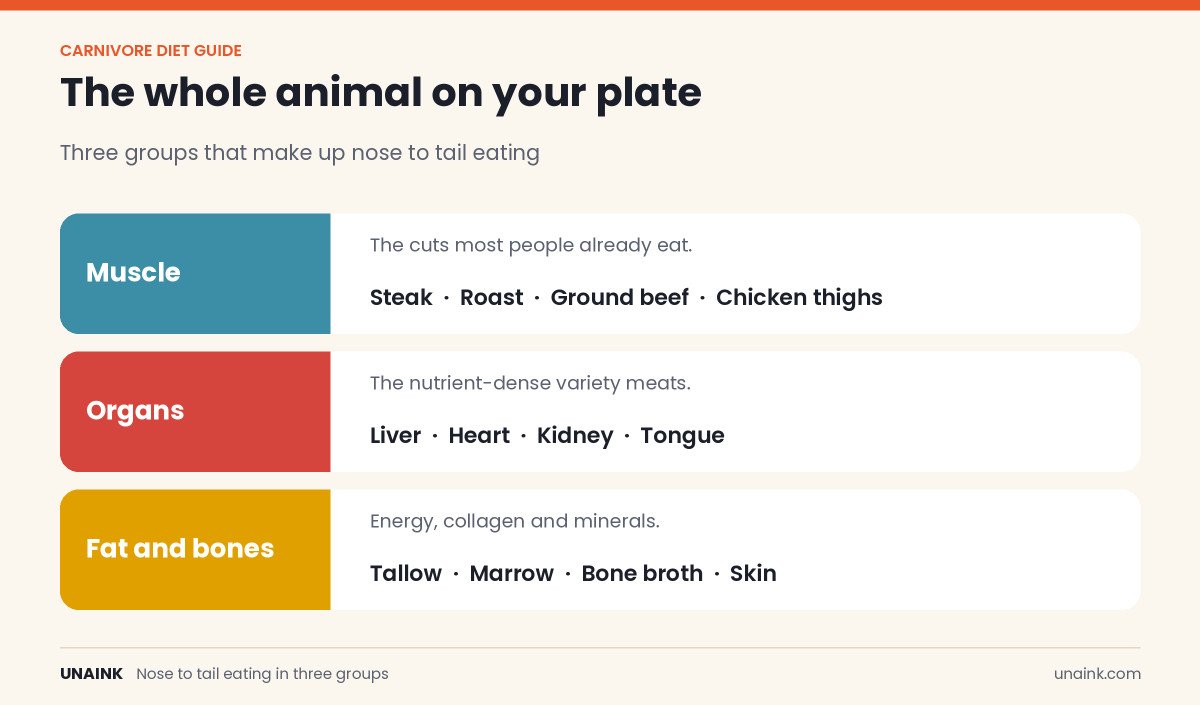
In the carnivore community, the approach is often called nose-to-tail carnivore. The aim is a single animal-based plan that gets its variety from different parts of the animal instead of from plants. See our overview of the carnivore diet for the wider context.
Why Whole-Animal Nutrition Matters
- Nutrient variety. Muscle meat is rich in protein, B12, iron and zinc, but organs add more of several vitamins and minerals. A plan that uses only steak can miss some of them.
- Gap filling. The 2026 scoping review of the carnivore diet flagged possible shortfalls in several nutrients. Organs, fish and eggs can help narrow some gaps, although not all, since fiber and vitamin C remain limited.
- Less waste. Using the whole animal respects the resources behind the meat and often lowers cost.
- More texture and flavor. Slow-cooked tongue, crisp marrow and rich broths give a plan built on animal foods more variety.
The evidence for health benefits is still limited. No trial has shown that nose to tail eating improves outcomes, so treat it as a sensible way to broaden nutrition, not a guaranteed advantage.
What Is on the Whole-Animal Plate?
| Part | What you get | Ways to use it |
|---|---|---|
| Muscle meat | Protein, B12, iron, zinc | Steaks, roasts, ground beef |
| Organs | Vitamin A, B12, iron, copper, selenium | Liver, heart, kidney, tongue. See what are organ meats |
| Fat | Energy and cooking fat | Tallow, suet, lard. See what is beef tallow |
| Bones and marrow | Minerals, collagen and rich flavor | Bone broth and roasted marrow |
| Skin and connective tissue | Collagen | Slow-cooked cuts, chicken skin chips |
How to Start Nose to Tail Eating
- Talk to a butcher. Ask for heart, tongue, liver, suet and soup bones. Many shops sell them cheaply.
- Start with the gentle ones. Heart and tongue taste closest to steak.
- Blend organs into ground beef. A small share of finely chopped liver or heart goes unnoticed in burgers.
- Make bone broth. Save bones and cook them into beef bone broth.
- Render your own fat. Suet makes clean tallow for cooking.
- Keep a weekly rhythm. Small organ portions once or twice a week are enough for most people.
Risks and Safety Notes
- Vitamin A and copper. Liver is extremely high in both. The adult upper limit for preformed vitamin A is 3,000 mcg RAE a day, and three ounces of beef liver contain about 6,582 mcg.
- Cooking temperature. USDA recommends cooking variety meats to at least 160°F, and fresh liver, kidney and tongue should be used within a day or two.
- Cholesterol and purines. Organs are high in both, which matters for people with high cholesterol or gout.
- Pregnancy. Liver is usually avoided because of its vitamin A content.
- Sourcing. Choose organs from healthy, well-raised animals and a trusted supplier.
Frequently Asked Questions
What does nose to tail eating mean?
It means eating the whole animal, including muscle meat, organs, fat, bones and connective tissue, not just popular cuts.
Is nose to tail eating healthy?
It can broaden nutrition because organs and bone-based foods supply nutrients that muscle meat has less of. There are no trials proving health benefits, and liver must be limited because of its vitamin A.
What organs should beginners start with?
Heart and tongue are the mildest and most steak-like. Liver is the most nutritious but the strongest, so start with small amounts.
How much organ meat is enough?
Small portions once or twice a week are enough for most people. A portion of liver can exceed the daily limit for vitamin A, so it should not be eaten daily.
Is nose to tail eating the same as carnivore?
Not exactly. Nose to tail eating is a way of choosing animal parts. It is often used within a carnivore diet, but it can also be part of a mixed diet.
Conclusion
Nose to tail eating makes sense as a way to widen the nutrients on a meat-based plan and to waste less. Start with mild organs, keep liver portions small, cook everything thoroughly and keep an eye on cholesterol and vitamin A. It is a practical upgrade to muscle-meat-only eating, not a cure-all.
Medical note
This article is for general education and is not medical advice. Talk with a doctor or registered dietitian before making major diet changes, especially if you have a health condition, take medication, or are pregnant or breastfeeding.
Keep Reading
- What Are Organ Meats?: types, nutrients and taste
- How to Eat Organ Meat: when you cannot stand the taste
- How to Make Beef Bone Broth: that gels every time
- What Is Beef Tallow?: uses, nutrition and how it is made
Sources
- Lietz, Dapprich and Fischer. Carnivore Diet: A Scoping Review. Nutrients, 2026: nutrient gaps on plant-free diets
- NIH Office of Dietary Supplements. Vitamin A fact sheet for health professionals: vitamin A in liver and the upper limit
- Michigan State University Extension. Are you throwing away valuable food? Part three: Meat: variety meats, USDA 160°F and storage
[…] helps. If you are not deficient, extra amounts add risk without a proven benefit. A pattern like nose-to-tail eating can be nutritious, yet it remains unstudied in large […]
[…] Nose to Tail Eating: Making use of the whole animal. […]