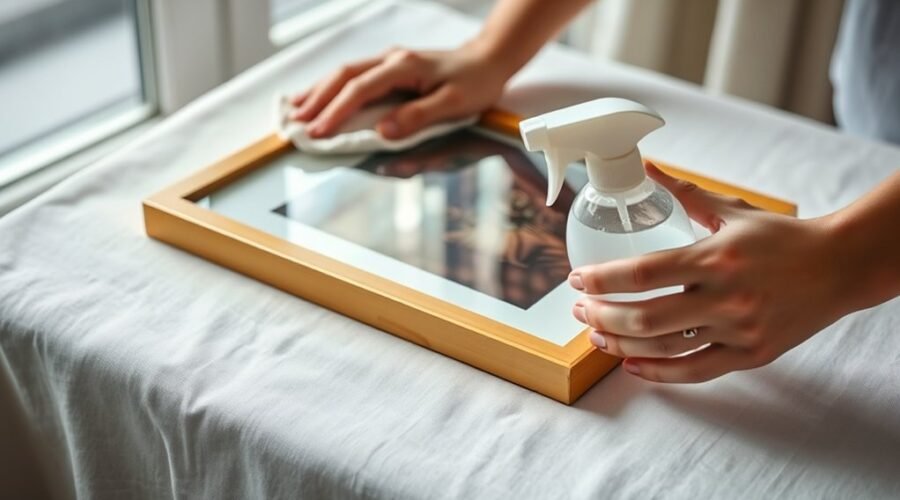
To clean picture frame glass without harming art, first remove dust from the frame and glass with a dry microfiber cloth or soft brush. Take the artwork out and place it flat. Use an ammonia-free cleaner, or a mild dish soap solution, applied to the cloth, not the glass. Wipe in small circular motions with light pressure. Dry with a clean cloth and inspect edges for residue. Further guidance covers safer methods for special glass.
Dust the Frame and Glass First
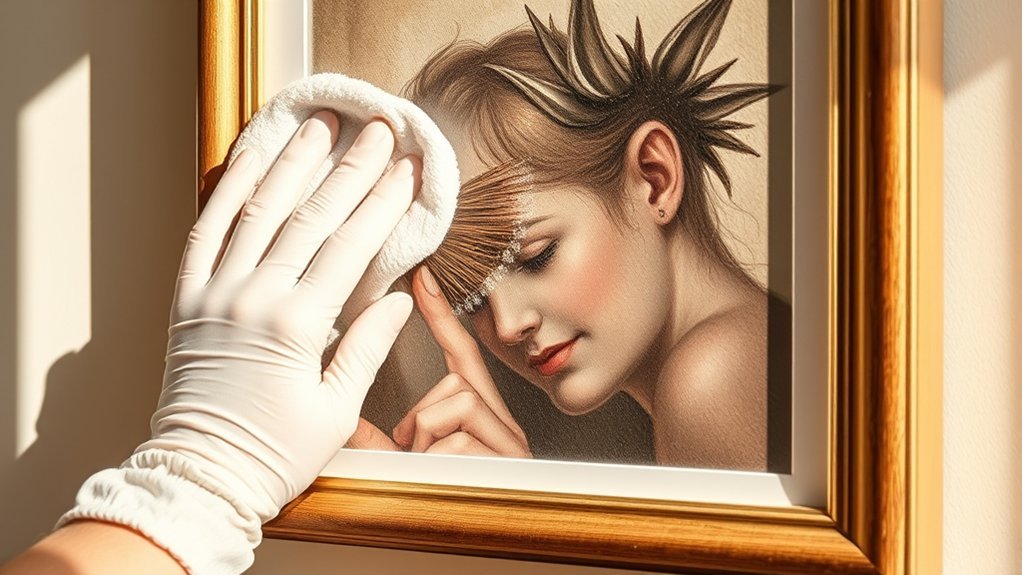
Before any wet cleaning begins, the frame and glass should be lightly dusted with a dry feather duster or microfiber cloth to remove loose particles, especially along corners and edges where buildup is common. This initial dust removal reduces abrasion risk and prepares the surface for later care.
On ornate frames, a horsehair brush or other soft brush can reach crevices without disturbing fragile details. After use, the duster or brush should be shaken outdoors so displaced dust does not resettle indoors, preserving a cleaner environment.
Abrasive materials, including paper towels, should not touch the glass directly, since they can leave scratches; soft cotton or microfiber cloths are safer. Regular weekly dusting keeps accumulation low, making future maintenance faster, simpler, and less dependent on aggressive cleaning products.
Careful dry cleaning supports a more liberated routine because it protects both the artwork and the person maintaining it.
Choose a Safe Cleaner for Picture Frame Glass
A safe cleaner for picture frame glass should be ammonia-free to reduce the risk of damaging artwork, coatings, or delicate finishes.
The cleaner should be applied to a soft microfiber cloth or cotton pad rather than sprayed directly onto the glass, which limits oversaturation behind the frame.
For stubborn streaks, a controlled 50/50 water and rubbing alcohol solution may be used, while acrylic glass requires a product formulated specifically to avoid clouding and scratching.
Ammonia-Free Cleaners
Ammonia-free cleaners are the safer choice for picture frame glass because ammonia can damage sensitive artwork, including cyanotypes and some printed materials.
A verified ammonia-free glass cleaner, such as Sprayway, reduces risk to coatings on framed glazing and supports careful preservation. The cleaner should be directed to a cleaning cloth, not the pane, limiting overspray that might migrate toward the artwork.
Where a commercial product is unavailable, mild dish soap in warm water offers a controlled alternative for clean acrylic or ordinary glass surfaces. A final wipe with alcohol on the cloth can improve clarity and produce a streak-free finish.
Each method prioritizes protection, allowing the frame to be maintained without compromising the work it shelters.
Cloth-Safe Application
With a safe cleaner selected, the next step is controlled application to the cloth rather than the glazing. For glass cleaning, ammonia-free solution should be lightly misted onto microfiber cloths, never sprayed across the frame, to prevent oversaturation, seepage, and coating injury.
A soft cotton cloth may also be used, but microfiber cloths generally lift dust and smudges with less abrasion. The cloth should be damp, not wet, so the hand remains precise and the artwork stays protected.
When acrylic glazing is present, mild soap and water or a plastic-safe cleaner is preferable, since harsh agents can cloud the surface. After wiping, a dry microfiber cloth should buff the pane to a streak-free finish, supporting clear viewing and preserving visual freedom.
Wipe Picture Frame Glass Without Streaks
To achieve a streak-free finish on picture frame glass, the cleaner should be sprayed onto a microfiber cloth rather than directly onto the surface, reducing the risk of moisture seeping behind the frame and damaging the artwork. This controlled cleaning method keeps the glass protected while limiting excess liquid.
An ammonia-free cleaner is preferred, since harsh additives can compromise protective coatings and diminish clarity. The microfiber cloth should move in steady circular motions across the pane, with deliberate attention to corners where residue and smudges often remain trapped.
After the damp pass, a dry microfiber cloth should be used to buff the glass, lifting any remaining film and restoring a clear, liberated finish. If the glazing is acrylic or Plexiglass, products made for plastics are required to avoid abrasion and preserve a polished surface.
Precise technique supports visual freedom while safeguarding the framed work underneath.
Clean Museum Glass and Coated Glass Safely
Museum glass and coated glass should be cleaned with extra restraint, since their anti-reflective surfaces can be easily marred by excess moisture or abrasive contact. Cleaner should be sprayed onto a clean microfiber or soft cotton cloth, never directly onto the pane, to limit saturation and preserve the finish.
Ammonia-free glass cleaners are preferred because they reduce the risk of chemical attack on delicate coatings. If streaks persist, a 50/50 solution of water and rubbing alcohol may be applied sparingly to the cloth and used with light, circular motions.
Ammonia-free glass cleaners help protect delicate coatings; for stubborn streaks, use a sparing 50/50 water and alcohol solution.
Paper towels should be avoided; their fibers can act like fine grit. After each pass, the surface should be inspected for missed specks or smudges and touched again only where needed. This disciplined method supports clear viewing without surrendering the integrity of the protective layer.
The approach also echoes careful cleaning acrylic practice, where restraint protects both clarity and surface freedom.
Clean Acrylic Frame Glass Without Scratching It
A soft microfiber cloth or cotton cloth should be used to wipe acrylic frame glass gently, since paper towels can leave fine scratches.
To Clean Picture Frames with acrylic fronts, the surface should be handled with controlled, circular motions that reduce abrasion and support a clear, unclouded finish.
A mild soap and warm water mixture may be used, but it should be applied to the cloth rather than sprayed directly onto the acrylic, limiting moisture intrusion and cloudiness.
Ammonia-based cleaners should be avoided, because they can damage plastic surfaces; products formulated for plastics, such as Novus, are safer.
For minor marks, Novus #2 Polish can restore clarity, followed by Novus #1 for final refinement.
Corners deserve extra attention, since dust often settles there.
This careful method preserves visibility and helps maintain material integrity without unnecessary restraint.
Remove Stubborn Smudges and Hidden Specks
Missed specks often remain in corners and along frame edges, where they are best lifted with masking tape or dislodged with a soft-bristled toothbrush.
Stubborn smudges can be treated with a microfiber cloth lightly dampened with mild dish soap and warm water, then followed by glass cleaner applied to the cloth rather than the glass.
A final dry microfiber buff helps remove residue and produce a streak-free finish.
Spotting Missed Specks
Under bright light or a flashlight, the glass surface can be examined for smudges and hidden specks that normal room lighting may conceal.
| Check point | Method | Signal |
|---|---|---|
| Center | Angle view | Residue |
| Edges | Rotate frame | Dust |
| Corners | Inspect closely | Specks |
After initial cleaning, the surface should be viewed from multiple angles; reflections often expose smudges and fingerprints. A small amount of masking tape may be pressed lightly to collect loose debris. If marks remain, a microfiber cloth, slightly damp with water and rubbing alcohol, can be used with restraint. This approach supports clean visibility without compromising the artwork. A final dry microfiber buff should follow to reveal any remaining trace and preserve a streak-free finish.
Lifting Stubborn Smudges
Stubborn smudges are best addressed with a mild dish soap solution and a soft microfiber cloth, worked in small circular motions to loosen grime without abrading the glass.
- Inspect under direct light to expose hidden specks before cleaning.
- Lift loose debris with masking tape, reducing scratch risk.
- If residue remains, apply a 50/50 water and rubbing alcohol mix to the cloth, never directly on the glass.
This controlled method helps clean your picture frame glass with minimal intervention and preserves visual clarity.
For liberation from persistent marks, patience matters more than force. Use only measured pressure, and never use abrasive pads, paper towels, or harsh solvents.
After the smudges are removed, a dry microfiber cloth may be kept ready for the next stage, but it is not part of this step.
Final Streak-Free Pass
A final streak-free pass should be made with a clean microfiber cloth slightly dampened with a 50/50 solution of water and rubbing alcohol, applied only to the cloth and never sprayed onto the glass.
This final streak-free pass lifts persistent smudges while minimizing moisture that could migrate into the frame and threaten the artwork.
The clean microfiber cloth should move in circular motions with light, controlled pressure, enough to dislodge hidden specks without abrading the surface.
After wiping, the glass should be inspected from several angles under strong light to reveal residual streaks or marks.
If needed, a dry microfiber cloth can be used to buff the panel to a clear finish, restoring visual freedom while keeping the protected art unharmed and ready for rehanging.
Protect the Artwork While You Clean
Careful handling preserves the artwork while the glass is being cleaned. The frame should be opened, and the art removed to a flat, stable surface before any clean begins. This separation helps protect the artwork from pressure, slips, and moisture intrusion.
Hands must be clean and dry, since oils and dampness can mark delicate surfaces. A cotton cloth or microfiber cloth should carry a small amount of ammonia-free cleaner; the solution should never be sprayed directly onto the glass, because overspray can reach the art and coatings.
- Remove the artwork first.
- Use ammonia-free cleaner on cloth.
- Inspect for fading before reassembly.
After cleaning, the artwork should be examined under steady light for fading, abrasions, or other damage. If any change is detected, reassembly should be delayed. Such restraint supports preservation and gives the object its best chance to remain intact, visible, and free from avoidable harm.
Rehang and Keep Picture Frame Glass Clean
Once the glass has been cleaned, the frame should be inspected from multiple angles for remaining smudges or streaks before it is rehung. This final check helps confirm that the glass fronts are fully clear and that no residue remains to dull the display.
The frame may then be rehung carefully, with backing and supports positioned so they do not touch the artwork. Such restraint preserves the art’s integrity and keeps the assembly in good condition.
The frame may be rehung carefully, with backing and supports kept clear of the artwork to preserve its integrity.
For continued care, the glass should be cleaned only as needed, using ammonia-free cleaner or a mild soap solution applied to a microfiber cloth, never sprayed directly on the surface.
Circular motions can be used to address corners and edges where dirt accumulates. This measured approach supports clarity, reduces risk, and allows the work to remain visible, stable, and free from preventable harm.
Frequently Asked Questions
What Is the Best Way to Clean Glass on Picture Frames?
The best way is to spray ammonia-free glass cleaner onto a microfiber cloth, never directly onto the frame glass, then wipe gently in circular motions.
For tougher marks, a 50/50 water and rubbing alcohol mix can be used sparingly.
These frame maintenance tips rely on proper glass cleaning tools and careful art preservation methods.
Corners should be cleaned thoroughly, then the surface buffed dry for a clear, streak-free finish.
Does Vinegar Clean Glass Better Than Windex?
Vinegar does not always clean glass better than Windex; the outcome often coincides with the soil type and surface coating.
Vinegar effectiveness is strong on light smudges and can reduce glass streaks when diluted properly. Windex, among common cleaning solutions, usually acts faster on heavy grime.
A cautious test on a small area is advisable. For those seeking liberation from harsh chemicals, vinegar remains a precise, non-toxic option.
What Do Professionals Use to Clean Glass?
Professionals use glass cleaning techniques centered on ammonia-free sprays, microfiber cloths, and safe solutions.
They favor professional tools that reduce scratching and leave minimal residue. For stubborn contamination, mild dish soap with warm water is applied sparingly, then wiped dry.
Isopropyl alcohol may be used for a final clarity pass. Cleaner is usually sprayed onto the cloth, not the glass, to limit oversaturation and protect delicate surfaces.
Does Dawn and Vinegar Clean Glass?
Yes, Dawn and vinegar can clean glass, as if it were alchemy in a spray bottle. Their Dawn vinegar benefits include cutting grease, lifting smudges, and leaving a streak-free finish when diluted properly.
For those seeking liberation from harsh chemicals, this is one of several glass cleaning alternatives. Safe cleaning methods favor spraying the mixture onto a microfiber cloth first, then wiping the glass with controlled, precise strokes.
Conclusion
In closing, picture frame glass can be cleaned safely when each step is handled with care. Dust should be removed first, followed by a mild, appropriate cleaner and a soft, lint-free cloth. Special glass, coated surfaces, and acrylic require extra caution to prevent damage. The artwork must remain protected throughout. With careful maintenance and regular cleaning, the frame will stay clear, and the display will look as good as new.