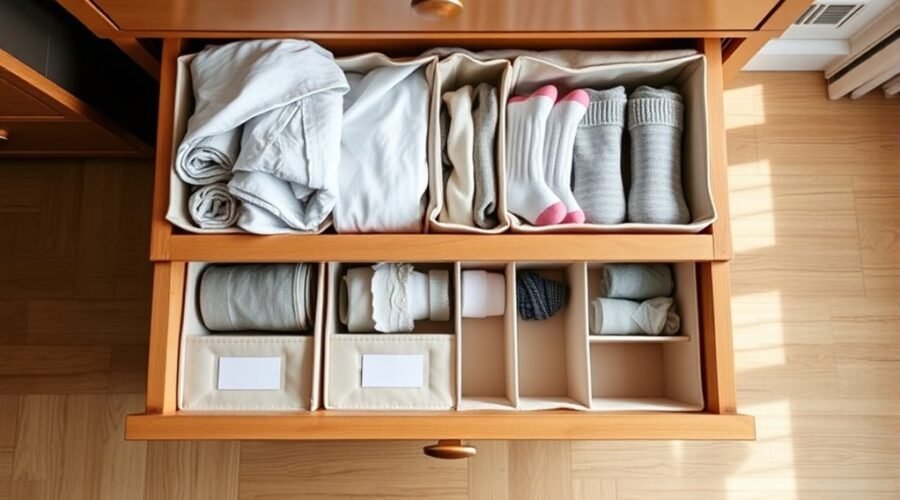
Organizing dresser drawers works best when you do more than simply refold everything. Empty the drawers, decide what actually belongs there, group clothes by type and use, then choose a folding and divider system that fits each drawer. The goal is simple: every item should have a clear home and be easy to see, remove, and put back.
Quick Answer
To organize dresser drawers, empty them completely, remove clothes you no longer use, group what remains by category, and assign each drawer a clear purpose. File-fold stable items for visibility, use bins or dividers for small pieces, avoid overfilling, and give bulky or wrinkle-prone clothes a storage method that suits the fabric.
Key Takeaways
- Empty every drawer first so you can see what you own, remove unwanted items, and clean out dust and lint.
- Group clothes by category and daily use, then give each drawer or section one clear purpose.
- Measure your drawers before buying dividers, bins, or other organizers.
- File-fold T-shirts and other stable garments when it helps you see everything at once, but adapt the method for bulky or delicate clothing.
- Use small boxes or dividers to stop socks, underwear, and other small items from mixing together.
- Keep drawers comfortably full rather than packed tight so clothes are easy to remove and put away.
- Use a short monthly reset and seasonal review to keep clutter from building back up.
At a Glance
| Time Required | About 30–90 minutes for a typical dresser; longer if you are sorting a large wardrobe |
| Difficulty | Easy |
| Tools Needed | Laundry baskets or boxes for sorting, cleaning cloth, tape measure, and optional drawer dividers or small bins |
| Cost | Potentially $0 if you reuse clean boxes or containers; purchased organizers are optional |
Warning: A dresser can become a tip-over hazard, especially where children live or visit. Follow the manufacturer’s anchoring instructions, secure appropriate furniture to the wall, avoid encouraging children to climb on drawers, and place heavier belongings lower when practical. The U.S. Consumer Product Safety Commission provides furniture tip-over guidance.
Empty Every Dresser Drawer
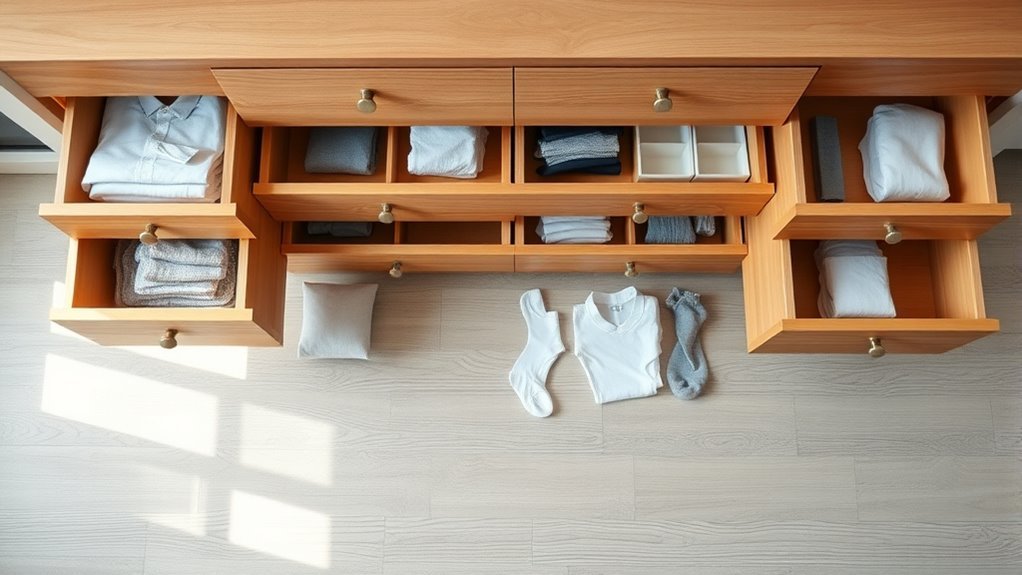
Start by emptying every dresser drawer so you can see exactly what you own and work from a clean slate. Trying to organize around existing piles makes it harder to notice duplicates, unused clothing, and items that belong somewhere else.
Sort everything into simple groups such as keep, donate or sell, relocate, and discard. Compare duplicate items, check worn clothing, and set aside anything you no longer wear or need.
With each drawer empty, wipe out dust, lint, and debris before putting clothes back. This gives you a clean surface and lets you inspect the drawer for rough edges, loose hardware, or anything else that might snag clothing.
An empty drawer gives you room to clean, declutter, and rebuild the storage system around what you actually use.
You do not need to repeat the full process every month. A larger seasonal review works well for most wardrobes, while shorter monthly resets can handle items that have drifted into the wrong drawer.
Plan Your Dresser Layout Before You Refill It
Before buying organizers, look at the clothes you decided to keep and compare them with the size of your drawers. Your categories should determine the layout—not the organizer package.
Assign each drawer a clear job. A shallow top drawer may work well for underwear, socks, camisoles, or accessories. Medium-depth drawers often suit T-shirts, sleepwear, workout clothes, or leggings. Deeper drawers may handle thicker clothing, although very bulky garments can sometimes use closet shelves more efficiently.
Keep frequently used, lightweight items in comfortable-to-reach drawers. If you store heavier items in the dresser, lower drawers are generally a better location than the top.
Pro Tip: Organize with the clothes you already own before shopping for dividers. Once you know how much space each category needs, you can buy only the organizers that solve a real problem.
Sort Clothes by Type and Use
Group your dresser into everyday wear zones so shirts, pants, underwear, sleepwear, and other categories do not become mixed together.
You can also sort by how you use the clothing. Work clothes, workout gear, lounge clothes, and sleepwear may deserve their own sections if that reflects your normal routine.
If one drawer contains several categories, use drawer dividers, bins, or small containers to keep them separate.
Everyday Wear Zones
Create dedicated zones for the clothing you reach for most often. Group tops, bottoms, activewear, underwear, and similar items so each category has a predictable home.
Put frequently used lightweight pieces in easy-to-reach drawers or toward the front of deeper drawers. Color-coding within a category is optional, but it can make matching similar garments faster if you find the visual order helpful.
Seasonal pieces you will not use for several months can move to another storage area if dresser space is limited. That keeps your daily clothes visible and prevents rarely worn items from taking over your most useful drawer space.
Activity-Based Sorting
You can also organize dresser space around your routine instead of garment type alone. For example:
- Keep workout gear together where you can grab it quickly.
- Group work basics in one section for easier mornings.
- Keep casual and lounge clothing in its own zone.
- Review the layout monthly and move categories that are not working.
Rotate seasonal items when your needs change. If you repeatedly put an item in a different drawer than the one you originally assigned, that is usually a sign that your system should change to match your habits.
Decide What Belongs in Drawers—and What Should Hang
Not every garment needs to go into a dresser. File folding works especially well for stable casual items such as T-shirts, pajamas, leggings, shorts, and many sweaters. Smaller items such as socks and underwear usually benefit from compartments or small bins.
Garments that wrinkle easily, have delicate construction, or are highly tailored may be easier to maintain on hangers. The official KonMari folding guidance also distinguishes between items suited to folding and garments that are better hung.
If a folded item is so thick that it becomes compressed, falls over constantly, or prevents the drawer from closing smoothly, move it to a deeper drawer, reduce the number of folds, stack it carefully, or store it on a shelf.
Choose Dividers for Your Drawer Size
Choose dividers that fit your drawer size so categories stay separated without wasting space.
Before buying anything, measure the interior width, depth, and usable height of each drawer. Check for curved sides, drawer hardware, or other obstructions that may reduce usable space.
Adjustable dividers are useful when your clothing categories change. Small bins or compartment organizers work well for socks, underwear, accessories, and other items that collapse into mixed piles.
You do not need expensive organizers. Clean shoeboxes, small cardboard boxes, or sturdy containers you already own can create simple zones. Choose materials with smooth edges that will not snag delicate fabric.
Keep the layout simple enough that putting laundry away is obvious. Too many tiny categories can make the system harder to maintain than one or two broad zones.
Fold Clothes for Easy Visibility
The official KonMari folding method uses compact folds that allow many garments to stand upright. This “file folding” approach can make individual pieces visible from above instead of burying them beneath a stack.
- Fold T-shirts and other stable garments into compact rectangles that can stand comfortably.
- Arrange folded pieces in rows rather than piling them on top of one another.
- Use dividers or small boxes if rows fall over when the drawer is partly empty.
- Leave enough room to remove and replace a garment without disturbing the whole row.
- Refold items during your regular reset before loose piles begin to form.
Because each item has a clear place, you can remove one shirt without lifting several others. Visibility also makes it easier to notice clothes you rarely wear.
Note: Vertical folding is a tool, not a rule. If a garment is too bulky, slippery, delicate, or wrinkle-prone to stay upright comfortably, use a different fold or storage location.
Store Bulky Clothes the Smart Way
Bulky clothes need more flexibility because thick sweaters and hoodies can quickly fill a drawer.
File folding can work for many knits and sweatshirts if the finished bundle fits comfortably. However, thicker pieces may need fewer folds, a wider row, or a different orientation. KonMari guidance for thicker garments similarly recommends adapting the number of folds when a compact bundle becomes too bulky.
Use drawer dividers to create wider lanes when bulky items tend to spread into neighboring categories. In a deep drawer, a bin or organizer can also create defined zones, but do not add containers simply to fill space.
Choose one area for sweaters, another for hoodies, and another for seasonal extras if the drawer is large enough. If those categories require force to fit, move some items to a closet shelf or seasonal storage rather than compressing the drawer.
Do not assume every thick item must stand upright. The best setup is the one that keeps the garment easy to identify and the drawer easy to open, close, and refill.
Stop Clutter From Building Back Up
Before adding more clothing to an already crowded dresser, reset the drawers by returning misplaced items to their proper categories and removing pieces you no longer use.
A one-in, one-out rule can help if you tend to accumulate more clothing than your drawers can hold. It is optional rather than mandatory: the more important rule is that every category stays within its available space.
Reset Before Refilling
If a drawer has become difficult to use, give it a full reset. Empty it so you can see what has accumulated, then decide what still belongs there.
- Keep the pieces you regularly use and want to store in that drawer.
- Move suitable unwanted items to a Donate/Sell group.
- Move misplaced items to Relocate and unusable items to Discard or an appropriate textile-recycling option.
- Adjust dividers, boxes, or bins before refilling.
Put back only what belongs in that drawer. Try to leave enough breathing room that removing one item does not pull several others out with it.
Spend about 5 to 10 minutes each month straightening problem drawers, then use seasonal clothing swaps as a larger checkpoint for anything that no longer fits your routine.
Keep A One-In, One-Out Rule
If your dresser is already at a comfortable capacity, consider using a one-in, one-out rule: when you add a new item to a full category, review one older item from that same category.
| New item | Possible older item to review |
|---|---|
| Shirt | A tee you no longer wear that is suitable for donation or resale |
| Socks | A worn pair that can leave the drawer; check local textile-recycling rules if appropriate |
The rule is most useful as a capacity check, not as a reason to discard useful clothing unnecessarily. If an item is still in wearable condition but no longer works for you, donation or resale may be appropriate. Recycling options vary by location and textile type; the U.S. Environmental Protection Agency notes that reuse and recycling are separate parts of textile management.
Frequently Asked Questions
What Is the Most Efficient Way to Organize Dresser Drawers?
Give each drawer or section a clear purpose, group similar clothing together, and use a folding method that lets you see what you own. File folding works well for many casual garments, while small boxes or dividers keep socks and underwear contained. Store the clothes you use most in easy-to-reach locations and avoid filling drawers so tightly that items are difficult to return.
What Is the KonMari Method for Drawer Organizing?
The KonMari Method asks you to choose the belongings you want to keep and then fold many garments into compact shapes that can stand upright. Similar items are grouped together so they are easy to see. Its “spark joy” idea is part of Marie Kondo’s specific tidying philosophy, not a requirement for organizing a dresser. A 2010 study of 60 dual-income couples found associations between more stressful descriptions of the home and certain mood and cortisol patterns, but it did not prove that clutter itself directly causes stress.
How to Organize Drawers Without Organizers?
Start by grouping items by type, then file-fold or roll suitable clothes so they remain visible. Clean shoeboxes, small cardboard boxes, and containers you already own can create simple zones without buying dedicated organizers. Keep categories broad, rotate bulky seasonal pieces when necessary, and leave enough room for clothes to return to their assigned spot easily.
How to Organize a Dressing Drawer?
Give the drawer one clear role or divide it into a few related clothing categories. Keep frequently used items easy to reach, use file folding or another space-efficient fold where appropriate, and move out-of-season clothing elsewhere if space is tight. Finish with a quick monthly reset so misplaced items do not turn back into a mixed pile.
What Should I Do If File-Folded Clothes Keep Falling Over?
Use a small box or adjustable divider to support the row, make each folded bundle slightly wider, or reduce the amount of unused space around the clothing. If a garment is too soft or bulky to stand comfortably, stack it or move it to a different storage area instead of forcing the fold.
Should Sweaters and Hoodies Go in Dresser Drawers?
They can if the drawer is deep enough and the garments fit without being compressed. Fold them into wider bundles, use fewer folds when necessary, and keep similar items together. If the drawer becomes difficult to close or the clothing will not stay organized, a closet shelf or other storage area may work better.
Conclusion
A dresser stays organized when the system is simple enough to use every day. Sort clothes by type or activity, give each category a clear place, fold for visibility where it makes sense, and use dividers only where they solve a real problem.
Do not force every garment into the same folding method. Bulky, delicate, or wrinkle-prone clothing may need a different drawer, a shelf, or a hanger. Keeping a little open space also makes it much easier to return clean laundry without rebuilding the whole drawer.
A short monthly reset, seasonal review, and optional one-in-one-out habit can keep clutter from creeping back. When every item has a predictable home, you spend less time digging through piles and more time simply getting dressed.
Sources
- KonMari — How to Fold Clothes with the KonMari Method — supports the description of upright and file-style folding.
- KonMari — Common Questions About the KonMari Fold — supports guidance on which garments to fold, hang, and organize with dividers.
- U.S. Consumer Product Safety Commission — Anchor It! — supports dresser and furniture tip-over safety guidance.
- Saxbe and Repetti — No Place Like Home — supports the qualified discussion of home environment, mood, and cortisol associations.
- U.S. Environmental Protection Agency — Textiles: Material-Specific Data — supports the textile reuse and recycling discussion.