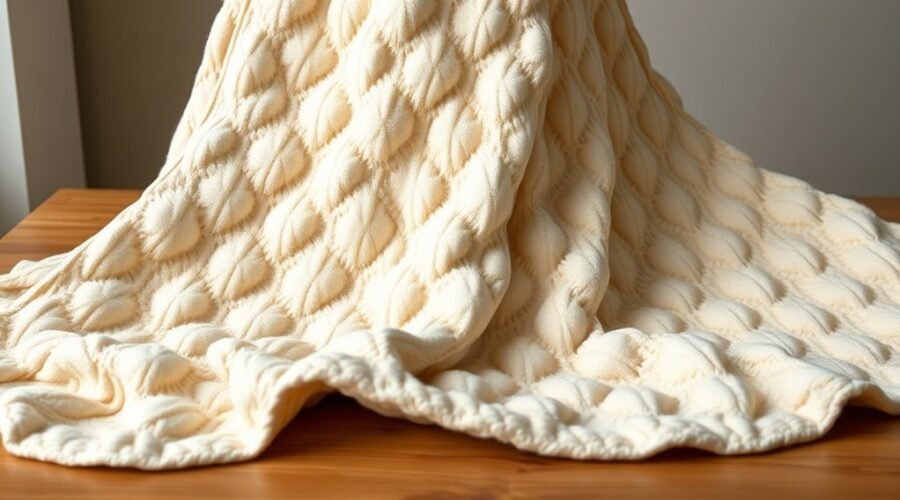
Matelassé fabric is a textured woven textile made to look quilted or padded even though it is not constructed like a conventional quilt with separate outer layers stitched around a sheet of batting. Its raised patterns are built into the weave itself, giving bedding, upholstery, and decorative textiles noticeable depth without visible quilting stitches.
Quick Answer
Matelassé is a woven fabric with a raised, quilt-like surface. Traditional versions use compound or double-cloth structures with multiple sets of yarns to create relief directly on the loom. Unlike a conventional quilt, the pattern does not depend on rows of stitching through a separate layer of batting.
Key Takeaways
- Matelassé describes a woven construction and surface effect, not one specific fiber.
- Its raised pattern can be produced with compound or double-cloth structures, figuring yarns, stuffer or wadding picks, and controlled differences in yarn tension or finishing.
- It resembles quilting, but a woven matelassé does not rely on quilting stitches through a separate sheet of batting.
- Cotton is common in modern bedding, although cotton blends and other fibers are also used.
- Weight, breathability, warmth, washability, and shrinkage vary by fiber, weave, finish, and manufacturer, so the care label matters.
What Is Matelassé Fabric?
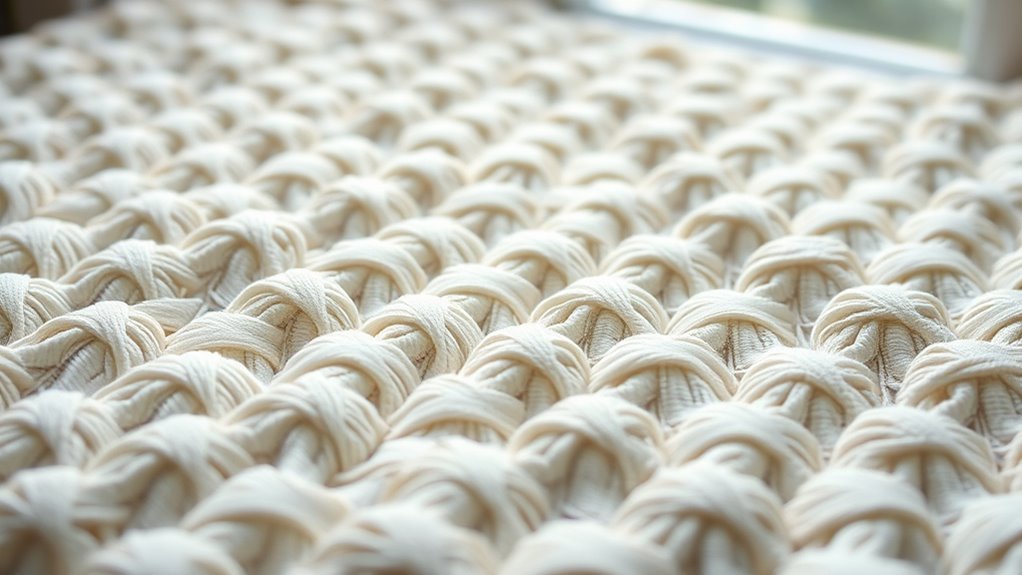
Matelassé is a textured woven fabric with a raised, embossed, or quilt-like face. The name is French, and modern dictionaries trace it to matelasser, meaning to pad or quilt, which in turn is related to matelas, or mattress.
The important point is that matelassé is primarily a fabric construction, not a fiber such as cotton or wool. The Office québécois de la langue française textile terminology database describes traditional matelassé as a double or multilayer fancy fabric with a quilted appearance. The Smithsonian National Museum of American History likewise catalogs a historical matelassé textile as a double weave.
That does not mean every product sold today uses exactly the same yarn arrangement. Matelassé is a family of related constructions, and manufacturers can vary the fibers, weight, pattern, finishing method, and exact weave structure.
Note: Describing matelassé as “one piece of fabric” is useful when comparing it with a sewn quilt, but it should not be confused with saying that its internal weave has only one layer or one set of yarns. Traditional matelassé can be a compound or double-cloth structure.
How Does Matelassé Get Its Quilted Texture?
Matelassé gets its dimensional surface from the way the yarn systems interact during weaving. Traditional constructions may use separate face and back systems, figuring threads, and additional filling or stuffer yarns. Areas of the fabric are connected more tightly while other areas are allowed to rise, producing the characteristic padded-looking relief.
Some constructions also use differences in yarn tension, yarn size, or finishing behavior to increase the puckered effect. That is why it is too simple to say that all matelassé is produced merely by shrinking extra yarns after weaving. Shrinkage can contribute to the appearance in some fabrics, but the underlying weave structure is what defines the effect.
More elaborate patterns are often made with Jacquard-controlled weaving. The Metropolitan Museum of Art notes that the Jacquard mechanism, introduced in the early nineteenth century, made it far easier to control complex woven patterns. Matelassé may also be associated with dobby weaving when the repeat is simpler.
Patterns range from restrained diamonds and basket textures to florals, medallions, scrolls, and large geometric motifs. Because the relief is woven into the cloth, the design remains visible without needing decorative quilting stitches across the face.
Where Did Matelassé Come From?
The word matelassé is French, but the history of the fabric is better described as part of a broader effort to reproduce the appearance of elaborate quilted textiles on a loom rather than as a single invention from one place.
The Metropolitan Museum of Art documents an eighteenth-century British patent for a method of “weaving and quilting in the loom” that imitated French and Marseilles quilting. Manchester manufacturers later produced woven cloth known as Marseilles quilting. The Met describes one surviving example as double cloth with heavy cording between the upper and lower woven layers to produce a hand-quilted appearance.
Later improvements in patterned weaving, particularly Jacquard control, made complicated raised motifs easier to manufacture. That history explains why matelassé is still closely associated with traditional coverlets, decorative bedding, and richly patterned household textiles.
Is Matelassé the Same as Quilted Fabric?
No. A woven matelassé and a traditional quilt can look similar, but the structure creating that appearance is different.
| Feature | Matelassé | Traditional Quilt |
|---|---|---|
| How texture is made | Raised pattern is created through the woven structure. | Stitching joins fabric layers and creates the quilted pattern. |
| Batting | Usually no separate sheet of quilt batting, although some traditional compound constructions use woven-in stuffer or wadding yarns. | Commonly contains a distinct layer of batting between outer fabrics. |
| Visible quilting stitches | Not required to create the raised woven pattern. | Normally part of the construction. |
| Weight | Can range from relatively light to substantial depending on yarns and structure. | Varies with the fabrics and thickness of the batting. |
| Warmth | Depends on fiber, density, and weight; often used as a layering coverlet. | Can provide greater insulation when substantial batting is used. |
So the safest description is that matelassé offers a woven interpretation of quilting. It can provide impressive depth without being built like a conventional three-layer quilt.
Matelassé vs. Piqué: What Is the Difference?
Matelassé and piqué are related textured-weave terms, and retail terminology sometimes overlaps. You may even see bedding described as “piqué matelassé.”
In everyday product descriptions, piqué often refers to a crisper surface with relatively small cords, diamonds, waffles, or geometric relief, while matelassé commonly describes a fuller quilt-like or embossed design. Matelassé patterns also tend to accommodate larger decorative motifs.
That distinction is useful when shopping, but it is not an absolute test of construction. Textile terminology has varied by period, manufacturing method, and trade usage. If the exact weave matters for a sewing or conservation project, rely on the manufacturer’s technical description rather than the product name alone.
What Materials Are Used in Matelassé?
Cotton is especially common in matelassé bedding because it can provide a soft hand, clear woven relief, and straightforward home laundering. Current bedding collections include both 100% cotton matelassé and cotton/polyester blends.
However, the word matelassé does not automatically mean cotton. Historical and decorative examples have used combinations that include wool, silk, metallic yarns, and other materials, while contemporary fabrics may contain synthetic fibers for easier care, wrinkle resistance, or additional durability.
The fiber content changes how the finished fabric behaves:
- Cotton: usually soft and comfortable for bedding, but it can shrink if exposed to excessive heat.
- Cotton blends: may reduce wrinkling or alter drying time and durability.
- Heavier decorative constructions: can provide more body for drapery or upholstery but may feel warmer and less flexible than a lightweight coverlet.
- Specialty fibers and finishes: can change cleaning requirements, sheen, texture, and abrasion resistance.
Why Matelassé Works So Well for Bedding
Matelassé is popular for coverlets, bedspreads, and shams because the weave provides texture and pattern without requiring a thick layer of conventional quilt batting. This makes it easy to use as a decorative top layer or as part of a layered bedding system.
A cotton matelassé coverlet can feel comfortable in warmer conditions when used alone over sheets, while in cooler weather it can sit beneath a blanket or duvet. The exact warmth depends on the product’s weight and density, so matelassé should not automatically be treated as a lightweight summer fabric.
Current products also show how varied the category can be. For example, Matouk’s Petra coverlet is a 100% cotton diamond matelassé with a soft hand and fluid drape, while other matelassé products use different constructions, finishes, and blends.
The raised weave also gives a bed visual depth even when the color palette is simple. White, ivory, beige, gray, and other solid colors can look detailed because light and shadow emphasize the woven pattern.
How to Choose Matelassé Bedding or Fabric
Do not shop by the word “matelassé” alone. Check the details that determine how the fabric will actually feel and perform.
- Check the fiber content. Cotton is common for bedding, while blends can change wrinkle resistance, feel, drying time, and care requirements.
- Look at the weight. A lighter coverlet may work well for layering, while a dense or heavily textured fabric can feel more substantial.
- Compare the pattern scale. Small diamonds and basket textures tend to look restrained; large medallions and florals create a more decorative surface.
- Check the finished dimensions. Coverlet and bedspread sizing varies considerably between brands. Measure your mattress and decide how much drop you want on the sides.
- Read the care label before buying. Two cotton matelassé products can still have different washing and drying instructions.
- Check whether it is reversible. Some matelassé bedding is designed to look finished on both sides, but reversibility is not guaranteed by the weave name.
- For upholstery, verify suitability. Decorative bedding fabric should not automatically be assumed to have the abrasion resistance needed for a frequently used chair or sofa.
Pro Tip: If you are buying a cotton matelassé coverlet, compare the manufacturer’s finished measurements and shrinkage guidance with your mattress dimensions before choosing a size. Natural-fiber products can change slightly after laundering.
How to Care for Matelassé
The safest care rule is simple: follow the label on the specific item. Matelassé describes the textile construction, not one universal fiber or finish, so there is no single wash temperature that applies to every product.
For example, Matouk specifies machine washing in warm water and tumble drying on low for its Petra cotton matelassé. Peacock Alley’s matelassé care guidance directs owners to the specific product label and notes that most of its matelassé coverlets and quilts are machine washable.
As a general starting point for washable cotton bedding, these habits can help protect the raised texture:
- Use the wash temperature and cycle stated on the care label.
- Avoid overcrowding the washing machine, especially with a large coverlet.
- Use an appropriate detergent and avoid bleach or fabric softener when the manufacturer prohibits them.
- Use low dryer heat when specified, because excessive heat can increase cotton shrinkage.
- Remove the item promptly rather than over-drying it.
- Iron only if the care label permits it; pressing from the reverse can help preserve surface relief.
Some manufacturers specifically warn that natural-fiber matelassé can shrink during laundering. That percentage is product-specific, so use the manufacturer’s stated allowance instead of assuming that every cotton matelassé will shrink by the same amount.
How to Style Matelassé in Your Home
Matelassé works best when its woven texture is allowed to provide the detail. You do not need a complicated color scheme to make the fabric noticeable.
- Use it as a coverlet or bedspread. A solid matelassé layer can add depth between smooth sheets and a duvet or blanket.
- Add matelassé shams or throw pillows. They introduce texture without requiring another print or strong color.
- Use suitable upholstery-weight matelassé on chairs or headboards. Confirm that the specific fabric is rated for the intended use before putting it on frequently used furniture.
- Carry the texture into smaller accents. Depending on the fabric’s weight and care requirements, matelassé can appear in cushions, table textiles, drapery, or other decorative pieces.
For a calm, tailored room, pair a strongly textured matelassé with smoother fabrics such as percale, sateen, linen, or plain upholstery. If the matelassé pattern is large and ornate, keeping nearby patterns smaller or simpler prevents the room from looking overly busy.
Frequently Asked Questions
What is the main difference between a quilt and matelassé?
A traditional quilt is assembled from fabric layers that are stitched together, usually with batting between them. Woven matelassé creates its raised pattern through the textile structure itself. It normally does not need visible quilting stitches or a separate sheet of batting to create the quilt-like design.
How do you pronounce “matelassé”?
In American English, common pronunciations are roughly “mat-luh-SAY” and “mat-uh-luh-SAY,” with emphasis toward the final “say.” Pronunciation varies somewhat by accent. The accented spelling is matelassé, although matelasse is also widely used in English.
What does matelassé feel like?
It usually feels textured and dimensional, with raised areas you can feel under your hand. The exact hand can range from soft and drapey to crisp and substantial depending on the fiber, yarn size, weave density, and finish.
What does matelassé mean?
The term comes from French and is associated with padding or quilting. In English textile use, matelassé refers to a fabric with a raised, embossed, or quilt-like surface, commonly produced as a compound weave on dobby or Jacquard equipment.
Does matelassé have batting inside it?
Woven matelassé generally does not use a separate sheet of batting like a conventional quilt. However, some traditional compound constructions can contain woven-in stuffer or wadding yarns between face and back systems to increase the raised effect. That is different from inserting a separate batting layer and quilting through it.
Is matelassé too hot for summer?
Not necessarily. A relatively light cotton matelassé coverlet can work well as a warm-weather top layer, but matelassé fabrics vary greatly in weight and density. Check the fiber content and finished weight rather than assuming that every matelassé product will sleep cool.
Can you machine-wash matelassé?
Many cotton matelassé coverlets are machine washable, but the correct temperature, cycle, detergent, and drying method depend on the product. Always follow the manufacturer’s care label because fiber blends, dyes, decorative trims, and finishes can require different treatment.
Is matelassé reversible?
Some matelassé products are finished attractively on both sides and are sold as reversible, but reversibility is not guaranteed by the term matelassé itself. Check the product description if you want bedding that can be displayed on either side.
Conclusion
Matelassé gives fabric a distinctive raised, quilt-like surface through weaving rather than conventional quilt construction. Traditional versions can use compound or double-cloth structures with several yarn systems, so calling it simply a “single-layer fabric” misses an important part of how it works.
For bedding, matelassé offers a useful combination of texture, pattern, and flexible layering. Cotton is common, but weight, warmth, softness, shrinkage, and care vary from product to product. If you are choosing a coverlet, sham, upholstery fabric, or decorative accent, check the fiber content, dimensions, weight, reversibility, intended use, and care label instead of relying on the matelassé name alone.
Sources
- Office québécois de la langue française — Matelassé textile terminology — compound/double-cloth construction and traditional matelassé terminology.
- Smithsonian National Museum of American History — Double-weave metallic matelassé — documented museum example identifying matelassé as a double-weave textile technique.
- The Metropolitan Museum of Art — Marseilles-type quilt — historical loom-woven imitation quilting and double-cloth construction.
- The Metropolitan Museum of Art — Nineteenth-Century European Textile Production — history and capabilities of the Jacquard mechanism for complex patterned weaving.
- Collins English Dictionary — Matelassé — pronunciation, definition, and French etymology.
- Peacock Alley — Matelassé care guidance — current manufacturer guidance showing why care should be based on the individual product label.