You can make clean, minimalist macrame coasters with a small set of supplies, but cord construction matters more than having a long list of specialty tools. A 3 mm cotton cord is a practical starting point for many coaster patterns, while sharp scissors, a measuring tool, and a comb or brush handle most of the finishing work.
Quick Answer
For minimalist macrame coasters, choose 3 mm single-strand cotton when you want soft, combable fringe, or a firmer twisted cord when you want more structure. Add sharp scissors, a measuring tape, a comb or brush, and tape, pins, or a temporary dowel for anchoring. A large-eye tapestry needle is useful for hiding loose ends.
Affiliate disclosure: This roundup is reader-supported. When you click through qualifying affiliate links, we may earn a referral commission at no additional cost to you.
Key Takeaways
- A 3 mm cotton cord is a versatile starting size, but cord quantity depends on the exact coaster pattern rather than diameter alone.
- Single-strand cord is especially easy to comb into soft fringe; more tightly twisted cord usually gives a firmer finished structure.
- A dowel is mainly a temporary anchor for certain square patterns, not a required part of every finished coaster.
- A bent-tip, large-eye tapestry needle makes it easier to hide cord tails and clean up joins.
- Always follow the care instructions for the specific cord you use, especially before washing, applying heat, glue, or a coating.
At a Glance
| Time Required | About 30–90 minutes per coaster once you know the knots; a first attempt can take longer. |
| Difficulty | Beginner to easy-intermediate, depending on the pattern. |
| Tools Needed | Macrame cord, sharp scissors, measuring tape or ruler, comb or brush, and an optional dowel, tape, pins, board, or tapestry needle. |
| Cost | Varies by cord brand, spool size, and which tools you already own. One cord spool can usually cover multiple small projects, but yield depends heavily on the pattern. |
Top Picks
The scores below are editorial fit scores carried forward from this roundup. They are comparative judgments about usefulness for these projects, not laboratory measurements or Amazon star ratings. Product availability, listing details, and review totals can change.
|
Category |
Product |
Editorial Fit Score |
|---|---|---|
|
🏆 Best Natural Cord For Coasters & Larger Projects |
95/100 |
|
|
🎨 Best For Soft Fringe & Delicate Detail |
88/100 |
|
|
💰 Best Budget Temporary Anchor |
84/100 |
|
|
🎯 Best For Weaving Ends |
90/100 |
How We Chose These Supplies
You want supplies that make a small project like macrame coasters manageable and repeatable. We prioritized material consistency, cord construction, practical dimensions, finishing usefulness, and how well each item fits common coaster-making techniques.
For cord, softness matters when you want combed fringe, but the cord also needs enough body to hold recognizable knots. We considered diameter, construction, usable yardage, and whether current manufacturer information supports the main specifications. For tools, we focused on straightforward functions: a temporary anchor that stays straight and a large-eye needle that helps hide cord ends.
This guide does not present the products as laboratory-tested against one another. Editorial scores are fit-for-purpose assessments, while listing ratings and review totals are treated as changing snapshots rather than permanent specifications.
What You Need To Make Minimalist Macrame Coasters
- Macrame cord: 3 mm cotton is a versatile starting size for many coaster patterns. Choose single-strand cord for especially soft, brushable fringe or a more firmly twisted construction when you want greater structure.
- Sharp scissors: clean cuts make the final fringe easier to level.
- Measuring tape or ruler: use the exact cutting lengths from your chosen pattern.
- Comb or brush: useful when the design has loose fringe.
- Temporary anchor: tape, pins and a cork board, or a dowel can stabilize the work depending on the pattern.
- Large-eye tapestry needle: optional but useful for hiding tails and tidying joins.
Pro Tip: Choose the pattern before cutting cord. Two finished coasters can both measure about 4 inches across yet require very different cord lengths because knot type, strand count, construction, fringe, and tension all change consumption.
Single-Strand Vs. Twisted Macrame Cord
|
Feature |
Single-Strand Cord |
More Firmly Twisted / Multi-Strand Cord |
|---|---|---|
|
Fringe |
Usually separates and combs out easily for a soft fringe. |
Can be combed depending on construction, but often produces a more textured fringe. |
|
Structure |
Softer and more relaxed. |
Typically holds its shape more firmly. |
|
Knot Definition |
Soft, smooth appearance. |
Often shows a more defined rope-like texture. |
|
Best Fit |
Minimalist coasters with brushed fringe, feathers, tassels, and soft decorative pieces. |
Coasters or larger decor where you want a firmer body and visible cord texture. |
MB Cordas currently identifies its natural 3 mm single-strand product as 1-ply twisted cotton cord. Its current product range also includes multi-strand 3 mm cord, so check the exact construction and spool specification of the listing you buy rather than assuming every 3 mm spool is identical. MB Cordas’ official 3 mm single-strand product information provides a useful reference.
MB Cordas Twisted

This 3 mm cotton cord is aimed at projects where a soft, fine cord and tidy knots matter. Its lighter feel works well for detailed pieces such as minimalist coasters, and a soft single-strand or lightly twisted construction is especially useful when you want to comb the ends into fringe.
If you favor a delicate finished look and are comfortable controlling a softer cord, it is a practical type of cord to keep for coasters, keychains, decorative accents, and other small projects.
What People Say
Feedback associated with this type of MB Cordas listing commonly emphasizes softness, color choice, and easy fringe-making. Softer cord can also separate or fray more readily when repeatedly handled. Treat these themes as directional rather than as a measured sentiment study because review totals, listing variants, and review wording change over time.
Overall Sentiment: Positive in the source article’s listing-feedback summary.

Long-Term Value
A cord that knots consistently can reduce the amount you lose to repeated cuts and discarded practice pieces. Actual project yield depends on the pattern, tension, fringe length, and spool size, so calculate material from your pattern instead of assuming a fixed number of coasters per spool.
Return On Investment
For a craft supply, the practical return comes from having a cord that suits the intended finish. A soft 3 mm cord can reduce extra finishing work when your design specifically calls for brushed fringe and fine knots. It does not automatically produce better results than firmer cord; that depends on the pattern.
DIY Guide
Choose your coaster pattern first and cut the specified lengths rather than estimating from the finished diameter. Practice one or two square knots or double half hitch knots with scrap cord so you can check tension before cutting a full set.
For a clean minimalist edge, leave the appropriate tails intact or comb the fringe gently and trim it only after the coaster lies flat. If blocking is needed, dampen only when the cord’s care instructions allow it and dry the piece flat rather than automatically applying an iron.
Versatility
This type of cord suits coasters, keychains, small plant-hanger accents, soft tassels, feathers, and delicate wall details where you want texture rather than heavy structural support.
Aesthetic Appeal
A smooth cotton surface gives knots a clean, understated look that works well with minimalist interiors. Color accuracy can vary between screens, production batches, and listing photography, so check the current listing before planning a matched set.
Safety
Use the cord as a craft material and follow the manufacturer’s care directions. Keep loose fibers away from open flame, candles, burners, and other ignition sources. Do not assume a handmade cotton coaster is a heat-rated trivet for cookware.
Customization Options
|
Feature |
Customization Level |
|---|---|
|
Color Choices |
High |
|
Combable Fringe |
High |
|
Dyeability |
Moderate; check the exact cord finish and dye instructions first |
|
Knot Thickness Options |
Low for a fixed 3 mm cord; use multiple strands or another diameter when the pattern requires it |
Problem Solving
If bulky cord makes a small coaster difficult to keep flat, a 3 mm cord can give you finer knots and more control. If a soft cord begins separating while you work, reduce unnecessary untwisting and handling. Secure ends using the finishing method specified by your pattern; if you choose fabric glue, test a tiny amount on scrap cord first because glue can change color, stiffness, and washability.
Key Benefits
- Soft handling for small knots and decorative work
- Fringe-friendly construction when the linked variant is single-strand or lightly twisted
- 3 mm diameter suits many compact macrame projects
- Multiple color options can fit neutral or seasonal palettes
Original listing snapshot: Rating: 4.6 (total: 1251+). Ratings and review totals may change.
Darice Dowel

These unfinished hardwood dowels are simple craft tools that can serve as temporary anchors for square macrame patterns, small hanging projects, lightweight jigs, and other craft work. The current product listing describes a 10-piece pack of 1/4-inch-diameter by 12-inch-long hardwood rods.
They are not required for every coaster. Round coaster patterns are often worked around a filler cord or pinned surface instead. For patterns that begin from a horizontal row, however, a straight dowel can make setup and tension easier.
What People Say
The current Amazon listing shows a strong overall rating and describes the rods as unfinished hardwood intended for arts and crafts. User feedback can change, so judge the rods mainly by the dimensions and whether a 1/4-inch temporary anchor fits your chosen method rather than by rating alone.
Overall Sentiment: Positive in the source article’s listing-feedback summary.

Long-Term Value
A multipack can cover repeated coaster practice, wall-hanging setups, prototypes, and other small craft jobs. Because the rods are unfinished, they can also be cut, sanded, painted, or stained for projects where the dowel remains visible.
Return On Investment
The main practical benefit is convenience: a straight, ready-made rod gives you a predictable temporary anchor without making a jig from scratch. The extra rods can be reused for later craft projects if they remain straight and undamaged.
DIY Guide
For a square coaster pattern that uses an anchor, attach folded cords to the dowel with lark’s head knots and keep the row evenly spaced before beginning square knots. If you cut a dowel shorter, use an appropriate saw and smooth the cut end before handling cord around it.
If a pattern needs more support than a slim 1/4-inch rod provides, use a more suitable anchor rather than assuming bundled dowels will provide structural strength for every application.
Versatility
Beyond macrame, these rods can be used for lightweight decorative crafts, mini display pieces, plant markers or stakes, model-making, and simple temporary jigs.
Aesthetic
The unfinished wood grain gives a warm, neutral look. For projects where the dowel stays visible, you can leave it raw or finish it to coordinate with the cord and surrounding decor.
Safety
Inspect unfinished wood for rough areas or splinters. When cutting, wear eye protection, secure the rod, use the correct cutting tool, and sand cut ends before handling them around cord or fabric.
Customization Options
|
Feature |
Customization Level |
|---|---|
|
Paint & Stain |
High |
|
Cut To Length |
High |
|
Sanding Finish |
High |
|
Bundling For Strength |
Moderate for temporary craft setups; not a substitute for properly sized structural material |
Problem Solving
If the first row of a square coaster keeps moving while you knot, a straight dowel gives you a stable temporary starting line. If the dowel itself rolls on your work surface, secure its ends or support it with a proper knotting setup rather than fighting the movement.
Key Benefits
- Current listing specifies a straight 12-inch length and 1/4-inch diameter
- Unfinished hardwood can be sanded, painted, or stained
- Lightweight and easy to use as a temporary craft anchor
- Sold as a 10-piece pack in the current listing
Current listing snapshot: Rating: 4.7 (total: 2930 ratings at the latest checked listing). Ratings may change.
Clover Needles
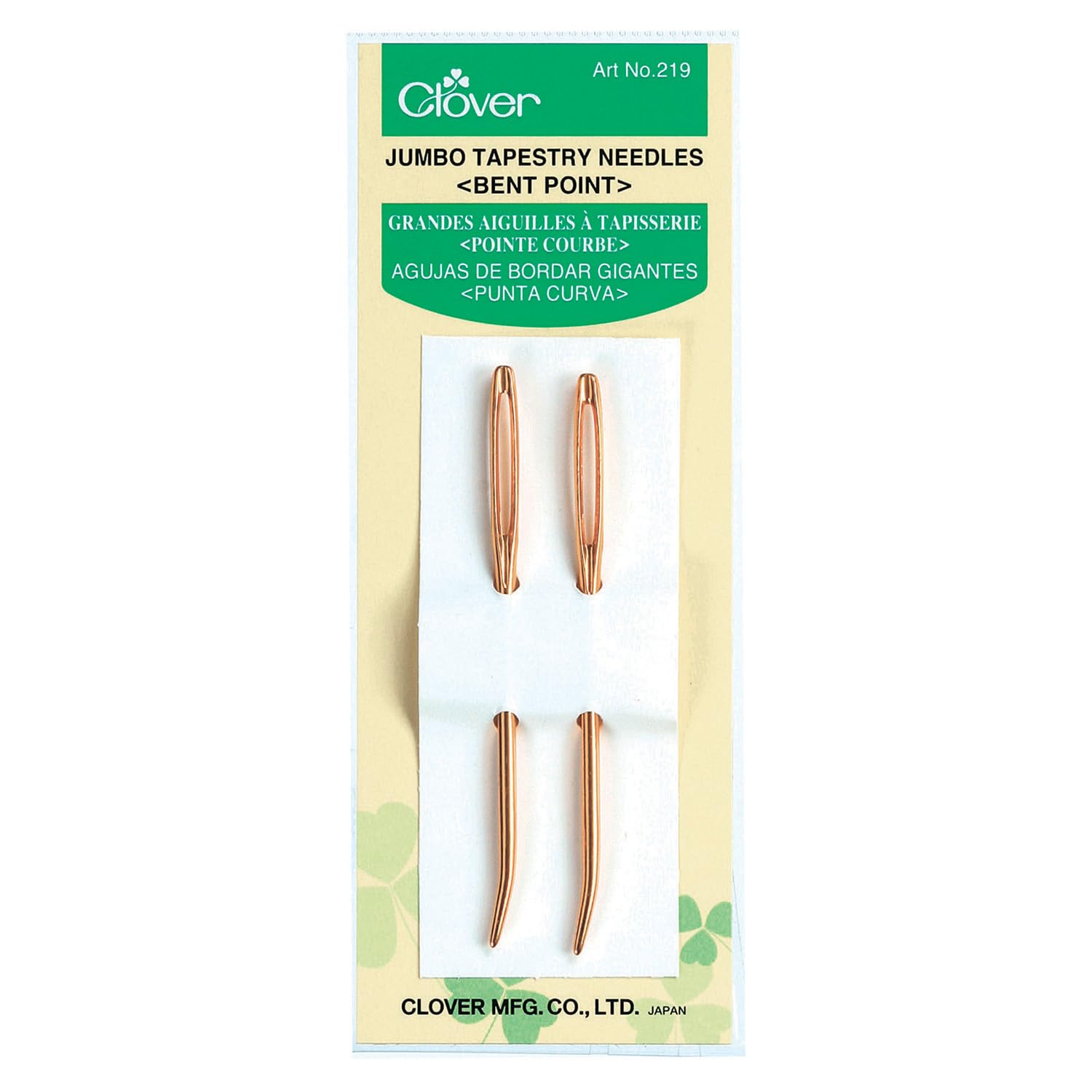
These jumbo bent-point tapestry needles are useful when a macrame coaster has cord tails that need to be tucked through existing knots. Clover’s official specifications list a curved tip for hooking threads, two needles per package, a 2.50 mm diameter, 70 mm length, and aluminum construction.
The large format is particularly convenient for bulky yarn and craft cord. For a coaster, use the needle to bury manageable tails, repair a loose join, or guide cord through a dense area without relying entirely on your fingertips.
What People Say
The source article summarizes feedback favorably, especially around the bent point and large eye. Because the article does not document a review-analysis sample, treat that sentiment as directional. The product’s most reliable attributes are the specifications published directly by Clover.
Overall Sentiment: Positive in the source article’s listing-feedback summary.

Long-Term Value
A reusable metal tapestry needle can simplify finishing across many macrame, knitting, crochet, and yarn projects. Store it where the tip will not be bent or lost, and one pack can remain useful well beyond a single coaster set.
Return On Investment
The benefit is mainly saved finishing time. A bent, large-format needle can make hidden tails easier to control than trying to push thick cord through a dense knot by hand.
DIY Guide
Thread a cord tail through the eye and weave it back through nearby knots without pulling hard enough to distort the coaster. Work in the direction of the existing knot structure, then trim only after the tail is secure.
If a dense knot requires significant force, stop and loosen the path or choose a different finishing method rather than pushing the needle toward your hand.
Versatility
Clover sells these as tapestry needles, but the curved tip and large format are useful across knitting, crochet, darning-style finishing, and selected macrame work where bulky fibers need to be guided through existing stitches or knots.
Aesthetic
The needle itself does not change the coaster’s visual style; its value is helping you hide loose ends so the finished knot work looks cleaner.
Safety
Store needles securely away from children and pets. Keep your non-dominant hand out of the needle’s path when pushing through dense knots, and use controlled pressure rather than forcing the point.
Customization Options
|
Feature |
Customization Level |
|---|---|
|
Compatible Yarn Sizes |
High within the limits of the needle eye and project density |
|
Bent Tip Angle |
Fixed by the product design |
|
Eye Size |
Fixed by the product design |
|
Material Finish |
Low |
Problem Solving
If loose tails are difficult to hide in thick knots, the bent tip helps you approach the path at an angle and guide the cord through. It is also useful for small repairs when a tail works loose after handling.
Key Benefits
- Curved tip is designed to make hooking threads easier
- Large format is useful with thicker fibers
- Official Clover specification lists aluminum construction
- Official dimensions are 2.50 mm in diameter and 70 mm in length
Original listing snapshot: Rating: 4.7 (total: 1198+). Ratings and review totals may change.
MB Cordas Natural

This natural cotton option is useful when you want a neutral base for minimalist coasters and larger decorative projects. The linked source listing identifies a 3 mm single-strand version, while MB Cordas’ current catalog includes multiple 3 mm constructions and spool sizes. Check the exact listing before ordering because length, weight, color, and construction can differ between variants.
For coaster work, the main advantages of this style of cord are its neutral appearance, brushable fringe, and manageable diameter. A soft single-strand cord produces a different finished feel from a firmer three-strand rope, so choose based on the pattern rather than assuming one construction is universally better.
What People Say
The source article summarizes feedback around softness, generous yardage, and consistent thickness while also noting that vigorous combing can create pilling and that natural colors may look different in person. Because reviews and variants change, use these themes as general buying considerations rather than a fixed sentiment measurement.
Overall Sentiment: Positive in the source article’s listing-feedback summary.

Long-Term Value
A larger spool is convenient when you want to make several coaster sets or practice patterns without switching material halfway through. Confirm the actual spool length on the listing you purchase, since current MB Cordas 3 mm options are sold in different constructions, weights, and lengths.
Return On Investment
For repeated craft projects, the useful value comes from consistency and having enough cord from the same batch to complete matching pieces. A larger spool can reduce interruptions, although it does not guarantee a specific number of coasters because patterns consume very different amounts of cord.
DIY Guide
Measure cord according to the chosen pattern and cut every matching strand carefully. Practice your tension on scrap material before beginning a set, especially if you want all finished coasters to match in size.
For a minimalist finish, trim fringe only after the knot work is complete and the coaster is lying flat. Comb gently from the ends toward the knots rather than aggressively pulling at the entire fringe in one pass.
Versatility
Natural 3 mm cotton cord can work for coasters, keychains, small plant-hanger accents, tassels, feathers, and medium decorative pieces. For load-bearing or safety-critical applications, use material specifically rated for that purpose rather than decorative craft cord.
Aesthetic
An off-white or natural cotton tone pairs easily with wood and muted palettes. Natural fibers can vary slightly in shade, so buy enough from the same listing or batch when an exact set match matters.
Safety
Keep craft cord away from open flame and direct high heat. Follow the care information for the exact cord purchased before washing, pressing, dyeing, gluing, or coating it. Do not use an ordinary macrame coaster as a substitute for a heat-rated trivet under cookware.
Customization Options
|
Feature |
Customization Level |
|---|---|
|
Color Range |
High across the broader MB Cordas range; verify the linked variant |
|
Combable Fringe |
High for single-strand versions |
|
Dye Compatibility |
Moderate; follow dye and cord-manufacturer directions |
|
Spool Length Options |
Moderate to high across current manufacturer offerings |
Problem Solving
If your coaster needs defined knots plus a soft fringe, a 3 mm single-strand cotton cord can balance those goals when the pattern is designed for it. If the finished coaster feels too soft, changing to a firmer twisted construction is usually more predictable than doubling strands without adjusting the pattern.
Key Benefits
- Natural cotton appearance suits minimalist designs
- 3 mm single-strand versions are easy to comb for fringe
- Larger spool options are practical for repeated projects
- Neutral color works with many interior palettes
Original listing snapshot: Rating: 4.7 (total: 1762+). Ratings and review totals may change.
How To Make A Simple Square Macrame Coaster
A square coaster is a good beginner project because the repeating rows make tension problems easy to see. One established 3 mm tutorial uses ten 120 cm cords attached to a temporary dowel, creating 20 working ends.
- Cut the cord. For this specific method, cut ten pieces of 3 mm cord at approximately 120 cm each. Do not use this quantity as a universal rule for other coaster patterns.
- Attach the cords. Fold each piece in half and attach it to a temporary dowel with a lark’s head knot, keeping all ten attachments evenly spaced.
- Make the first row. Divide the 20 working cords into groups of four and tie five square knots across the row.
- Offset the next row. Leave the first two cords free, tie four square knots across the middle, and leave the last two cords free.
- Repeat the alternating rows. Alternate five-knot and four-knot rows while watching the side edges and maintaining even tension. A common version uses 11 total rows and begins and ends with a five-knot row.
- Finish the edges. Follow the pattern’s method for releasing the temporary anchor and creating the final top and bottom fringe.
- Comb and trim. If the cord is designed to separate into fringe, comb gently and trim only after the coaster is flat and symmetrical.
For another construction method, round coasters often begin with a filler cord and use lark’s head and double half hitch knots rather than a horizontal dowel setup. Yarnspirations’ published macrame coaster patterns are useful references for these knot techniques and finished sizing.
Warning: A decorative cotton macrame coaster is intended for cups and ordinary tabletop use. Do not assume it is rated to protect a surface from hot cookware, open flame, candles, or other high-temperature objects.
How To Keep A Macrame Coaster Flat
Curling usually comes from tension or spacing rather than a lack of finishing product. If a round coaster cups upward, the working knots may be packed too tightly around the center. If the edge becomes wavy, you may have added too much circumference or too many cords too quickly.
- Check tension early: correct curling during the first few rows rather than trying to flatten severe distortion at the end.
- Add cords when the pattern requires them: round patterns often need additional working cords as the circumference grows.
- Count rows or rounds: use the same count for every coaster in a matching set.
- Let the piece relax: a mildly uneven coaster can often be shaped flat by hand or placed under a flat weight once the material’s care instructions permit it.
- Do not automatically iron: some macrame yarn care instructions specifically prohibit ironing.
Note: Different cord constructions behave differently. A very soft single-strand cord may make a more relaxed coaster, while a firmer twisted cord can hold shape more decisively. Match the cord to the pattern rather than trying to correct every structural problem during finishing.
Frequently Asked Questions
Which cord should I choose for macrame coasters?
For a soft minimalist coaster with combed fringe, 3 mm single-strand cotton is an easy starting point. If you want a firmer coaster with more rope-like texture, consider a more tightly twisted or multi-strand cord. Always match the diameter and construction specified by your pattern because changing either one affects finished size, knot density, and cord consumption.
How do I protect macrame coasters?
Secure loose tails using the finishing method in your pattern, keep the coaster dry between uses, and clean it according to the specific cord manufacturer’s instructions. If you want to use fabric glue or another treatment on loose ends, test it on scrap cord first. Avoid automatically adding sealants because they can change absorbency, flexibility, color, washability, and heat behavior.
How much cord do I need for one macrame coaster?
There is no reliable universal amount. For example, one square pattern using 3 mm cord starts with ten 120 cm strands, or about 12 m (39 ft) total. A different round tutorial using 4 mm cord starts with one 130 cm strand plus twenty 90 cm strands, or about 19.3 m (63 ft). Use the exact cutting list for your chosen pattern and keep extra cord available for practice, tension differences, and mistakes.
Do I need a dowel to make a macrame coaster?
No. A dowel is useful as a temporary anchor for some square patterns, but many round coasters are worked around a filler cord on a flat surface and may use tape, a cork board, or pins instead. Follow the setup used by the specific pattern.
Why is my macrame coaster curling?
Uneven or excessive tension is a common cause. On round patterns, too few working cords as the circle expands can also pull the piece into a cup. Correct the spacing and tension as you work instead of depending on pressing or coatings to flatten severe curling afterward.
Customer Preferences
Your best supply choice depends on what you want the finished coaster to look and feel like. If soft fringe is the priority, a brushable single-strand cord is usually easier to finish. If you want a firmer edge and stronger rope texture, a more structured twisted cord may be a better match.
Dowels are most useful when a pattern needs a straight temporary anchor, while large-eye needles become valuable during finishing when you need to bury tails or clean up joins. For a minimalist coaster set, consistency matters more than buying the largest tool collection: use the same cord diameter, construction, cutting lengths, knot count, and tension across the set.

Wrapping Up
Choose supplies around the coaster pattern rather than around a product score alone. If you prefer soft, combable fringe and fine knots, a 3 mm single-strand cotton cord is a strong place to start. If you want a firmer finished piece, compare more tightly twisted constructions before cutting the project.
Use the Darice dowels when a pattern benefits from a straight temporary anchor, and keep the Clover bent-point tapestry needles available when you need to hide ends cleanly. Instead of relying on a missing embedded video, use the written starter method above or follow a complete published coaster pattern with its exact cord lengths and knot sequence.
| Product Name | Image | Rating | Material | Dimensions | Weight |
|---|---|---|---|---|---|
| Macrame Cord Cotton Rope 3 mm 1/8 in – MB Cordas |
|
Original listing snapshot: 4.6/5 (1,251 reviews); may change | Cotton | 3 mm diameter; source listing stated 459 feet, but verify the current variant before purchase | Source article stated 500 g; verify the current listing because MB Cordas spool sizes vary |
| Dowel Rod – Wood – 1/4 x 12 inches – Darice |
|
Current checked listing: 4.7/5 (2,930 ratings); may change | Hardwood | 1/4 inch diameter, 12 inches length; 10 rods per pack | Source listing stated 0.16 pounds for the item/package; individual-rod weight is not needed for coaster use |
| Clover Jumbo Tapestry Needles Bent Point 2 Pack |
|
Original listing snapshot: 4.7/5 (1,198 reviews); may change | Aluminum | 70 mm length; 2.50 mm diameter according to Clover | Not listed on Clover’s official product page; the original table stated 6 g |
| MB Cordas Natural Macrame Cord 3mm Cotton Cord |
|
Original listing snapshot: 4.7/5 (1,762 reviews); may change | Cotton | Source listing stated 3 mm diameter and approximately 459 feet; current MB Cordas 3 mm offerings vary by spool | Source article stated 500 g; verify the linked variant before ordering |
Sources
- Clover USA — Jumbo Tapestry Needles (Bent Point) — official material, quantity, diameter, length, and curved-tip specifications.
- MB Cordas — 3 mm Single Strand Twisted Natural Macrame Cotton Cord — official reference for 3 mm single-strand construction and current spool specifications.
- Darice Dowel Rod current Amazon product listing — current listing dimensions, material, pack quantity, and rating snapshot.
- Yarnspirations — Bernat Macrame Coasters Pattern — coaster sizing, finishing supplies, and care guidance.
- Yarnspirations — Bright Side Macrame Coasters — lark’s head and double half hitch knot techniques and finished coaster sizing.
- LoveCrafts — Macrame Coaster Tutorial — published materials list and pattern-specific cord cutting quantities.