

Why soak liver in milk is a question almost every cook asks after tasting liver for the first time. The tradition is old and widespread: soak the slices, rinse the milk off the plate, and cook a milder, softer piece. Whether the soak truly changes the chemistry is less clear, and this guide separates what cooks report from what is actually known.
Quick Answer
Cooks soak liver in milk to make it taste milder and feel more tender, and some say it draws out blood and bitterness. I found no controlled studies confirming a chemical effect, so treat it as a kitchen tradition that many people find helpful. If you try it, soak in the refrigerator and discard the milk afterward.
Key Takeaways
- Milk soaking is a long-standing cooking tradition, not a proven technique.
- Canada Beef describes dipping thin slices in milk before cooking, with no set time.
- Trimming the membrane and veins and not overcooking probably matter more for flavor.
- Soak in the refrigerator, never on the counter, and throw the milk away.
- Variety meats like liver keep only 1 to 2 days in the refrigerator, so cook or freeze them quickly.
What People Say Milk Does
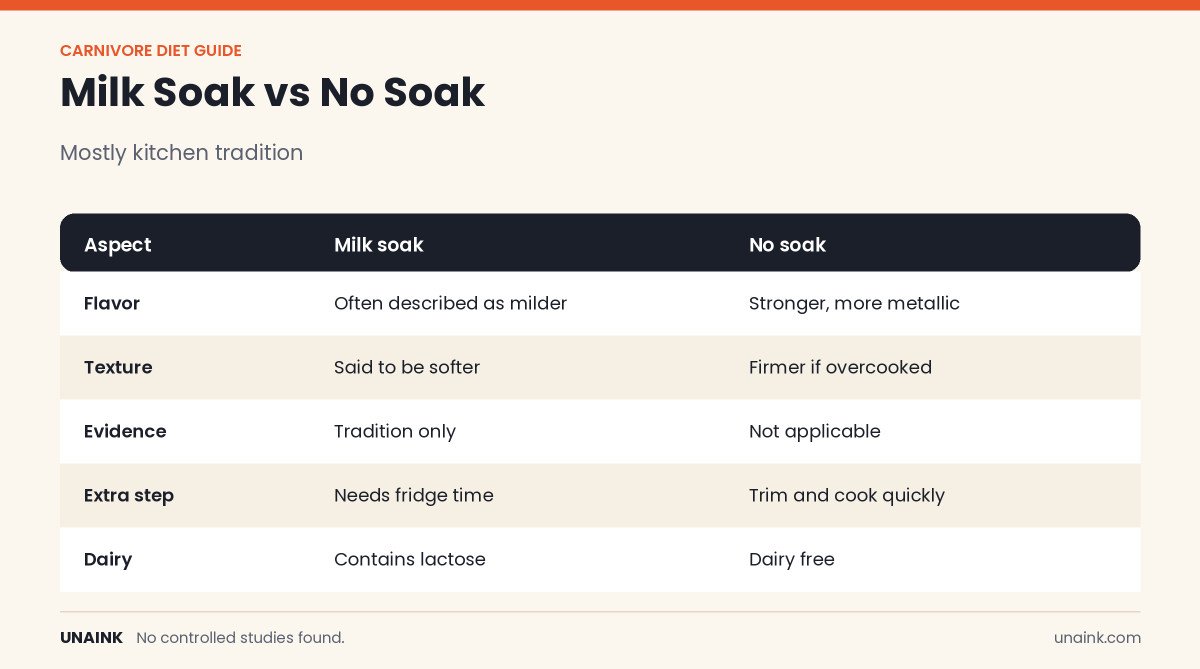
Cooks give three reasons. First, they say milk pulls out blood and the sharp metallic taste that goes with it. Second, they say it softens the surface of the slices. Third, they describe a general mellowing of the bitter edge in beef liver. These are observations from home kitchens, not results from laboratory tests.
Is There Any Science Behind It?
Possible explanations include milk proteins binding some flavor compounds, the water in milk diluting blood on the surface, and the mild acidity of milk affecting texture. None of these has been shown for liver in a study I could find. Another factor is that people who soak also tend to trim carefully and cook briefly, which alone improves flavor.
So the honest answer is that many cooks swear by it and some notice no difference. Try a side-by-side test with two slices to see what you think.
Why Soak Liver in Milk Safely
Raw liver is perishable. Extension handouts list variety meats at 1 to 2 days in the refrigerator at 40°F or below, and the USDA says to discard perishable food left out more than 2 hours. That makes the counter a poor place to soak.
- Soak in a covered dish in the refrigerator
- Keep soaking time modest, since no source gives an official limit
- Pour the milk down the sink afterward and never reuse it
- Pat the slices dry with paper towels before cooking
- Wash hands, bowls and boards with hot, soapy water
Comparing Milk With Other Methods
| Method | What cooks say | Notes |
|---|---|---|
| Milk soak | Milder, softer slices | Tradition; dairy is not strictly carnivore |
| Lemon juice or vinegar | Brightens flavor | Acid can make slices firm if left too long |
| Salted water | Draws out surface blood | Rinse and pat dry |
| No soak, careful trim | Clean taste when fresh | Peel the membrane and avoid overcooking |
See how to clean beef liver for trimming steps. If you avoid dairy, those steps plus a short cook time are often enough.
Carnivore and Dairy Considerations
Milk contains lactose, so some strict followers skip it, and people with lactose intolerance may prefer water or a lactose-free option. Because you discard the milk, very little remains on the meat. Our milk guide explains where milk fits.
After the Soak
Cook liver quickly over medium-high heat. Canada Beef suggests about 2 minutes per side for slices 1/2 inch thick and says liver is best cooked only to medium. The USDA has no separate liver temperature, so many cooks use 160°F, the ground meat figure, as a conservative target. Overcooking makes it grainy. See our cooking guide for more.
Why Soak Liver in Milk: The Short Version
Why soak liver in milk? Because many cooks find it mellows flavor and softens texture, even though no study confirms why. Whether or not you decide to soak liver in milk, cold storage, careful trimming and short cooking matter most.
Frequently Asked Questions
How long should I soak liver in milk?
No official time exists. Many recipes use between 30 minutes and a few hours, always refrigerated.
Does soaking remove toxins from liver?
No. This is a common myth, and soaking is only about flavor and texture.
Can I soak liver in something other than milk?
Yes. Cooks use water with salt or a little lemon juice or vinegar.
Should I rinse liver after soaking?
Pat it dry with paper towels instead, then wash your hands and tools.
Is soaked liver safer to eat?
No. Soaking does not make raw liver safe. Cooking, cold storage and clean handling do.
Conclusion
A milk soak is harmless and might help, but it is optional. Trim well, keep liver cold, cook it briefly and judge for yourself whether the extra step improves flavor.
Keep Reading
- How to Clean Beef Liver: Peel the membrane and trim the tubes.
- How to Cook Beef Liver: A quick pan method.
- How to Eat Organ Meat: Gentle ways to start.
- Beef Liver vs Chicken Liver: Taste and texture compared.
Sources
- Canada Beef: Variety Meats: Milk dip, slice thickness and cooking notes.
- University of Arkansas Extension: Keeping Food Safe: Variety meat storage times.
- USDA FSIS: Leftovers and Food Safety: 2-hour rule and temperature guidance.


[…] Optional soak. A milk soak can soften the flavor but does not sanitize the liver. Keep it in the fridge and discard the liquid. Here is why people soak liver in milk. […]