Dried beef snacks come in many forms, but the biltong vs jerky pairing is the one people confuse most. Both are salted, dried beef, and both are popular on low-carb and carnivore plans. They differ in how the meat is cut, flavored, and dried, which changes texture, ingredients, and food safety.
Quick Answer
Biltong is a South African snack made from thick strips of beef cured with vinegar, salt, and spices, then air dried for days. Jerky is usually thinner, often marinated with sugar or sauces, and dried with heat. Biltong tends to have a softer, meatier bite, while jerky is chewier and often sweeter.
Key Takeaways
- Biltong is air dried over days; jerky is dried with heat and heated to a safe internal temperature.
- Biltong uses vinegar, salt, and spices; jerky often adds sugar, soy, and smoke.
- Biltong strips are thicker, which gives a softer, more tender texture.
- Both can be high in sodium, and store-bought versions vary a lot, so read labels.
- Homemade jerky has clear safety steps, while home biltong needs extra care.
How Each Is Made
Traditional biltong starts with strips of beef, often cut along the grain, soaked or rubbed with vinegar, salt, and spices such as coriander. The meat then hangs in a ventilated space for several days, which dries it without cooking. Beef is the standard, though game such as kudu and ostrich is also used.
Jerky uses thinner slices, often marinated in soy sauce, sweeteners, and seasonings. It is dried with low heat in a dehydrator or oven, and it is frequently smoked. Our beef jerky guide covers the method.
Biltong vs Jerky: Side by Side
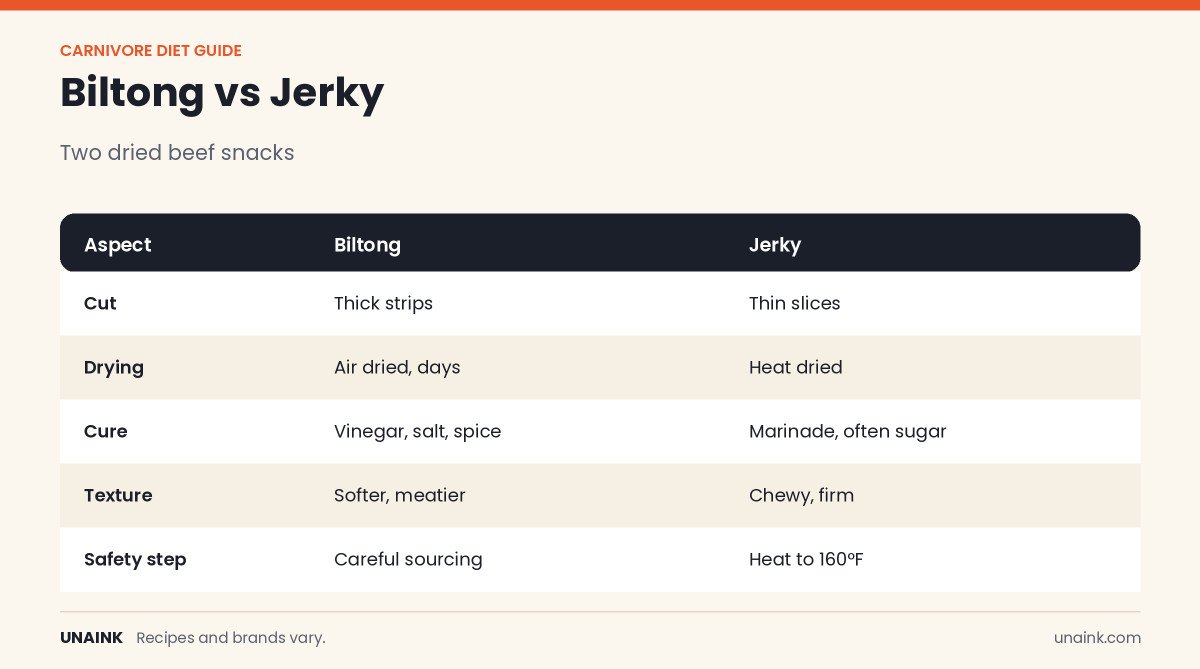
| Feature | Biltong | Jerky |
|---|---|---|
| Origin | South Africa | Widely made, with roots in many cultures |
| Cut | Thick strips or slabs | Thin slices |
| Cure and flavor | Vinegar, salt, spices | Salt, marinades, often sugar and smoke |
| Drying | Air dried for days | Heated, usually in a dehydrator or oven |
| Texture | Softer, can be sliced thin | Chewy and firm |
| Typical additives | Usually few | Often sugar, soy, or preservatives |
Sugar content varies by brand and recipe. Many traditional biltong recipes skip added sugar, though some spice mixes include a little, so labels matter for strict carnivore eaters.
Nutrition and Ingredients
Drying removes water, so both snacks are concentrated protein. Roughly 200 g of fresh beef yields about 100 g of biltong, and some biltong is reported to run as high as 67 percent protein. Jerky varies with the marinade and cut.
- Check for added sugar, which is common in flavored jerky.
- Look for short ingredient lists: beef, salt, vinegar, spices.
- Watch sodium, since both are cured with salt and can be very high per serving.
- Avoid products with nitrates or fillers if you prefer minimal processing, as some jerky contains them.
Processed meats are classified by the World Health Organization’s cancer agency as carcinogenic to humans, with risk rising as intake rises, so treat dried meats as an occasional snack rather than a daily staple. Cured and smoked products are the main concern.
Food Safety: Heat vs Air Drying
Jerky has a clear safety rule. The National Center for Home Food Preservation advises heating meat to 160°F, either in the marinade before drying or on a baking sheet afterward. It then suggests drying at about 140°F and notes that properly dried jerky keeps about two weeks sealed at room temperature.
Biltong normally has no heating step, so safety depends on salt, acidity, thorough drying, cleanliness, and good meat. Buy from reputable makers, store it as directed, and be careful with homemade batches. Pregnant people, older adults, young children, and people with weakened immunity should talk with a clinician before eating air-dried meat.
Which One Fits a Carnivore Plan?
Either can fit if the ingredient list is simple. Biltong more often matches strict carnivore preferences because it uses fewer additives, while jerky needs more label checking. Try them as portable snacks next to ideas from carnivore diet snack ideas, or consider pemmican for a fattier travel food.
Biltong vs Jerky: The Short Version
The biltong vs jerky difference comes down to method: air drying with vinegar for biltong, heat drying and marinades for jerky. Choose by texture and ingredients, and in any biltong vs jerky purchase, check sodium and added sugar.
Frequently Asked Questions
Is biltong healthier than jerky?
Not automatically. Biltong often has fewer additives and less sugar, but both are salty dried meats. Compare labels and eat them in moderation.
Is biltong raw?
It is cured and air dried rather than heated, so it is not cooked in the usual sense. This is why handling and sourcing matter.
Why is biltong softer than jerky?
The strips are thicker and the drying is gentler, so more moisture and tenderness remain, depending on how dry you leave it.
Does biltong contain sugar?
Traditional versions often do not, but some recipes and brands add a small amount. Read the ingredient list.
How long does jerky last?
NCHFP says properly dried jerky keeps about two weeks at room temperature in a sealed container, and longer in the refrigerator or freezer.
Conclusion
Biltong and jerky are cousins with different manners. Pick the one whose texture and ingredient list you prefer, watch sodium, and follow the safety steps for anything you make at home.
Medical note
This article is for general education and is not medical advice. Talk with a doctor or registered dietitian before making major diet changes, especially if you have a health condition, take medication, or are pregnant or breastfeeding.
Keep Reading
- How to Make Beef Jerky at Home: A simple dehydrator method.
- Carnivore Diet Snack Ideas: Easy snacks without carbs.
- What Is Pemmican?: The traditional high-fat travel food.
- How to Make Pemmican: Make it at home.
Sources
- Wikipedia: Biltong: Overview of how biltong is made versus jerky.
- National Center for Home Food Preservation: Making Jerky: Safe heating, drying, and storage for jerky.
- World Health Organization: Carcinogenicity of red meat and processed meat: IARC classification and risk context.