Carnivore diet bad breath is one of the most common early complaints, often described as a metallic, fruity, or nail-polish-like smell. It is usually tied to ketosis and protein breakdown, and for most people it fades. Here is what causes it, what actually helps, and when a change in breath is a warning sign.
Quick Answer
Carnivore diet bad breath usually comes from acetone, a ketone your body exhales while burning fat, and from ammonia made when protein is broken down. It often appears within the first week and tends to fade over a couple of weeks. Drinking enough water, brushing and flossing, and leaning toward fattier cuts can help. Fruity breath with heavy thirst, vomiting, or confusion is an emergency, especially for people with diabetes.
Key Takeaways
- Ketone breath is caused mainly by acetone, which is exhaled when the body runs on fat.
- Extra protein can add an ammonia smell that some people describe as urine-like.
- It usually shows up within days to a week and often fades within a couple of weeks.
- Dry mouth, gum problems, and tongue bacteria can cause or worsen the smell, so mouth care matters.
- Fruity breath with nausea, vomiting, belly pain, fast breathing, or confusion needs emergency care, especially with diabetes.
What Causes Ketone Breath
When carbs are very low, the body makes ketones for fuel. One of them, acetone, leaves through the lungs and can give breath a fruity or nail-polish-like smell. Healthline notes that ketones are usually harmless, and its sources include a 2002 study showing breath acetone is a reliable marker of ketosis (Healthline).
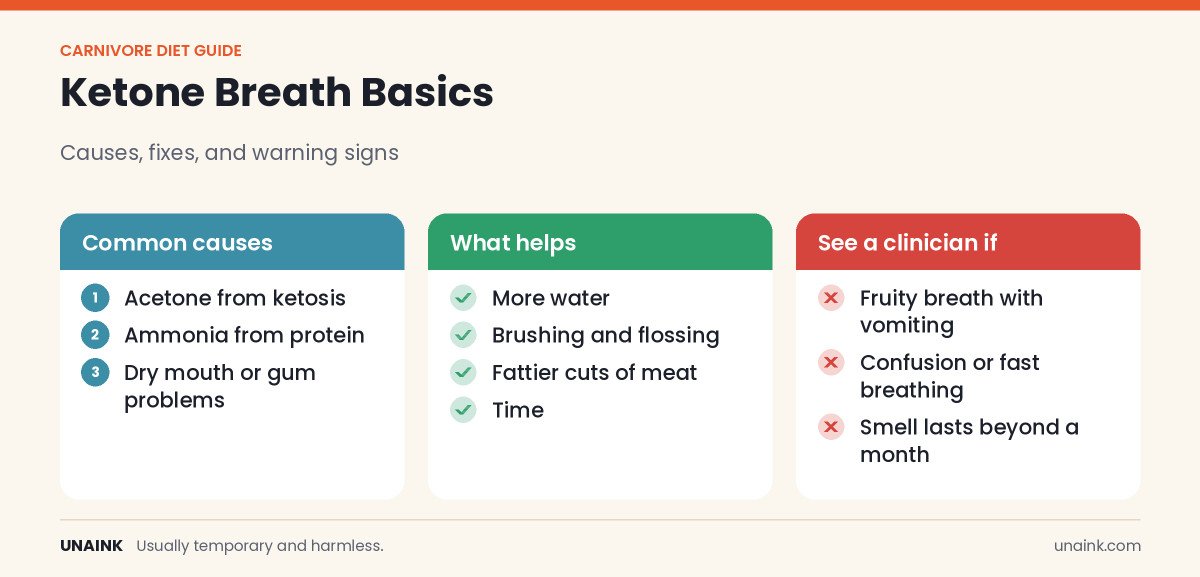
Protein plays a second role. Breaking it down produces ammonia, which the body clears through urine and breath. Healthline says eating a lot of protein can add to the odor. On a meat-only plan that can be a factor, particularly if most of your meals are lean cuts.
Carnivore Diet Bad Breath: How Long Does It Last?
Keto breath often appears within days to a week of cutting carbs and usually fades within a couple of weeks as the body adjusts. Some people never notice it. There is no reliable way to prevent it, and there is no good long-term data from carnivore eaters specifically, since the human evidence is small and mostly self-reported (Nutrients review). If the smell lingers well past a month, look at your mouth and overall health before blaming ketones.
Other Causes Worth Ruling Out
- Dry mouth. Less saliva lets odor-causing bacteria build up. Low fluid intake early in the diet can contribute.
- Gum disease or cavities. Persistent odor with bleeding gums, tooth pain, or a bad taste points to a dental problem. See carnivore diet and dental health.
- Tongue coating or tonsil stones. Bacteria collect on the back of the tongue and in tonsil crypts.
- Reflux or stomach issues. A sour smell with heartburn may be digestive. See carnivore diet and acid reflux.
- Smoking, alcohol, or medicines. Several common medicines dry the mouth.
What Helps
- Drink more water. Healthline says it helps flush ketones out through urine. Use our water guide for practical amounts.
- Brush twice a day, floss, and gently clean your tongue.
- Choose fattier cuts such as ribeye or ground beef over very lean meat, and avoid piling on extra protein. See how to get more fat on carnivore.
- Use sugar-free gum or mints sparingly. Check the sweeteners first, since not everyone counts them as carnivore (see sweeteners on carnivore).
- Be patient. Time is the most dependable fix.
- Some low-carb eaters add a few grams of carbs and use a breath ketone analyzer to find their threshold. That is a personal experiment, not a proven treatment.
Reading the Smell
| What you notice | Likely source | What to do |
|---|---|---|
| Fruity or nail-polish smell | Acetone from ketosis | Drink water, keep up mouth care, and wait for it to ease |
| Ammonia or urine-like smell | Protein breakdown, dehydration | Drink more, mix in fattier cuts, and see a clinician if it persists, especially with kidney concerns |
| Sour, rotten, or bad taste | Gums, tongue, tonsils, or reflux | Book a dental check and mention reflux symptoms to your doctor |
| Fruity breath with thirst, vomiting, belly pain, or confusion | Possible diabetic ketoacidosis | Seek emergency care right away |
Red Flags That Need Prompt Care
Ketone breath from diet is generally harmless, but breath can also signal a medical problem. Get urgent help if you notice:
- Fruity breath with excessive thirst, frequent urination, nausea, vomiting, stomach pain, fast breathing, or confusion. The CDC lists nausea, vomiting, stomach pain, and diabetic ketoacidosis among type 1 diabetes warning signs (CDC).
- Breath changes if you take an SGLT2 inhibitor or insulin. These medicines raise the stakes for ketone buildup, so talk with your prescriber before eating very low carb, and never change a dose on your own.
- A persistent ammonia or urine smell, swelling, or much less urine, which can signal kidney trouble.
- Bleeding gums, loose teeth, or a lasting bad taste in the mouth.
Carnivore Diet Bad Breath: The Short Version
Carnivore diet bad breath is typically a temporary result of acetone and ammonia, and it usually improves with water, good mouth care, and time. If carnivore diet bad breath comes with illness symptoms or does not fade, treat it as a signal to get checked.
Frequently Asked Questions
Why does my breath smell like nail polish on carnivore?
That fruity, solvent-like smell is usually acetone, a ketone your body exhales when it runs on fat.
How long does keto breath last?
It often starts within days to a week and fades within a couple of weeks for many people. Some never get it and a few notice it longer.
Will mouthwash fix it?
It can mask the smell for a while, but it does not remove ketones. Brushing, flossing, and tongue cleaning address the mouth bacteria part.
Does eating more carbs stop ketone breath?
Raising carbs enough to leave ketosis would reduce acetone, but that changes the diet. Talk with your clinician first if you have diabetes or take glucose-lowering medicine.
Is fruity breath ever dangerous?
Yes. Fruity breath with thirst, vomiting, stomach pain, fast breathing, or confusion can signal diabetic ketoacidosis and needs emergency care.
Conclusion
For most people the smell is a short-term sign of adapting, not a health problem. Drink enough, keep your mouth clean, and give it a couple of weeks. If anything feels off beyond the smell, get checked instead of guessing.
Medical note
This article is for general education and is not medical advice. Talk with a doctor or registered dietitian before making major diet changes, especially if you have a health condition, take medication, or are pregnant or breastfeeding.
Keep Reading
- Carnivore Diet and Dental Health: Gums, teeth, and what to watch.
- Carnivore Diet Ketosis: How ketosis works on a meat-only plan.
- How Much Water to Drink: Practical hydration targets.
- Carnivore Flu: Other early adaptation symptoms.
Sources
- Keto Breath (Healthline): Causes, timeline, and fixes for ketone breath.
- Signs and Symptoms of Diabetes (CDC): Diabetes symptoms and warning signs including ketoacidosis.
- Carnivore Diet scoping review (Nutrients, 2026): Limited, mostly self-reported evidence on carnivore diets.
- Keto Flu (Cleveland Clinic): Early adaptation symptoms and hydration advice.