Zero fiber and a gut condition that is often managed with fiber seem like a poor match, yet people ask about the carnivore diet and diverticulitis all the time. Diverticulitis is inflammation or infection of small pouches in the colon wall, and it can be serious. This article explains what national guidance says about fiber and red meat, what is unknown about carnivore eating, and why flare-ups need medical care.
Quick Answer
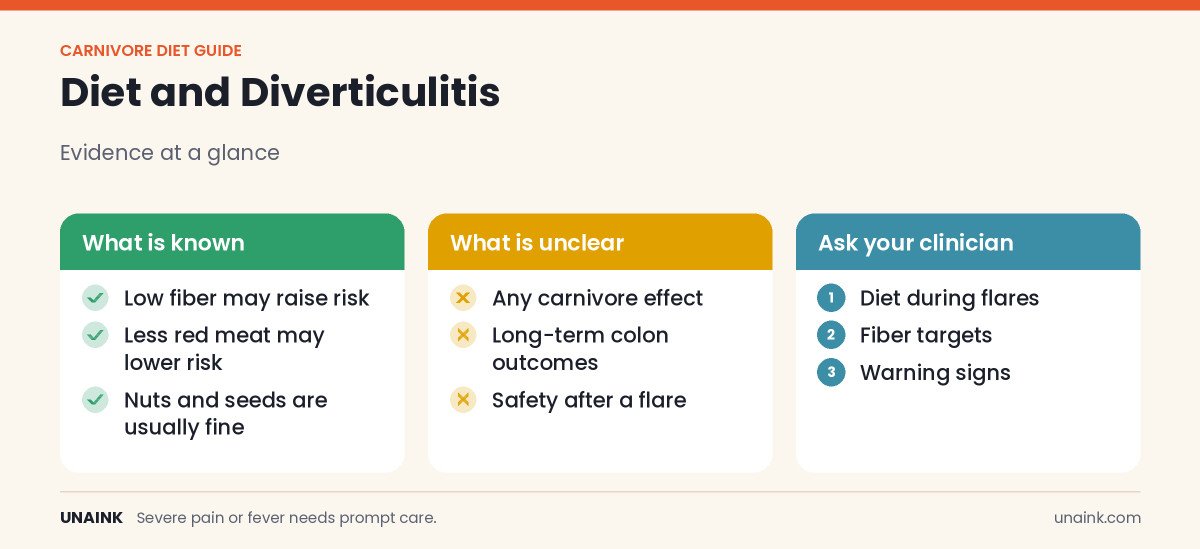
It is unproven and may be a poor fit. The NIDDK says research suggests a low-fiber diet may raise the risk of diverticulitis and eating less red meat may lower it. A carnivore diet has no fiber and is built on red meat. No study tests it in diverticular disease, so talk to your clinician before trying it.
Key Takeaways
- Diverticulosis means small pouches in the colon, and diverticulitis is when they become inflamed or infected.
- The NIDDK says low fiber may raise diverticulitis risk and less red meat may lower it.
- No study has tested a carnivore diet in diverticular disease.
- Nuts and seeds no longer need to be avoided by most people, per the NIDDK.
- Severe abdominal pain, fever, or bleeding needs prompt medical care.
What Diverticulosis and Diverticulitis Are
Diverticulosis is the presence of small pouches, called diverticula, in the wall of the colon. Many people have them without symptoms. Diverticulitis happens when one or more pouches become inflamed or infected, causing lower abdominal pain, fever, and changes in bowel habits.
Complicated cases can involve abscesses, perforation, or bleeding. A flare needs a clinician to confirm the diagnosis, since other conditions can look similar. Do not manage suspected diverticulitis with diet alone.
What National Guidance Says About Diet
The NIDDK reports that a low-fiber diet may raise the risk of diverticulitis, while high-fiber foods may lower it. It cites the Dietary Guidelines figure of 14 grams of fiber per 1,000 calories and advises increasing fiber gradually.
The same page says eating less red meat may lower the risk, and that most people with diverticular disease do not need to avoid specific foods, including nuts and seeds. Diet during a flare is a separate question that your doctor should answer.
Carnivore Diet and Diverticulitis: Where the Concerns Are
- No fiber: opposite of the usual advice to eat more fiber for diverticular disease.
- High red meat intake: a factor linked with higher diverticulitis risk in observational research.
- Constipation: hard stools and straining are common without fiber. See carnivore diet constipation.
- Microbiome changes: less plant fiber changes what gut bacteria receive. See carnivore diet and the gut microbiome.
- Weak evidence overall: the 2026 scoping review found only nine human studies.
What People Report
Some people with gut issues say cutting plant foods reduced pain or bloating, and a few with a diverticulitis history say they have stayed flare-free on meat. These stories are anecdotal and cannot show that carnivore prevents flares, especially because flares can be months or years apart. Others report constipation on the diet, which can strain the colon. See do you need fiber on the carnivore diet.
Who Needs Extra Care
Anyone with a recent diverticulitis attack, repeated flares, a history of surgery or abscess, or an upcoming colonoscopy should talk with a gastroenterologist before changing diet. If you take blood thinners, NSAIDs, or steroid medicines, ask about bleeding and perforation risk. Do not change medicine on your own. A dietitian can build a plan that fits your symptoms.
Warning Signs
- Severe or worsening lower abdominal pain.
- Fever or chills with abdominal pain.
- Blood in the stool or a large amount of rectal bleeding.
- Vomiting, inability to keep fluids down, or a swollen abdomen.
These need prompt evaluation, not a diet experiment.
Carnivore Diet and Diverticulitis: The Short Version
The carnivore diet and diverticulitis have not been studied together, and national guidance leans toward more fiber and less red meat. If you still want to try the carnivore diet and diverticulitis is in your history, speak to your gastroenterologist first.
Frequently Asked Questions
Is a zero-fiber diet safe with diverticulitis?
Not proven. The NIDDK says low fiber may raise risk, and no study tests a zero-fiber diet in diverticular disease.
Does red meat cause diverticulitis?
Observational research and the NIDDK suggest eating less red meat may lower risk. That does not prove cause.
Do I need to avoid nuts and seeds?
The NIDDK says most people with diverticular disease do not need to avoid specific foods.
What should I eat during a flare?
Ask your doctor. The right diet during a flare depends on severity, and the NIDDK page does not cover it.
Can a dietitian help?
Yes. A doctor or dietitian can help plan meals around symptoms and fiber needs.
Conclusion
For diverticular disease, the best-supported guidance points toward adequate fiber and moderate red meat, which is the opposite of a carnivore pattern. If you want to explore meat-based eating, involve your gastroenterologist, avoid it during flares, and treat warning signs as urgent. Your colon health matters more than any diet label.
Medical note
This article is for general education and is not medical advice. Talk with a doctor or registered dietitian before making major diet changes, especially if you have a health condition, take medication, or are pregnant or breastfeeding.
Keep Reading
- Do You Need Fiber on the Carnivore Diet?: What fiber does and what happens without it.
- Carnivore Diet Constipation: Why it happens and what helps.
- Carnivore Diet and IBD: Inflammatory bowel disease and diet.
- Carnivore Diet and Colon Cancer Risk: What is known about colon health.
Sources
- NIDDK: Eating, Diet, and Nutrition for Diverticular Disease: Fiber, red meat, nuts and seeds.
- Scoping Review of the Carnivore Diet (Nutrients, 2026): Nine human studies, very limited evidence.
- Harvard Health: What Is the Carnivore Diet?: Overview and cautions.