Is it true that a flat sheet is more trouble than it’s worth? You use it as a thin layer between you and your blanket or comforter, but many people skip it to cut laundry and avoid nighttime tangles. Others like the extra barrier and easier care for the top bedding. The real choice depends on how you sleep, what you wash, and whether the setup actually helps you rest better.
Key Takeaways
- A flat sheet is a large top sheet placed between you and the outer bedding for added comfort and a washable barrier.
- It helps keep comforters and blankets cleaner by catching sweat, oils, and everyday grime.
- Some people skip it because they dislike bunching, shifting, and the extra hassle of washing another sheet.
- Many use alternatives like duvet covers, fitted sheets with blankets, or lightweight covers instead.
- Flat sheets are optional, so the choice usually depends on comfort preferences, climate, and how simple you want bedding care.
What Is a Flat Sheet?
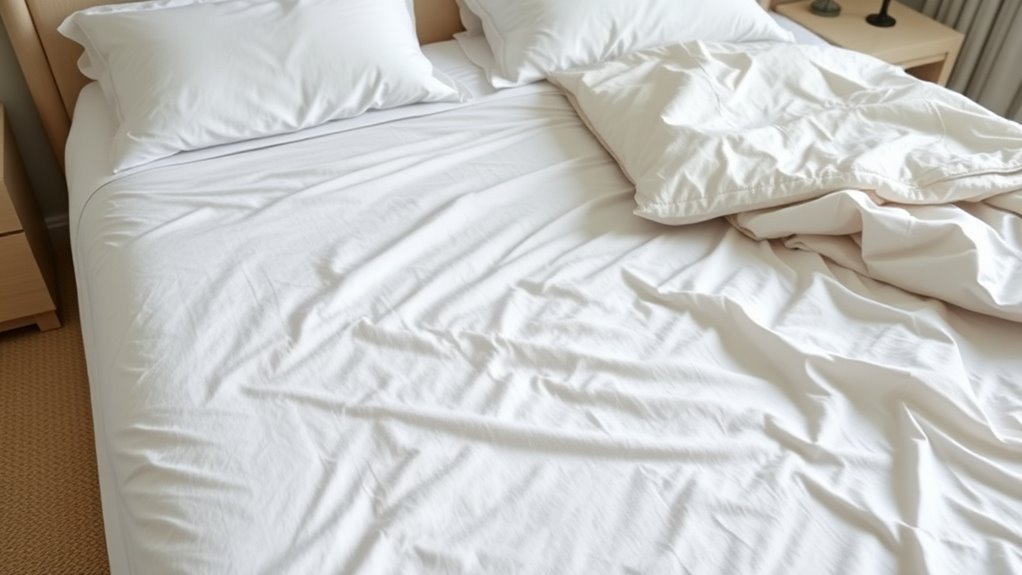
A flat sheet, also called a top sheet, is a large rectangular piece of fabric that sits between you and the outer bedding for an extra layer of comfort. You place it on the mattress, then let it drape loosely or tuck it in for a cleaner look.
Because it has no elastic corners, it moves with ease and works with different mattress sizes. Most flat sheets are made from cotton, linen, or microfiber, giving you choices that match your needs and budget.
Without elastic corners, a flat sheet adapts easily and comes in cotton, linen, or microfiber.
It’s also a washable barrier, helping keep blankets and comforters cleaner by catching sweat, oils, and debris. Many people value this extra layer for comfort and temperature regulation, especially when seasons shift.
Even so, the flat sheet remains optional, so you can decide whether it fits your sleep setup and your sense of freedom.
What Is a Flat Sheet Used For?
You place a flat sheet between you and the rest of the bedding to add a comfortable layer.
It also helps protect your comforter or blankets from sweat and oils, so you won’t have to wash them as often.
In warmer weather, you can even use it on its own as a light, breathable cover.
Layer Between Sleeper And Bedding
A flat sheet, also called a top sheet, sits between you and your comforter or duvet to add a layer of comfort and protection.
This flat sheet creates a barrier between your body and the outer bedding, so your bedding routine feels cleaner and more relaxed. It adds an extra layer of comfort without trapping too much heat, and it keeps your comforter from taking direct wear.
In warmer months, you can use it as a lightweight cover instead of heavier bedding. The top sheet also helps enhance comfort when you want a softer feel against your skin.
Because it’s easy to wash, you can swap it out often and keep your sleep space feeling fresh, simple, and free from fuss.
Protects And Simplifies Laundry
Beyond comfort, a flat sheet also makes cleanup easier and helps protect the bedding you wash less often. You get a simple barrier that catches body oils, sweat, skin cells, and allergens, so your comforter stays fresher. That one extra step can simplify laundry and support hygiene without adding much work.
| Benefit | Result |
|---|---|
| Protect layer | Less wear on blankets |
| Easier to wash | Weekly wash and dry |
| Save time | Fewer bulky loads |
| Cleaner sleep environment | Less buildup of oils |
| Tidy bed | Polished look, less effort |
When you strip the bed, just remove the flat sheet and wash it. Because it’s easier to wash than heavy bedding, you keep your routine light, free, and practical while extending the life of what you own.
Flat Sheet vs. Fitted Sheet
Flat and fitted sheets serve different roles in a bed setup. You use a fitted sheet as the bottom layer because its elastic corners hug the mattress and keep it steady.
A flat sheet, or top sheet, sits above it as a loose layer. In your bedding, the fitted sheet shields the mattress from sweat and oils, while the flat sheet can add comfort or make washing easier. Your choice can also affect temperature: some people like the extra layer, others prefer the freedom of a duvet cover alone.
A flat sheet adds comfort, eases washing, and can help—or hinder—your temperature preferences.
- Fitted sheet: secure, practical, protective
- Flat sheet: optional, lighter, easier to swap
- Comfort: depends on your sleep style
- Personal preferences: decide your routine
If flat sheets bunch up or feel like extra work, skip them. If they help you wash less often or sleep better, keep one. You don’t owe your bed a rule—only what works for you.
Do You Actually Need a Flat Sheet?
Do you actually need a flat sheet? Not always. A flat sheet, or top sheet, can add comfort and hygiene by shielding your comforter from sweat and oils. But if you like simpler bedding, you can skip it and use a fitted sheet with a duvet cover instead. That choice can also cut laundry, since you’re washing one less layer.
| Option | Best for | Tradeoff |
|---|---|---|
| Flat sheet | Added hygiene | More laundry |
| No flat sheet | Simplicity | Less barrier |
| Fitted sheet only | Minimal setup | Less layering |
| Duvet cover | Easy care | Fewer fabric choices |
| Climate-based choice | Hot temperature | Personal preference |
You may also find a flat sheet bunches or untucks, which hurts comfort. Cultural preferences matter too: in some places, people skip it because the climate and sleeping style fit better without one. The real answer is yours. Choose the bedding setup that supports your comfort, hygiene, and freedom.
Why Many People Skip Flat Sheets
Why skip a flat sheet? Because you can cut the hassle and keep your bed setup simple. Flat sheets add another load to wash, dry, and fold, so your bedding maintenance gets heavier fast. They can also shift, bunch, or tangle while you sleep, which is why many people skip them for a cleaner feel.
Skip the flat sheet to simplify laundry, reduce bunching, and enjoy a cleaner, easier bed setup.
- You wash less and save time.
- Your bed feels less crowded.
- Duvet covers already protect your comforter.
- A fitted sheet plus a blanket can work well.
For hot sleepers, flat sheets may get in the way of temperature regulation by trapping heat or adding weight. That’s why lighter alternatives appeal to you if you want more comfort with less fuss.
Modern bedding trends also lean toward streamlined setups, and many people find that a fitted sheet and duvet offer the freedom they want without extra layers.
When a Flat Sheet Is Worth Using
A flat sheet is worth using when you want a protective layer between you and your comforter, since it helps keep bulky bedding cleaner and cuts down on how often you need to wash it.
You also get an extra layer that can smooth out temperature fluctuations, so you’re not stuck too hot or too cold. In warm weather, your top sheet can work as a lightweight cover, giving you enough comfort without the weight of a comforter.
It can also make your bed feel more finished; many hotels use a flat sheet for that polished look. If you use adjustable beds, a flat sheet can move with you more easily, so you’re less likely to fight slipping bedding.
When you want comfort, ease, and a breathable layer that supports your routine, this simple piece can earn its place.
How to Choose the Right Sheet Depth
To choose the right sheet depth, measure your mattress from top to bottom, including any topper, before you buy. Your mattress depth decides whether standard fitted sheets, a deep pocket, or an extra deep pocket works best.
Most beds need deep coverage, so don’t guess. If you want a fitted sheet alone to stay put, check the pocket size against your mattress depth, or the corners may pop off.
- Up to 14 inches: standard fitted sheets usually fit well.
- 15 to 17 inches: choose deep pockets for a secure hold.
- 20 to 22 inches: pick an extra deep pocket for thick setups.
- Use elastic edges to help the bottom layer grip the mattress.
If you skip the flat sheet, you can still keep things clean and simple under a comforter or duvet.
Flat sheets help, but only when they match your bed. Liberation starts with the right fit.
Do Flat Sheets Work on Adjustable Beds?
Flat sheets can work on adjustable beds, but they often untuck as the base moves and flexes, which can make them annoying to use. If you want your bed to stay in place, a flat sheet usually needs help from clips or suspenders, and even then it may shift.
For many people, fitted sheets are the freer choice because they grip better, especially deep pocket styles made for taller mattresses. Duvet covers also stay in place more reliably, and they can simplify your routine.
If you like less fuss, you can skip flat sheets entirely and use a lightweight blanket for easier movement and comfort. That setup gives you more flexibility without fighting the bed every night.
In practice, adjustable beds tend to reward bedding that moves with you, not against you, so choose what supports your comfort and lets you rest without constant readjusting.
How to Care for Your Sheets
Wash your sheets weekly to keep sweat, skin cells, and allergens from building up, and use cool or warm water so you don’t damage cotton fibers or reduce breathability. This care routine supports hygiene and keeps your flat sheet and fitted sheets feeling fresh, soft, and breathable.
- Wash both sets weekly.
- Skip fabric softeners; they can coat cotton fibers and weaken moisture-wicking.
- Rotate between two sheet sets to limit wear.
- Check fitted sheets pocket depth so the fit stays secure.
When you wash, choose a gentle cycle and dry on low heat to protect the weave. If you use a flat sheet, treat it the same as your fitted sheets—clean them together so your bed stays balanced and free of allergens.
Rotating sheet sets gives you freedom from constant laundering while helping each set last longer.
Frequently Asked Questions
Why Do People Not Use a Flat Sheet?
You might skip a flat sheet because it doesn’t match your sleeping habits or comfort levels. It can bunch up, feel hot, and create convenience issues with extra laundry.
Many people prefer alternative bedding like duvet covers, following bedding trends, cultural preferences, and personal choices.
You may also weigh hygiene factors differently and decide the flat sheet benefits don’t outweigh the freedom of a simpler setup for you.
Why Is My Wife’s Side of the Bed Yellow?
Your wife’s side is probably yellow from sweat accumulation, skin oils, and product buildup, which can create yellow stains over time.
Improve bed hygiene by washing sheets weekly and checking your washing frequency. Choose natural fabrics for better fabric care, and use laundry tips like hot washes when safe.
A mattress protector boosts mattress protection, and your bedding preferences can reduce staining.
If needed, treat stains quickly and dry thoroughly.
Why Don’t Europeans Use Flat Sheets?
You’ll often see Europeans skip flat sheets because European bedding favors duvet usage, easier laundry habits, and minimalist trends.
Cultural preferences and historical context shaped bedding types around separate duvets and fitted sheets, especially in Germany and Scandinavia.
Comfort factors and seasonal variations also matter: lighter layers work better in warmer months, while duvet covers stay simple to wash.
For many, less bedding means more ease, freedom, and practicality.
Why Does Gen Z Not Use Top Sheets?
Gen Z skips top sheets because you often want simpler bedding essentials that fit minimalist lifestyles and comfort priorities.
You’ll see Gen Z preferences shaped by cultural influences, fashion trends, and space-saving solutions, especially when a duvet feels easier.
You also save time, support sleep hygiene with fewer layers, and make eco-friendly choices by washing less.
For many, a top sheet just doesn’t feel necessary anymore.
Conclusion
In the end, you don’t need a flat sheet if it only adds extra laundry and gets tangled at night. You can skip it, use a duvet cover, or choose a lightweight blanket that feels simpler and still keeps you comfortable. If you do like that extra layer, pick a sheet that stays put and feels smooth. Picture a bed that’s neat, easy to make, and ready for sleep without the fuss.