
A bed slat base can look simple, but it plays a big role in how well your mattress supports you. You’re choosing a frame system with parallel slats that replace a box spring, and the spacing matters more than most people realize. Too much space can cause sagging, especially with memory foam. The right setup depends on your mattress, the slat material, and whether your bed needs extra reinforcement.
Key Takeaways
- A bed slat base is a set of parallel slats that supports a mattress without needing a box spring.
- Slats should usually sit no more than 3.5 inches apart, with 2 to 3 inches best for memory foam mattresses.
- Tighter slat spacing helps prevent sagging, improves support, and protects mattress warranties.
- Solid wood or sturdy engineered wood slats, at least ¾ inch thick, provide the most reliable support.
- Larger beds should include center support rails and legs to keep the slats stable and evenly weighted.
What Is a Bed Slat Base?
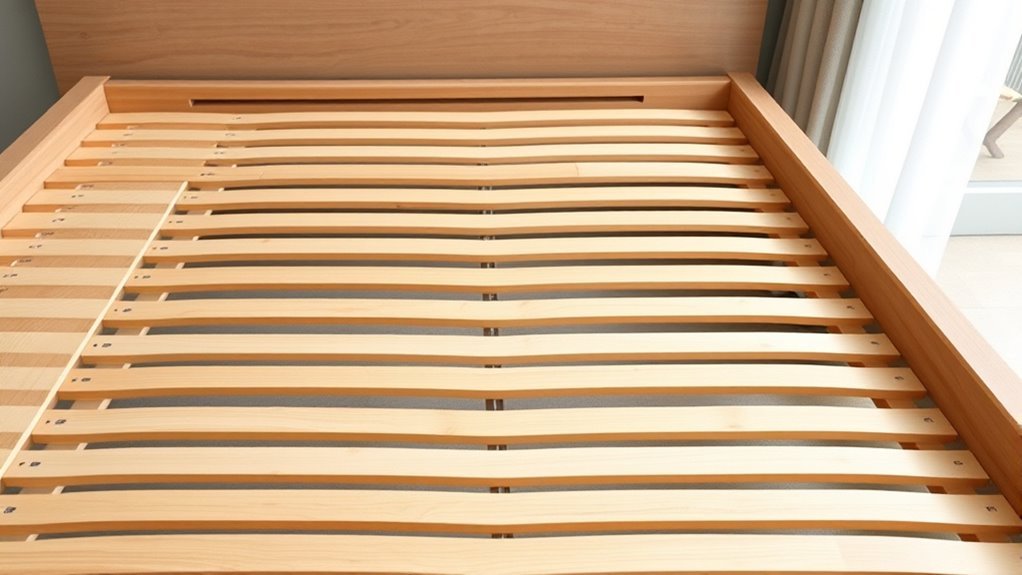
A bed slat base is a support system made of parallel slats that hold up your mattress without needing a box spring. You rely on bed slats to support your mattress with a firm, breathable platform that helps you claim comfort on your own terms.
Makers usually use solid wood, engineered wood, or metal, and that material choice lets air move under the bed, which helps regulate temperature and cut moisture buildup. When slats sit spaced too far apart, your mattress can sag, lose support, and face reduced warranty protection.
A sturdy slat base often adds center support rails and legs so the frame can carry weight evenly. That even load distribution matters for mattress longevity because it reduces stress on the core and keeps the surface stable.
Choose a base built to stay solid, and you’ll keep your sleep space strong, open, and free from unnecessary compromise.
How Far Apart Should Bed Slats Sit?
You should keep bed slats no more than 3.5 inches apart to give your mattress solid support and help prevent sagging.
If you use a memory foam mattress, aim for 2 to 3 inches between slats to protect the warranty and spread weight evenly.
Wider slats can improve support, but too much spacing can damage the mattress while overly tight spacing can reduce airflow and trap moisture.
Slat Spacing Guidelines
Bed slats should sit no more than 3.5 inches apart, with 2 to 3 inches being ideal for most slatted bed frames without an added foundation. That spacing gives your mattress steady support, helps stop sagging, and keeps the load distributed evenly across the frame.
If you choose wider gaps, you risk weakening the mattress and triggering warranty problems, especially with memory foam models. Keep every slat flat, sturdy, and ideally ¾ inch thick for reliable performance.
Consistent spacing also improves airflow, so your bed can release heat and resist moisture buildup. You don’t need extra complexity to sleep well—just precise slats, disciplined spacing, and a frame that respects your body’s need for dependable support and long-term durability.
Support and Mattress Care
When slat gaps stay within 3 to 4 inches, your mattress gets the steady support it needs to resist sagging and wear. With this spacing, slats provide adequate support, protect the mattress core, and preserve the mattress feel you paid for.
If gaps stretch beyond 3.5 inches, you risk distortion, reduced durability, and possible warranty trouble, especially with memory foam. Aim for 14 to 16 slats on a standard frame, and choose solid wood at least ¾ inch thick so each board stays flat under load.
Don’t overlook center support; it helps distribute weight evenly and keeps the whole base aligned. Proper spacing also boosts airflow, which lowers heat buildup and moisture, so your bed stays stronger and cleaner over time.
How Much Slat Spacing Do Memory Foam Mattresses Need?
For a memory foam mattress, you should keep slats no more than 3 inches apart, with 2 to 3 inches being the ideal range.
Wider gaps can weaken support, cause sagging, and even affect your warranty, while properly spaced slats also help airflow and moisture control.
To keep the bed stable and durable, use a center rail and extra support legs where needed.
Memory Foam Spacing
Memory foam needs a tight, supportive slat layout to perform properly, and you should keep gaps at no more than 3 inches to prevent sagging and uneven wear.
With memory foam mattresses, the right slat spacing gives adequate support, so your bed stays steady and your body gets even pressure relief.
Flat, sturdy slats at least ¾ inch thick work best because they resist flex and help preserve mattress shape.
Experts often recommend about 1 inch between slats; that tighter setup lets air move while protecting integrity.
When slats offer consistent support, you avoid soft spots, improve comfort, and keep the mattress working as designed.
Don’t let wide gaps undermine your rest or your warranty.
Slat Gap Limits
Because memory foam needs steady, even support, you should keep slat gaps at 3 inches or less to prevent sagging and protect the mattress structure.
If your frame leaves wider openings, you’re risking poor performance, reduced durability, and possible warranty problems. For a slatted base without an extra foundation, 3.5 inches is the outer limit, but 2 to 3 inches gives your mattress better structure and peace of mind.
Wide slats aren’t recommended because they can’t reliably support the weight across the bed. Tight, consistent slat spacing gives you adequate support and helps your mattress stay level over time.
Measure each gap carefully, and don’t assume “almost” works—precision protects your investment and your comfort.
Support and Airflow
To keep a memory foam mattress both supported and breathable, you should aim for slats spaced no more than 3 inches apart, with 1 inch between slats often offering the best airflow and moisture control.
This spacing protects your comfort and support by stopping the foam from dipping into wide gaps and losing shape. Choose sturdy slats, ideally ¾ inch thick wood, so they won’t flex under load.
If you push slats too far apart, you can weaken the bed base, shorten mattress life, and even void the warranty. Proper airflow helps your mattress stay cooler and drier, which matters if you want cleaner sleep and less wear.
Set the slats evenly, and you’ll keep the mattress stable, resilient, and ready to serve you well.
Which Bed Slat Materials Give the Best Support?
For the strongest bed slat support, solid wood is usually your best choice, especially when the slats are at least ¾ inch thick. You get a firm, reliable solid surface that helps your mattress stay level and lets your body rest without unwanted sink.
Quality wood slats resist flexing, so they hold up well under daily use and support heavier loads with confidence.
If you want a high-performance alternative, engineered wood like LVL can deliver excellent strength and stability, sometimes even better than softer lumber.
Metal slats last long, but they can squeak and feel less steady. Bowed slats add some give, yet they wear faster and may weaken support over time.
Keep the spacing between slats no more than 3 inches, especially with memory foam, so your mattress doesn’t sag and you keep your freedom from premature wear.
Do You Need a Center Rail and Legs?
Yes—if your bed frame spans a wider mattress, a center rail can make a major difference by supporting the slats, spreading weight more evenly, and reducing sagging under load.
You should treat this as a structural upgrade, not an optional extra. A snug center rail that reaches cleanly from rail to floor keeps movement out of the frame, so the slats often stay aligned and your mattress gets adequate support.
For stronger setups, attach the rail at both the head and foot of the frame and use a single center leg when the design allows. On larger frames, aim for at least three evenly spaced support legs, including one in the middle, to lock in stability.
Then test the bed by pressing down and watching for slat movement under weight. If the frame flexes, reinforce it now—you deserve a bed that holds firm, frees you from sagging, and stays dependable night after night.
How Many Slats Should Your Bed Have?
How many slats should your bed have? For a standard king bed, aim for 14 to 16 slats to get reliable support and balanced weight distribution.
That count lets your mattress sit on a firm, even base instead of stretching across open space. Keep the spacing no wider than 3.5 inches so the mattress can’t dip between slats.
Choose slats that are 2 to 4 inches wide; wider slats improve weight distribution and give you stronger support under pressure. Flat, sturdy slats about ¾ inch thick work best because they resist flexing and keep the surface stable.
You should also use a center rail with at least three evenly spaced support legs to reinforce the frame.
When you match the right number of slats with proper spacing, you protect your mattress, strengthen the bed, and create the freedom of a sleep setup that feels solid, dependable, and fully yours.
How Do You Fix Gaps, Sagging, and Flexing?
When gaps, sagging, or flexing start showing up, you can usually fix the problem by tightening the foundation and adding stronger support.
Check that your slats sit no more than 3-4 inches apart; wider gaps invite sagging and weaken mattress support. If the spacing is off, replace the slats with wider, sturdier boards.
When the bed still dips, add more slats or install a center support rail with at least three evenly spaced legs so the load spreads evenly.
For flexing, choose rigid slats made from solid wood or engineered wood, not metal or bendy options. Then secure every slat with screws or brackets so nothing shifts.
Recheck alignment often, because small movements can create new gaps and instability.
With a firmer base, you reclaim steadier sleep and a bed that holds its shape.
Frequently Asked Questions
What Is the Ideal Space Between Bed Slats?
The ideal space between bed slats is no more than 3.5 inches, and you’ll do better with 2 to 3 inches for memory foam.
You should choose strong slat materials, like solid wood, and keep slat thickness at least ¾ inch for reliable slat support.
A tight slat arrangement prevents sagging, protects your mattress, and improves airflow, so you can rest freely without worrying about damage or hidden weakness.
Which Is Better for a Bed Base, Plywood or Slats?
Slats usually win, like a breeze under your mattress. You’ll get better bed support, stronger mattress compatibility, and improved airflow.
In a durability comparison, plywood feels rigid and can sag less, but it traps moisture and suits fewer mattress types. Slats cost more to build carefully, yet they deliver better long-term cost effectiveness.
If you want a freer, more adaptable sleep setup, choose slats for most modern beds.
Is 3 Slats Enough for a Bed?
No, 3 slats aren’t enough for your bed. You need far more for proper bed support types, even with strong slat material options.
With only three, your mattress can sag, shift, and wear out fast.
Check mattress compatibility factors, especially for foam models, and watch slat durability concerns.
Aim for 14–16 slats, with spacing under 3.5 inches, plus a center rail and support legs for real stability.
What Is the Recommended Maximum Gap Between Bed Slats?
You shouldn’t let the gap between bed slats exceed 3.5 inches; smaller is better for bed support and mattress compatibility.
For strongest performance, keep slats 2 to 3 inches apart, especially with memory foam.
Choose sturdy slat materials and proper slat thickness to prevent sagging, protect warranty coverage, and improve airflow.
When you set tighter spacing, you free your mattress to perform, breathe, and last longer.
Conclusion
A bed slat base gives your mattress steady support and lets air move underneath it, helping it stay cooler and last longer. Keep slats no more than 3.5 inches apart, and aim for 2 to 3 inches if you use memory foam. Strong slats, a center rail, and enough support points prevent sagging. If gaps or flexing appear, fix them quickly so your bed feels as solid as a bridge.